We use minimally invasive techniques to repair decayed or damaged teeth while preserving the tooth structure. We can also reconstruct old, grey metal fillings with the latest plastic materials to make them white, aesthetic and tooth-coloured.




We use minimally invasive techniques to repair decayed or damaged teeth while preserving the tooth structure. We can also reconstruct old, grey metal fillings with the latest plastic materials to make them white, aesthetic and tooth-coloured.
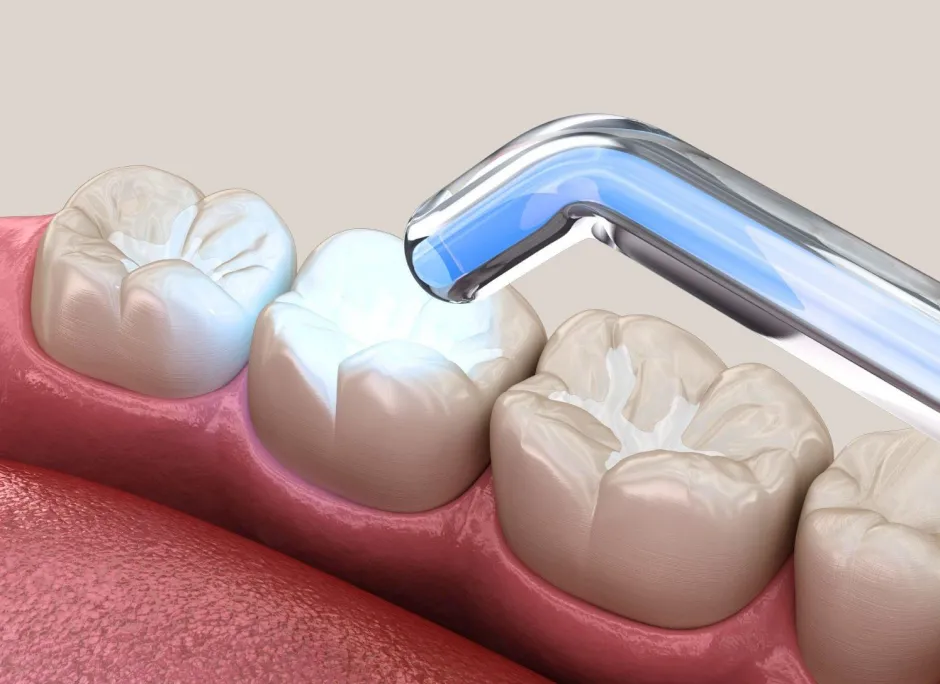
Fillings are necessary when a tooth has lost substance. This is mainly caused by caries bacteria, which destroy the tooth, but also by excessive grinding, acidic food and drink and incorrect brushing techniques.
The smaller the defect in the tooth, the more likely it is to be repaired with a filling.
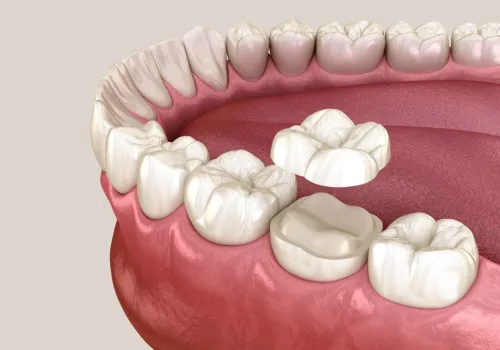
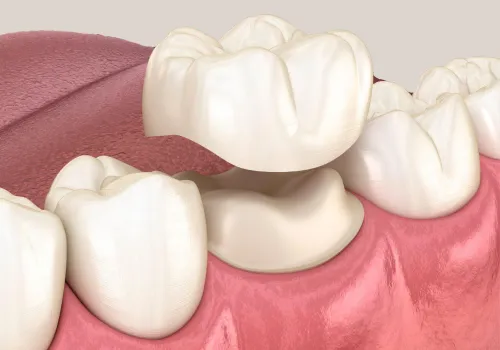
In the case of very large defects, the tooth often loses so much stability that volume replacement with a filling alone is not sufficient to stabilise the tooth in the long term. In such cases, an inlay or an onlay (previously often referred to as a partial crown) is often the more durable alternative.
Today, we use state-of-the-art hybrid composites to replace the lost substance. These tooth-coloured plastics are filled with tiny ceramic particles.
Thanks to these fillers, resin fillings today consist of only 20-30% resin and 70-80% ceramic particles. This has the advantage that the fillings look better, last longer and feel pleasant after insertion.
Glass ionomer compomers are also used for semi-permanent fillings. These are also tooth-coloured and less expensive than composite fillings. They are particularly suitable for long-term temporary fillings when long-term tooth preservation cannot yet be estimated or for caries therapy on a tight budget. Plastic fillings last around 10-20 years, depending on size and care, while glass ionomer fillings remain edge-tight for around 5-8 years.
We only use brand-name materials for our filling therapy in all areas.
Compomer filling
Plastic filling
Tooth widening / highly aesthetic anterior filling
Dental fillings are used to repair defective teeth or teeth damaged by decay and to restore their function and aesthetics. As soon as a tooth is damaged by decay, wear or small fractures, the affected area must be completely cleaned and filled with a suitable material.
In Switzerland, dental fillings are one of the most common dental treatments. The aim is to preserve the natural tooth structure as far as possible and prevent further damage. Modern fillings offer not only stability, but also a visually appealing solution that blends harmoniously into the dentition and is practically invisible. Depending on the findings, different materials are used, which are selected individually for you as the patient.
There are various types of dental fillings available in Switzerland, which differ in terms of material, durability and aesthetics.
The most common are composite fillings (plastic), ceramic fillings and amalgam fillings. Composite is particularly popular as it is tooth-coloured and blends in unobtrusively. Ceramic offers very high aesthetics and longevity, but is more expensive. Amalgam is not used in our centres as it is considered hazardous to health due to its high mercury content.
The choice of the right filling depends on factors such as the position of the tooth, chewing load and budget. An individual consultation with the dentist is crucial for the optimal solution.
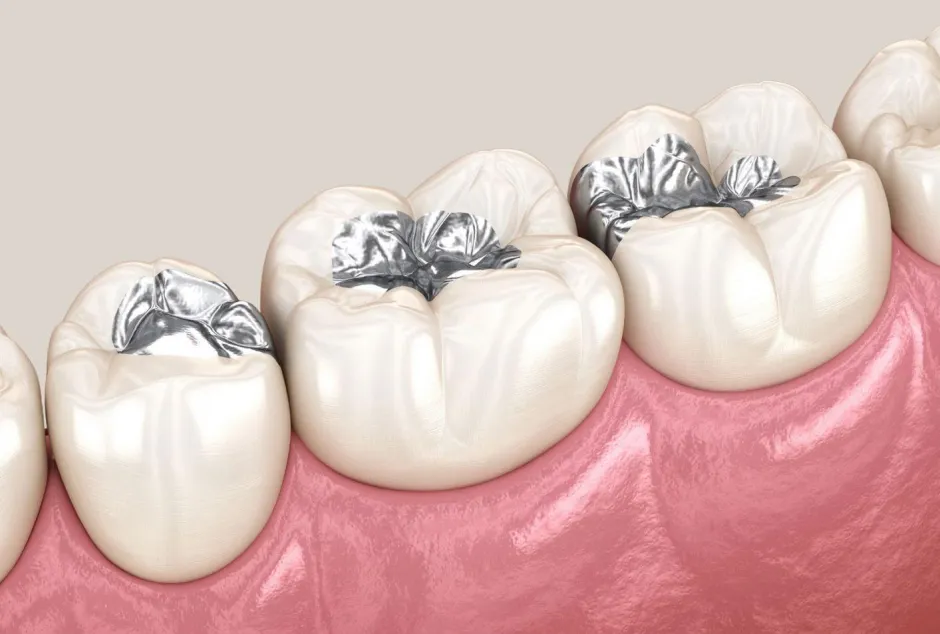
An amalgam filling is a classic dental filling made from a metal alloy containing silver, tin, copper and mercury, among other things. It has been used in dentistry for over 100 years and is known for its high stability and long durability. Amalgam was frequently used in the posterior region in particular, as it can withstand heavy chewing loads. Today, its use is restricted in Switzerland as it is considered hazardous to health due to its high mercury content and is increasingly being replaced by more modern materials. Nevertheless, amalgam is unfortunately still an issue in dentistry in many non-European countries due to its cost-effectiveness and resistance.
At CITYDENTAL, we do not use amalgam-containing materials or amalgam fillings, but endeavour to avoid harmful substances in our materials as much as possible. We believe that this is an important part of being able to live a healthy life in the long term.
The question of whether amalgam fillings are harmful to health has been the subject of controversial debate for years. Amalgam contains mercury, which can be toxic in high concentrations. However, studies show that the quantities released in intact fillings are very low. There is therefore no acute health risk. The dangers lie more in chronic exposure over many years and decades. Mercury is associated with various autoimmune and neurodegenerative diseases such as Alzheimer's and other forms of dementia. Particularly in people with certain pre-existing conditions, exposure to amalgam fillings should be considered and checked. Many patients make a conscious decision to replace amalgam fillings with amalgam-free fillings in order to avoid possible risks.
The durability of dental fill ings depends heavily on the material used and individual oral hygiene. Composite fillings usually last 10 to 15 years, while ceramic fillings often remain stable for 15 to 25 years or longer.
Factors such as chewing behaviour, dental hygiene and regular dental check-ups are decisive. Good care can significantly extend the lifespan.
It is important to have fillings checked regularly in order to recognise and treat wear or leaks at an early stage.
The cost of a dental filling in Switzerland varies depending on the material and the treatment required. Composite fillings usually cost between CHF 160 and CHF 495 per tooth, while ceramic fillings can be somewhat more expensive.
As dental treatments in Switzerland often have to be paid for privately, it is important to us to provide transparent cost information. You will therefore find all prices on our detailed price list. We will also be happy to provide you with a personalised quote free of charge.
Depending on the tariff, supplementary insurance may cover part of the costs. Early treatment helps to avoid higher follow-up costs.
There is no one-size-fits-all "best" dental filling, as it depends on individual factors. Composite or ceramic fillings are particularly suitable for visible areas due to their aesthetics. Robust materials are decisive in the posterior tooth area, where high stress occurs.
In principle, it can be said that ceramic materials are the best choice for most indications in terms of material properties, even if they are not the cheapest.
It is important to find a customised solution that is both functional and visually appealing. The dentist takes into account the position of the tooth, the load and the patient's wishes in order to select the optimum filling.
Yes, amalgam fillings can be removed and replaced with modern materials. This process is known as amalgam restoration. Special care must be taken to minimise the release of mercury. In Switzerland, many dentists, including us, work with special protective measures such as rubber dams, special mouth and nose protection and suction technology.
After removal, the teeth are decontaminated and then usually restored with composite or ceramic. After amalgam restoration, detoxification measures may also be indicated. We recommend having amalgam fillings restored gradually and not all at once in order to minimise the burden on the body.
Many patients decide in favour of this step for aesthetic or health reasons. Professional execution is crucial for a safe result.
Treatment with a dental filling begins with a thorough examination and cleaning of the affected tooth. The caries is then removed and the tooth cleaned. If necessary, this is done under local anaesthetic to make the treatment absolutely painless. To keep the tooth very dry, a rubber dam is often placed over the tooth before treatment so that it does not become moist from saliva or breath. Modern composite materials are bonded to the tooth and this only works if the tooth is absolutely dry.
The selected filling material is then applied in layers and hardened with a special, very strong blue light. Finally, the height of the filling is adjusted and then the surface is very finely polished so that it blends in perfectly with the bite. The entire procedure is usually quick and uncomplicated. The aim is to permanently restore the function and aesthetics of the tooth.