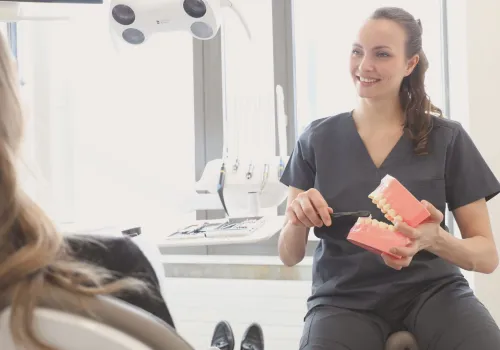
Stress often triggers unconscious teeth grinding or clenching. Over the years, this can lead to enamel wear, muscle and headaches and even serious temporomandibular joint disorders. We can stop this process with the right splint therapy.




Stress often triggers unconscious teeth grinding or clenching. Over the years, this can lead to enamel wear, muscle and headaches and even serious temporomandibular joint disorders. We can stop this process with the right splint therapy.
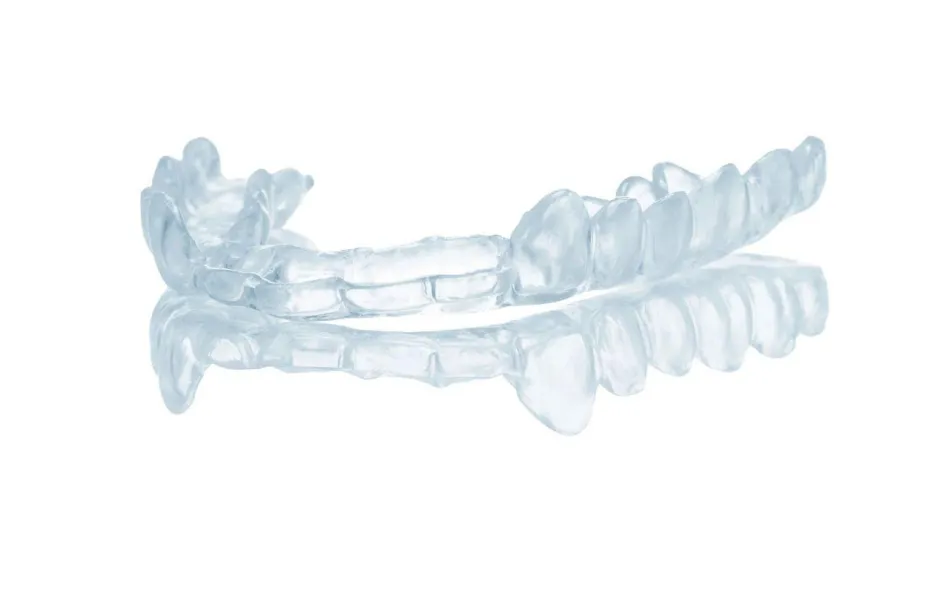
It is impossible to imagine modern dentistry withoutgrinding splints. In today's fast-paced world, many people suffer from grinding or clenching their teeth at night - also known as bruxism. These unconscious movements can cause considerable long-term damage to teeth, jaw joints and masticatory muscles.
The enamel wears down much faster due to the constant overload. Arthritic changes can occur in the area of the temporomandibular joint, which is often accompanied by pain and limited mobility. The chewing muscles also react sensitively to incorrect loading and can cause headache-like complaints.
The causes of teeth grinding are usually multifactorial. Frequent triggers are stress, tooth loss, maladjusted fillings, bridges, dentures or the condition after orthodontic treatment.
The problem is that initial symptoms often go unnoticed and complaints only become apparent once damage to the teeth or temporomandibular joint has already occurred. We therefore recommend that you have signs of bruxism checked at your annual dental check-up - especially if you or your partner have noticed grinding your teeth at night.
The aim of splint therapy varies greatly depending on the individual diagnosis. Depending on the particular situation, the therapy can aim to relieve pain, stop the loss of tooth substance, relieve the chewing muscles or restore normal jaw mobility.
As part of a comprehensive initial examination, we carefully analyse your current findings, possible signs of wear and tear on the teeth and your personal stress level - a common trigger for bruxism and jaw joint complaints.
We then define the appropriate treatment goal together with you. Based on these findings, your dentist will select the most suitable dental splint for you - be it for muscle relaxation, to protect the tooth structure or to treat jaw dysfunction.
Night splints are made from biocompatible plastics or medical silicone, depending on the purpose.
Prefabricated silicone splint SoluBrux
Optional: With customisation in the practice (+ CHF 79)
Laboratory-made individualised Michigan splint
Laboratory-made individualised DIR splint
With digital calibration, DIR system
Yes - teeth grinding (bruxism) can be harmful to your teeth, especially if it happens regularly and unnoticed (e.g. at night).
Grinding exerts very high forces on the teeth - often stronger than normal chewing. This can lead to the following problems in the long term:
1. enamel wear
2. cracks & chipping
3. sensitive teeth
4. jaw and headaches
5. long-term: temporomandibular joint problems (CMD)
Many people grind their teeth in their sleep at night. Typical symptoms are
We have put together a leaflet with exercises that you can do yourself at home based on some of the methods developed by the Dental Centre of the University of Zurich. If you do these exercises regularly, in many cases you will notice a significant improvement after just 1-2 weeks.
The form is available for free download here: Exercises for tension in the jaw area
Bruxism is the medical term for teeth grinding or clenching, which usually occurs unconsciously - either during sleep(sleep bruxism) or during the day(awake bruxism). Strong forces act on the teeth, chewing muscles and temporomandibular joint, which can lead to long-term discomfort.
The exact causes are not always clear, but common triggers are