We reconstruct even severely damaged teeth with high-performance and metal-ceramics safely and for the long term. In co-operation with our experienced dental technicians, we give your teeth a natural and aesthetic appearance.




We reconstruct even severely damaged teeth with high-performance and metal-ceramics safely and for the long term. In co-operation with our experienced dental technicians, we give your teeth a natural and aesthetic appearance.
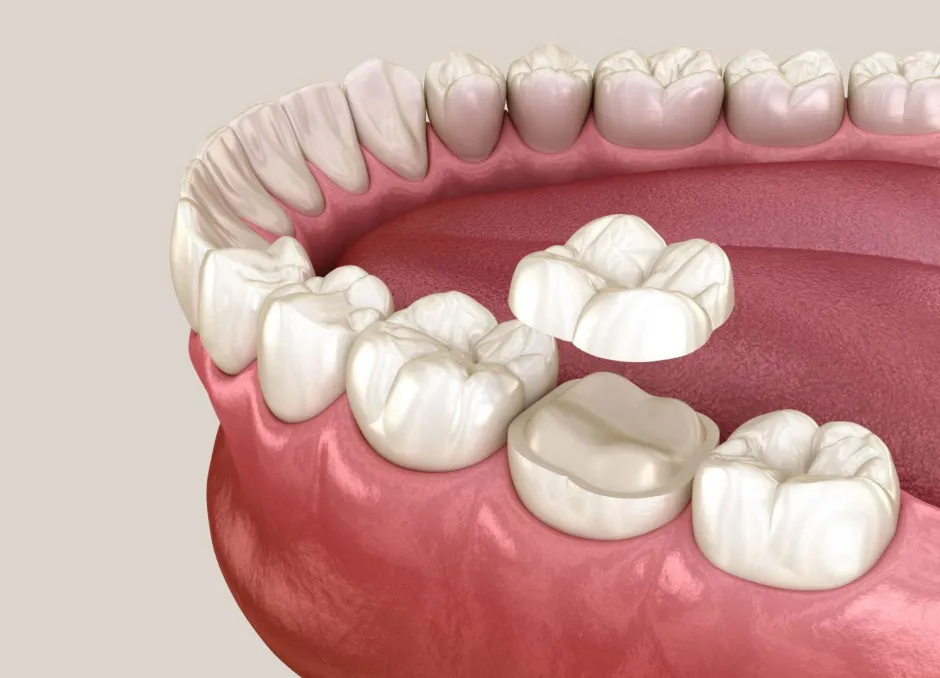
If a tooth defect caused by caries is too large to be reconstructed in the long term with a stable plastic filling, we rely on modern computer-based techniques and produce precise inlays or onlays for our patients.
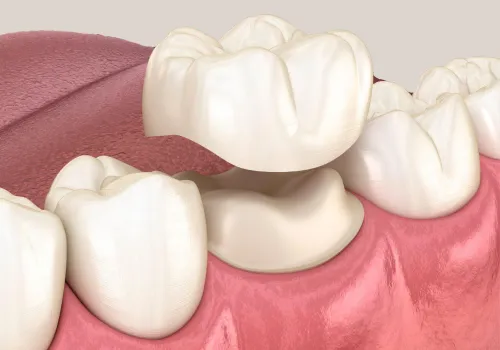
An inlay replaces part or individual cusps of the tooth and is inserted directly into the natural tooth. An onlay, on the other hand, covers the entire chewing surface. As these dental restorations are made entirely of ceramic, they offer significantly greater stability compared to plastic fillings. This means that even broken teeth can often be saved and a full dental prosthesis can be avoided.
Treatment with an onlay is particularly recommended for teeth that have undergone root canal treatment. These teeth are sensitive and have a high risk of fracture. It has been scientifically proven that an indirect restoration with an onlay significantly reduces the risk of fracture. This considerably improves the prognosis and durability of a root canal-treated tooth, even if in rare cases a tooth fracture can no longer be saved.
While an inlay is primarily suitable for small to medium-sized tooth defects, an onlay can be used to reconstruct a large part of the chewing surface. As the onlay grips over the cusps of the tooth, weakened tooth walls are strengthened. The inlay, on the other hand, is surrounded by tooth substance and is only used on teeth that are otherwise healthy.
Direct ceramic restorations such as CEREC inlays or onlays save time and often money. However, the directly milled ceramic, which is inserted within 1-2 hours, is somewhat softer than a fired ceramic. For this reason, this method is not recommended in dentistry for patients who tend to grind their teeth at night (bruxism) or clench their teeth.
For such patients, we recommend restorations made of Emax or zirconium oxide ceramic. These can also be fabricated directly in the centre. However, the treatment takes a little longer than a CEREC ceramic restoration due to the additional firing time required to produce the ceramic.
In the aesthetically visible area or for larger restorations such as bridges or attachments, we recommend having the restorations made by a dental laboratory, as the aesthetic result of the restorations (inlay/onlay/veneer/crown) made by the dental technician is usually even better than that of directly milled restorations.
Inlays and onlays are indirect restorations that offer a long-lasting solution for damaged teeth. In contrast to a direct filling, which is modelled and hardened directly in the tooth, inlays and onlays are made from 100% ceramic in the dental laboratory or with a computer-controlled milling machine. The finished ceramic construction is then chemically bonded to the tooth substance using special cements. This strong bond ensures high durability, so that the restoration often lasts for several decades. Scientific studies show that indirect restorations such as inlays, onlays, crowns and bridges have an average lifespan of around 25 years. With good dental care, they can even last 40 years or longer.
For a perfect fit, a box-shaped cavity is moulded from the tooth defect, for example after caries removal. The dentist creates a conventional impression of the affected tooth using precision moulding material. In the case of ceramic inlays or ceramic onlays, the tooth colour is determined in order to select a material of the same colour in the dental laboratory. The impression is then sent to the laboratory, where an exact model of the jaw is created using special hard plaster. This makes the tooth defect visible and the ceramic can be customised.
In the classic procedure, the inlay is first modelled out of wax and tested in an articulator, a device for simulating the jaw and chewing situation. A mould is created from the wax model, into which the material is poured for gold inlays or gold onlays. For ceramic inlays or ceramic onlays, the ceramic is injected under high pressure and high temperature. The inlay filling is then finely ground and polished by the dental technician to ensure an optimum fit and aesthetic appearance.
After around 5-7 days, the finished inlay or onlay is available in our dental practice and can be bonded to the tooth in a second session.
When inserting the inlay or onlay, the dentist applies a special luting cement to the inlay filling and places it precisely in the cavity. Excess cement, which could cause inflammation of the gums, is removed and the edges of the inlay filling are finely polished. After grinding in, chewing, speaking and swallowing function perfectly again.
Between sessions, a temporary filling made of special plastic protects the cavity of the diseased tooth so that the patient can chew and eat normally. It is recommended that sticky foods and chewing gum are avoided during this phase to prevent the temporary inlay or onlay from becoming loose.
Alternatively, in some cases an inlay or onlay can be made directly in the dental practice in a single session. Instead of a conventional impression, a digital impression is taken with an intraoral scanner. With the help of our CEREC milling machine, the crown is milled from high-performance ceramics and inserted directly or after a sinter firing. This saves the cost of a temporary crown and eliminates the need for a second session. Your dentist will clarify whether this is possible in your case.
Ceramic inlays and ceramic onlays offer clear advantages over conventional fillings: they resemble natural tooth substance in terms of hardness, colour and appearance. They are also more durable, more resilient and have excellent biocompatibility, making them an ideal solution for prepared teeth.
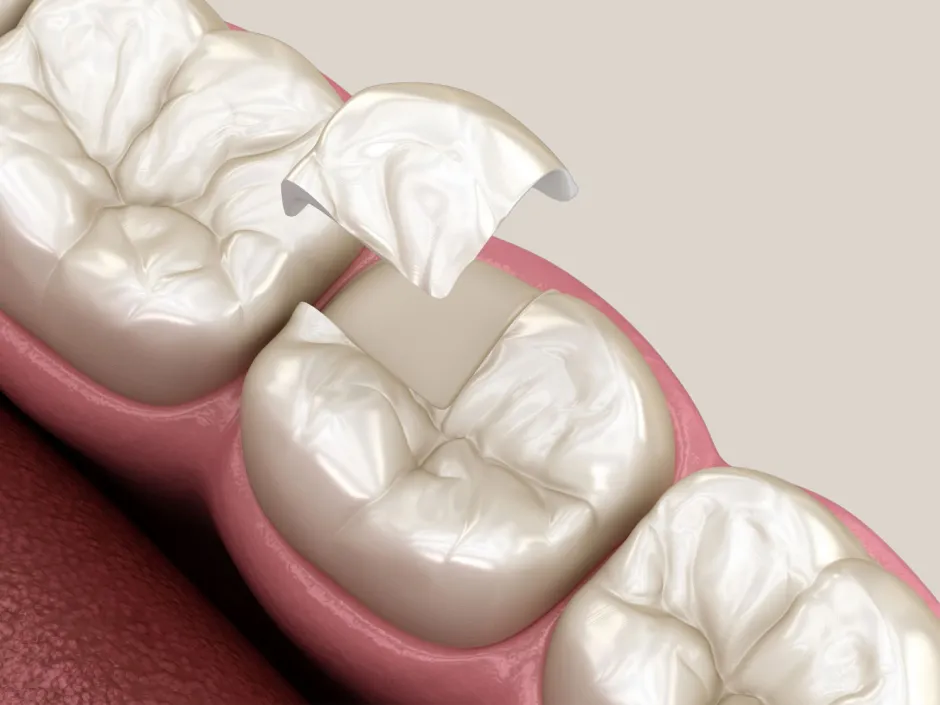
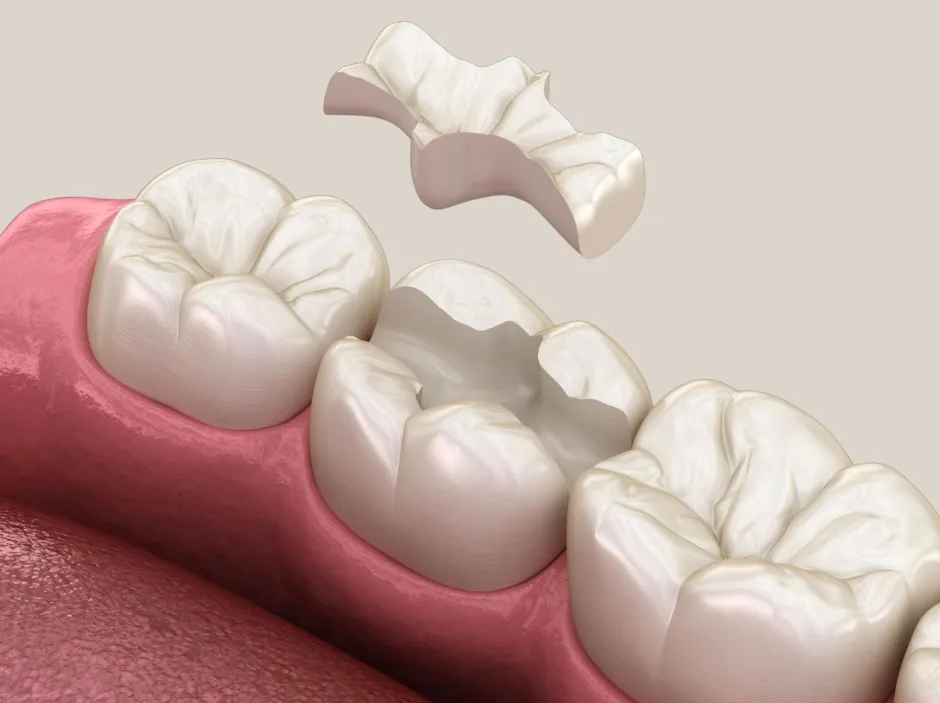
Computer-milled CEREC inlay made of directly milled ceramic
Computer-milled CEREC inlay made of high-strength ceramic
Laboratory-made inlay made of high-strength ceramic (CH)
The question about the cost of inlays and onlays in Switzerland is one of the most frequently asked questions. Prices vary greatly depending on the material, dental practice and complexity. As a rule, the cost of a ceramic inlay or onlay is between around CHF 800 and CHF 2,000 per tooth. You can find a detailed overview of our prices for inlays and onlays in our price list. Decisive factors are the size of the defect, the technology used and the time required. As inlays and onlays are customised in the laboratory or digitally, they are more expensive than simple fillings. At the same time, however, they offer significantly greater precision and longevity, which makes them economically viable in the long term.
In Switzerland, these services are not usually covered by basic insurance. However, supplementary insurance can cover part of the costs. It is important to obtain a transparent quote before starting treatment. Patients should bear in mind that high-quality solutions can reduce follow-up costs due to repeat treatments in the long term.
Inlays and onlays are mainly used in dentistry for posterior teeth, as they are specially designed to absorb high chewing loads. However, the question often arises as to whether they are also suitable for anterior teeth. In principle, this is possible, but rather unusual. Front teeth have a different function and aesthetic appearance, which is why composite fillings or veneers are often preferred here. Although inlays and onlays offer a high level of stability, they are not suitable for visible areas.
In Switzerland, dentists pay particular attention to a harmonious overall aesthetic appearance, which is why treatment is planned individually. If an anterior tooth is severely damaged, an inlay may make sense in exceptional cases, but a different solution is usually chosen. A comprehensive consultation is important in order to optimally combine function and aesthetics. Ultimately, the dentist decides on the best treatment together with the patient.
A common question concerns the stability of inlays and onlays. They are generally considered to be very durable and resistant, especially if they are made of ceramic. Nevertheless, they can break or come loose under certain circumstances. This is usually caused by heavy chewing loads, teeth grinding or material fatigue. Inadequate bonding or marginal leakage can also play a role.
However, modern bonding techniques ensure a very strong bond with the tooth substance, which minimises the risk. In Switzerland, high-quality materials are used that guarantee a high level of resilience. Regular check-ups at the dentist help to recognise problems at an early stage.
Overall, inlays and onlays are very reliable, but not completely indestructible.
Modern dentistry offers both digital (CAD/CAM) and classic laboratory-made inlays and onlays. Digital versions are often milled directly in the practice and can often be inserted in one session. Classic inlays are produced in the laboratory and usually require two appointments.
The advantage of digital solutions lies in the time savings and high precision. Conventional methods, on the other hand, often offer an even more individualised aesthetic design.
Both methods deliver high-quality results, provided they are carried out correctly. In Switzerland, both methods are used, depending on the patient's requirements.
The choice depends on factors such as complexity, budget and time.
Ceramic inlays and onlays are known for their high colour stability. In contrast to plastic fillings, they hardly discolour due to coffee, tea or nicotine. The material is very dense and only absorbs a minimal amount of colouring agents. As a result, they retain their natural tooth colour in the long term. In Switzerland, high-quality ceramics are used that have been specially developed for aesthetic dental treatments.
Nevertheless, the marginal area can become slightly discoloured over time, especially if oral hygiene is inadequate. Regular dental cleanings help to maintain the appearance.
Overall, ceramic inlays are considered one of the most colour-stable solutions in dentistry.
The question of allergies caused by inlays and onlays is relevant for many patients. Modern materials such as ceramic are considered biocompatible and very well tolerated. Allergic reactions are therefore extremely rare.
In rare cases, intolerance can occur with metal-containing inlays, such as those made of gold. In Switzerland, metal-free solutions are therefore frequently used.
An allergy test can be carried out before treatment if there is any uncertainty. The choice of material is individualised and takes health aspects into account.
Overall, inlays and onlays are safe and well-tolerated restorations.
Whether an inlay or onlay can be repaired depends on the extent of the damage. Small defects or marginal problems can sometimes be repaired with composite material. In the case of more extensive damage, however, a complete replacement is usually necessary. The advantage is that the underlying tooth structure is often preserved. In Switzerland, we endeavour to be as minimally invasive as possible in order to protect the tooth in the long term. Regular check-ups help to recognise and treat minor damage at an early stage. This can extend the life of the restoration.
Patients with bruxism (teeth grinding) present a particular challenge. Inlays and onlays can generally be used, but depending on the ceramic material, there is a risk of material wear or breakage. This can be particularly relevant for directly milled ceramic solutions.
In Switzerland, particularly robust materials such as zirconium oxide ceramic or alternative restorations are often used for such patients. In addition, a grinding splint is often recommended to reduce stress. Careful planning is crucial to avoid long-term damage.
With the right protective measures, inlays and onlays can also be used successfully in cases of grinding.
Sustainability is also becoming increasingly important in dentistry. Inlays and onlays are considered a sustainable solution as they preserve the natural tooth and are stable in the long term. Due to their long durability, they need to be replaced less frequently, which saves resources. In addition, less tooth structure is removed than with crowns, which supports the biological approach.
In Switzerland, many practices emphasise durable and environmentally friendly materials. Ceramics, for example, are well tolerated and durable. By combining tooth preservation and longevity, inlays and onlays contribute to sustainable dentistry.
The durability of inlays and onlays is a key decision criterion for many patients. High-quality ceramic inlays and onlays generally last 20 to 25 years or longer, and even several decades with optimal care. Gold inlays can also achieve a lifespan of over 20 to 25 years. Factors such as oral hygiene, chewing load and regular dental check-ups are decisive. Compared to traditional fillings, inlays are significantly more durable as they are manufactured more precisely and have better marginal integrity. In Switzerland, they are therefore regarded as a long-term premium solution for tooth preservation. It is important to take hard stresses such as teeth grinding into account. Good care can extend the lifespan considerably and makes inlays and onlays one of the most durable restorative dental treatments.
In addition to the many advantages, patients in our clinics are often interested in the disadvantages of inlays and onlays. The most important point is the higher cost compared to conventional fillings. In addition, the treatment usually requires more time, especially if a dental laboratory is involved.
A further disadvantage can be that material damage or secondary caries can occur with incorrect loading or inadequate care. Several appointments are also necessary if no immediate digital restoration is carried out. Nevertheless, the advantages clearly outweigh the disadvantages in most cases. Inlays and onlays offer a more precise fit, better aesthetics and longer durability than direct fillings. In Switzerland, they are therefore often recommended as a high-quality standard solution when a simple filling is no longer sufficient.
Many people are afraid of pain and wonder whether inlay or onlay treatment is painful. Thanks to modern dentistry, the procedure is generally painless today. The treatment is carried out under local anaesthetic so that there is no pain during the procedure. There may be slight sensitivity after the treatment, but this usually subsides quickly. Modern techniques enable a particularly gentle procedure. In Switzerland, great importance is attached to patient comfort. Overall, the treatment is considered to be well tolerated and low-risk, which makes it a very pleasant solution for many patients.
The choice of material is an important factor for inlays and onlays. Ceramic is particularly popular because it is aesthetically pleasing and tooth-coloured. Gold, on the other hand, is extremely durable and stable, but is rarely chosen for aesthetic reasons. Plastic inlays are cheaper but less durable. In Switzerland, many patients opt for ceramic as it offers an optimal combination of aesthetics and durability. The choice of material depends on individual factors such as budget, dental situation and personal preferences. We will be happy to discuss the most suitable solution with you.
Proper care is crucial for the lifespan of inlays and onlays. Basically, the same rules apply as for natural teeth: regular brushing, flossing and annual professional dental cleaning/dental hygiene. It is particularly important to clean the junctions between the tooth and the inlay, as plaque can accumulate there. In addition, regular check-ups at the dentist should be organised. In Switzerland, great importance is attached to preventive care. With the right oral hygiene, inlays and onlays can reliably fulfil their function for many years and remain aesthetically and functionally stable.