We reconstruct even severely damaged teeth with high-performance and metal-ceramic in a safe and long-term way. In co-operation with our experienced dental technicians, we give your teeth a natural and aesthetic appearance.




We reconstruct even severely damaged teeth with high-performance and metal-ceramic in a safe and long-term way. In co-operation with our experienced dental technicians, we give your teeth a natural and aesthetic appearance.
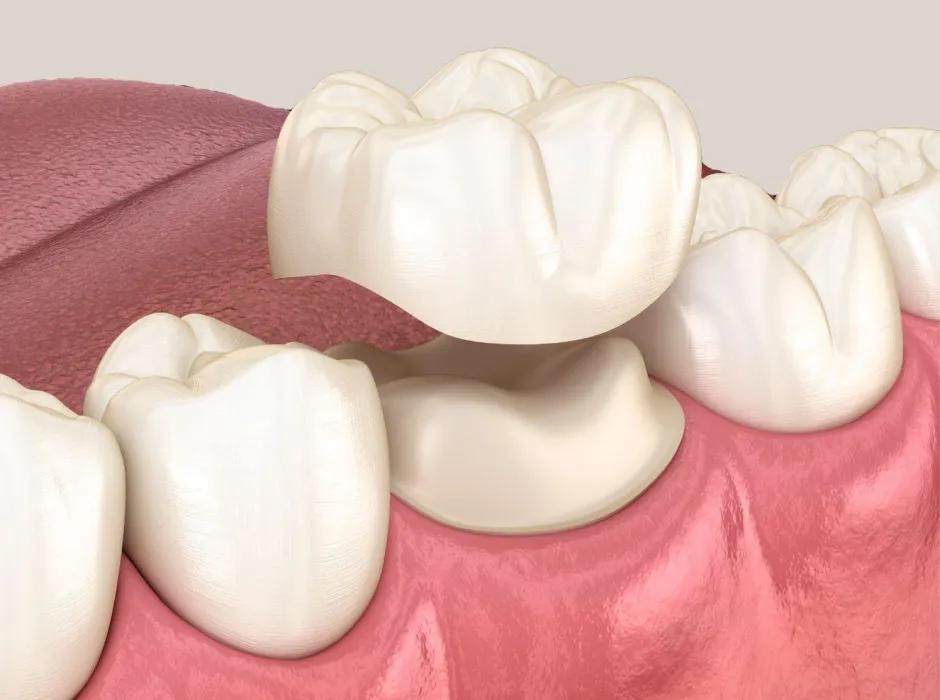
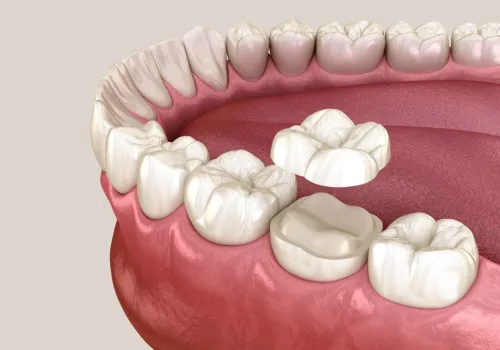
Dental crowns are indirect restorations. This means that unlike a direct filling, which is modelled and hardened directly in the tooth, dental crowns are made from 100% ceramic in the dental laboratory or with a computer-controlled milling machine. The production of a dental crown requires one to three sessions, depending on the procedure. The dental crown, whether milled in the dental practice or produced by the dental technician, is chemically bonded to the tooth using special luting cements. This bond is extremely stable and offers a durability of many decades. Scientific studies show that indirect restorations such as inlays, onlays, dental crowns and dental bridges have an average survival time of around 25 years. With good dental care, the durability of your dentures can even be extended to up to 40 years or more.
During the first treatment, the damaged tooth is precisely prepared by the dentist. For a dental crown, a conventional impression is taken with precision impression material in the classic method and a digital impression with an intraoral laser scanner in the newer digital method. For a ceramic dental crown, the treating dentist determines the tooth colour in order to select a suitable material in the dental laboratory. The impression is then sent to the laboratory where the restoration is produced.
Between sessions, a temporary denture made of special plastic protects the tooth so that normal chewing and eating are possible. It is recommended to avoid sticky foods and chewing gum, as the temporary denture may come loose in some cases.
In the dental laboratory, the impression is moulded with special hard plaster or 3D-printed to create an exact model of the jaw that shows the prepared tooth in detail. In the classic procedure, the dental crown is modelled out of wax and tested in an articulator, a device for simulating the jaw and chewing situation. The wax model is used to create a mould into which the material for gold crowns, composite metal-ceramic crowns or ceramic crowns is poured or injected under high pressure and temperature. In more modern procedures, the crown is precision-milled from a ceramic blank, sintered and then glaze-fired. The dental crown is then finished and polished by the dentist or dental technician.
After around 5-7 days, the finished dental crown is available in our dental practice using the classic method and is bonded to the tooth in a second session. In the case of direct in-house milled crowns, the crown is ready on the same day and can be inserted. The dentist applies luting cement to the dental crown and places it precisely. Excess cement is removed and the edges of the dental crown are polished to prevent gum inflammation. After grinding, you can chew, speak and swallow again without any problems.
A dental restoration is necessary if a tooth is so badly damaged that the remaining tooth structure is not sufficient for a plastic filling, an inlay or an onlay. In such cases, a ceramic dental crown is made to protect the tooth structure and preserve the tooth in the long term.
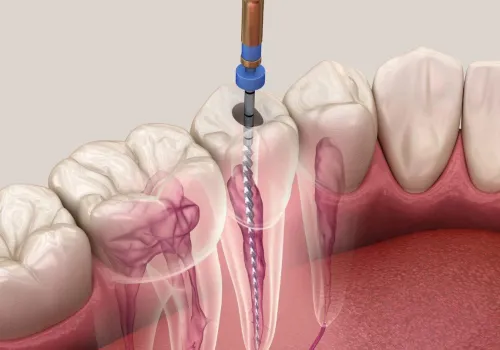
This often applies to patients who have undergone root canal treatment, as there is often very little healthy tooth structure left on these teeth. Dental crowns made of high-performance ceramics offer high aesthetics and exceptional stability to fulfil the requirements of function and appearance.
The artificial crown is a proven method of restoring teeth with a reliable treatment result and an excellent prognosis. A dental crown can significantly improve the durability and prognosis of root canal-treated teeth in particular.
As an alternative to the conventional method, in some cases a dental crown can be made directly in the dental practice in just one session. Instead of a conventional impression, a digital impression is taken with an intraoral scanner directly at the dental chair. Based on this scan, the dental crown is milled from high-performance ceramics in our CEREC milling machine and inserted either immediately or after a sinter firing. You receive your finished dental crown in the shortest possible time. This method saves the cost of a temporary dental crown and a second session, which can reduce your treatment costs.
Your dentist will be happy to clarify with you whether this treatment is possible in your case.
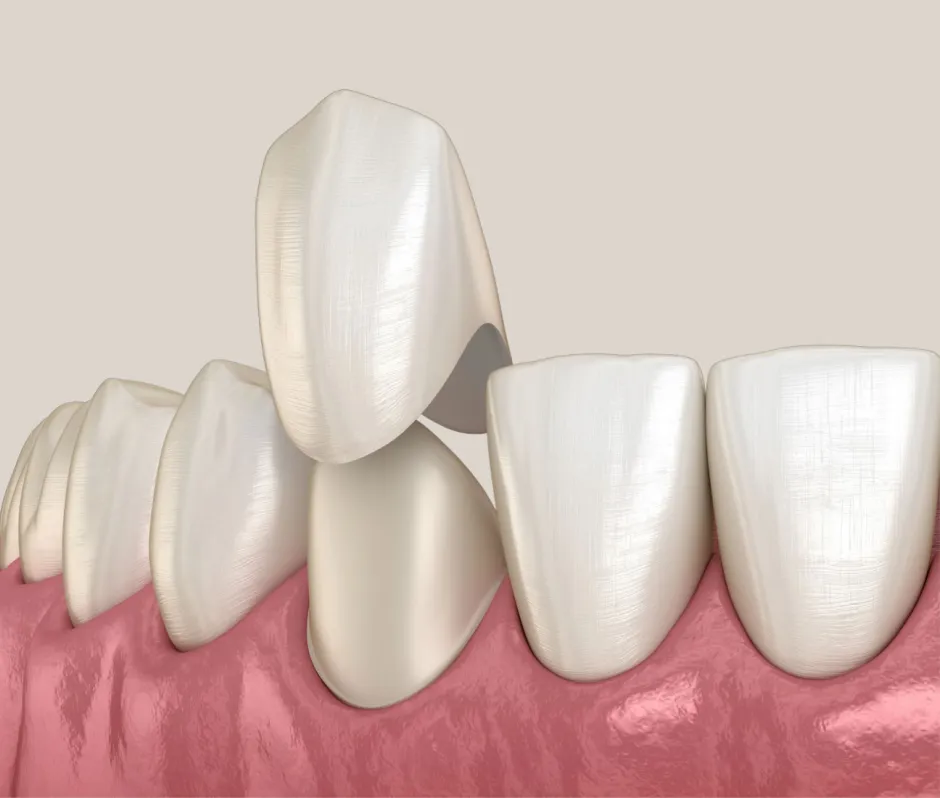
Probably the biggest difference between direct ceramic restorations, such as CEREC crowns, and lab-fabricated dental crowns is the time and cost involved.
In contrast to laboratory-made dental crowns, CEREC crowns can be made and milled directly on site. In such a case, the new crown can be inserted within 1-2 hours during a tooth replacement treatment.
The ceramic used is somewhat softer than a fired ceramic and is therefore not recommended for patients who tend to grind their teeth at night (bruxism) or clench their teeth. A restoration made of Emax or zirconium oxide ceramic is more suitable for these patients. These can also be fabricated directly at the centre, and it is generally possible to fabricate such an artificial crown in just one day. However, the treatment takes a little longer due to the additional firing time of the ceramic.
We recommend having the restorations made by a dental laboratory, especially in the aesthetically visible part or for larger restorations. The result of restorations (inlay/onlay/veneer/crown) made by a dental technician is often even better than that of directly milled restorations. The layered ceramics in particular look even more natural with these artificial dental crowns.
Your dentist will be happy to tell you which dental crown is suitable for your particular case.
Nowadays, there are many different types of dental crowns. Each type of crown fulfils a different function. A distinction is made between replacement crowns, protective crowns and anchoring crowns.
Replacement crowns are one of the most classic forms of dental prosthesis. They are used to replace the natural crown in the case of a large tooth defect.
Protective crowns are always used when the hard and firm enamel on the tooth has been lost. As a result, the dentine is exposed and unprotected. This is often caused by acids that erode the enamel. These acids are usually found in extremely acidic drinks such as fruit juice or lemonade, as well as in certain types of fruit. However, it is also possible that in some patients the enamel is not properly formed (amelogenesis imperfecta). Regardless of the reason for the loss of enamel, the aim of the protective crown is to protect the exposed, soft dentin again.
The purpose of an anchoring crown is to anchor a dental prosthesis. A dental prosthesis can be a bridge, for example. In this treatment, the affected tooth is replaced in its entirety and the two neighbouring teeth are crowned as bridge abutments.
The telescopic crown is a special type of anchoring crown. This special type of crown is used to attach a removable prosthesis to remaining teeth. The telescopic crown is also known as a double crown, which already gives an indication of the two-part crown construction. The inner crown, also known as the primary crown, is firmly attached to the ground tooth. The outer crown - the secondary crown - is then placed on the primary crown. This construction is only held in place by frictional resistance and can be removed again and again. The secondary crown is built into the removable prosthesis, which can be securely anchored to the remaining teeth.
Dental crowns are not only differentiated by their function, but also by size and expansion. A basic distinction is made between partial crowns and full crowns.
As the name suggests, a partial crown only covers part of the tooth. This type of crown is always used when the tooth is so damaged by caries that a filling is no longer sufficient, but not so much that a full crown is necessary. The partial crown can, for example, only cover the occlusal surface of a tooth. The transition between inlay and partial crown is very fluid.
In contrast to a partial crown, a full crown replaces the entire natural crown of the tooth. It acts like a cap that is placed on the underlying tooth stump. The aim of a full crown is to completely restore chewing function. A major advantage of this type of crown is that it looks very similar to a natural tooth.
The type of anchorage also offers several possibilities. Depending on how badly a tooth has been destroyed by caries or other bacteria, the crown can be attached to it in different ways. A distinction is made between cemented or bonded crowns and posterior teeth.
The question of adhesive or cement often plays a central role in fixed dentures. In most cases, crowns are attached to the natural tooth structure with special "adhesives". The type of bonding agent required depends on the material of the crown: metal crowns or veneer crowns are usually fixed with a special cement, whereas ceramic crowns are firmly bonded with a plastic adhesive.
A post tooth, as it is colloquially known, is a dental prosthesis that is anchored in the tooth using a post. These posts are always used when the tooth stump is so damaged that it can no longer provide sufficient support for the crown. Nowadays, the posts are mainly made of metal or glass fibre and are attached using plastic. However, this type of crown often requires additional treatment at the beginning. The affected tooth must first undergo root canal treatment. This treatment is often not necessary for extremely damaged teeth.
The question of the cost of dental crowns in Switzerland is one of the most frequently asked topics of all. Depending on the material, technology and dental practice, prices in Switzerland are typically between CHF 1,000 and CHF 2,500 per crown. You can find our prices on our price list. We will be happy to provide you with a free quote for multiple crowns. Digital CEREC crowns can sometimes be slightly cheaper, while customised ceramic crowns made in the laboratory are more expensive. According to current prices, crowns in Switzerland often start at around CHF 995, but can increase significantly depending on the amount of work involved.
Important influencing factors are the position of the tooth, the condition of the tooth and the material used. All-ceramic crowns and jacket crowns are usually more expensive than metal-based versions, but offer clear aesthetic advantages. As a rule, the costs are borne privately, as basic insurance only pays in exceptional cases. Supplementary insurance may cover part of the costs.
In the long term, crowns are an economically sensible investment, as they stabilise the tooth and prevent subsequent damage. A transparent cost estimate before the start of treatment is standard in Switzerland.
The durability of ceramic crowns and jacket crown s is a key decision factor. As a rule, high-quality crowns last 20 to 25 years or longer, and often significantly longer with optimal care. Modern materials such as zirconium oxide or lithium disilicate offer very high stability and resistance.
Factors such as oral hygiene, chewing load and regular check-ups are decisive. The precision of the fitting also plays a major role. In Switzerland, ceramic crowns are considered to be particularly durable, as they are made to fit precisely and have good marginal integrity.
A crown protects the tooth from further damage in the long term and can significantly extend its lifespan. It is important that patients pay attention to hard stresses such as teeth grinding. Overall, modern crowns are among the most durable solutions in dentistry.
The difference between a ceramic crown and a jacket crown is often asked by our patients. A jacket crown is basically a metal crown that is covered with a white ceramic. This type of crown is very expensive to produce and has been almost completely replaced by all-ceramic crowns. These no longer contain any metal but are made entirely of ceramic and are used successfully in the anterior region in particular, but also in the posterior region, as they have aesthetic advantages.
The choice depends on the aesthetic requirements and the load situation.
Fear of pain is one of the most frequently asked questions about dental crowns. Thanks to modern anaesthesia, the treatment is usually painless today. The tooth is locally anaesthetised so that there is no pain during the procedure.
After the treatment, there may be a slight sensitivity, especially when pressure or temperature changes occur. However, this discomfort is usually temporary and can be easily controlled.
In Switzerland, great importance is attached to gentle treatment. Modern techniques enable precise and comfortable treatment. Overall, the insertion of a crown is considered a well-tolerated routine procedure.
Treatment with a dental crown is carried out in several steps. First, the tooth is prepared and ground into shape. An impression or digital scan is then taken.
In the next step, the crown is made in the laboratory or directly in the practice. Modern technologies often enable treatment in just one session.
After fabrication, the crown is fitted and fixed in place. A precise fit is crucial for long-term success.
The entire process is now standardised and efficient. In Switzerland, particular emphasis is placed on quality and precision.
After a dental crown has been fitted, you can usually eat and chew normally without any problems. The crown completely restores chewing function and allows you to lead an unrestricted everyday life.
After treatment, you should be careful at first until the tooth has become accustomed to the new situation. After that, even harder foods are usually no problem.
Modern crowns are designed to optimally replace the natural tooth. Patients often report a very natural feeling when chewing.
A good fit is crucial to avoid any discomfort.
The aesthetics of dental crowns is a frequent topic of discussion. Modern ceramic crowns hardly discolour at all and retain their colour for many years. They reflect light in a similar way to natural teeth and therefore look very authentic.
Older metal-ceramic crowns, on the other hand, can develop visible edges over time. All-ceramic crowns avoid this problem and offer a highly aesthetic solution.
In Switzerland, great importance is attached to natural results. Individual colour matching ensures that the crown fits perfectly into the overall appearance.
As with any treatment, there are certain risks with dental crowns, but these are rare. These include hypersensitivity after treatment, inflammation of the dental nerve or problems with the fit.
An inaccurate fit can lead to chewing problems in the long term, which is why precision is crucial. In rare cases, a new treatment may be necessary.
In Switzerland, modern technologies and high quality standards ensure that these risks are minimised. Overall, dental crowns are considered a safe and proven treatment method.
The benefits, especially tooth preservation, clearly outweigh the potential risks.