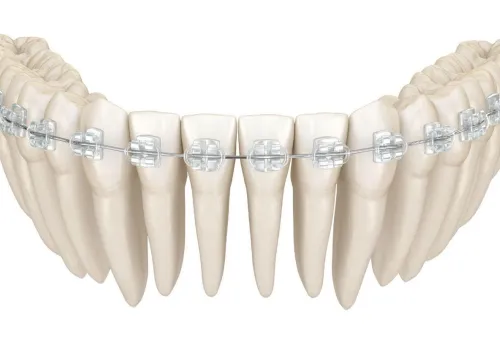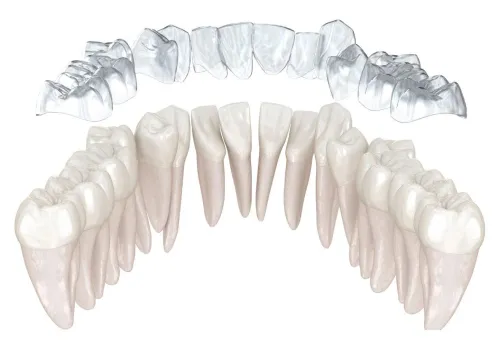
The solution for patients who do not want to wear visible braces. The WIN brackets are attached to the teeth from the inside and are therefore completely invisible.




The solution for patients who do not want to wear visible braces. The WIN brackets are attached to the teeth from the inside and are therefore completely invisible.
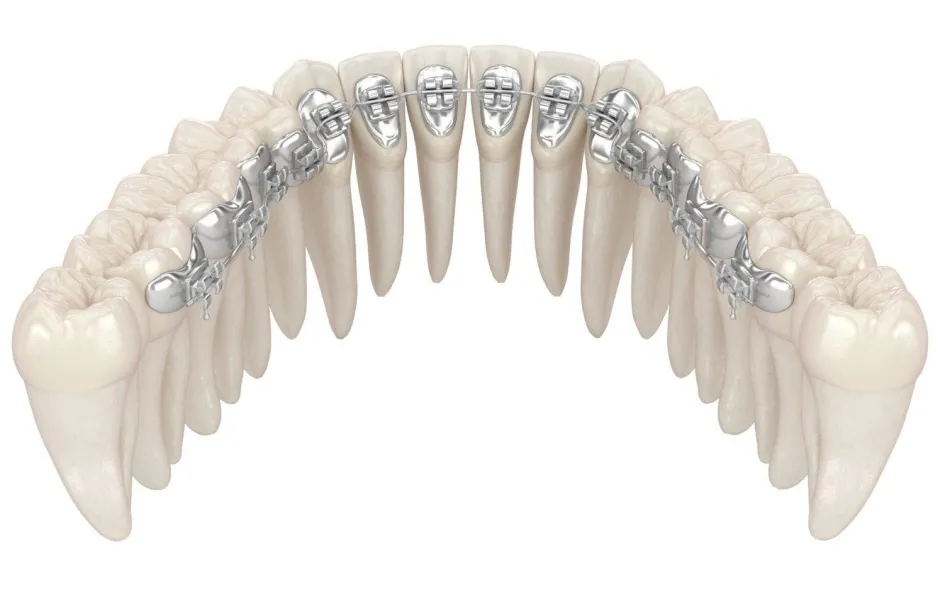
We use WIN for patients with the highest aesthetic demands. With WIN tooth alignment correction, neither brackets nor splints are visible from the outside. This method is the most aesthetically pleasing, but also the most cost-intensive orthodontic treatment.
With WIN teeth alignment correction, the brackets are not bonded to the teeth from the outside as usual, but from the inside. This makes them completely invisible to outsiders. This innovative method is made possible by computer-aided planning and a very precise cementation process.
The costs for correcting tooth alignment with WIN are very individual and depend on the specific task and the patient's situation.
We would be happy to advise you personally on the subject of tooth position correction during a brief, free consultation in our practice.
WIN brackets and Incognito brackets are two of the best-known systems for lingual orthodontics - i.e. braces that are attached to the inside of the teeth and are therefore completely invisible from the outside. Both systems pursue the same goal, but differ in some technical details.
WIN stands for "What Is New" and is a German system developed by the company DW Lingual Systems. The WIN brackets are manufactured individually for each patient and are characterised by their particularly flat, ergonomic design. This makes them more comfortable in the mouth and reduces the familiarisation time for the tongue. The brackets are precisely customised to each individual tooth using a computer-aided planning process.
Incognito is a system from 3M and is also a fully customised lingual bracket system. Here too, the brackets are manufactured using CAD/CAM technology on the basis of a digital 3D impression. Incognito is one of the most widely used lingual bracket systems in the world and has a long clinical history.
The differences between WIN and Incognito are often subtle in everyday practice: they relate to the exact bracket geometry, the archwire technique and the specific treatment indications for which the respective system is particularly well suited. Both systems enable the treatment of mild to complex malocclusions.
Which system is right for you depends on your individual dental situation, the preferences of the orthodontist treating you and your specific treatment goals. In a personal consultation, your orthodontist can work with you to determine the optimum solution for your invisible tooth correction.
The treatment process with WIN brackets is precisely structured and begins long before the brackets are actually inserted. The procedure is more complex than with conventional external braces, as each individual bracket is customised - but the result is absolutely tailor-made.
The first step is a thorough orthodontic examination: the orthodontist analyses the current position of the teeth, takes photos, x-rays and a precise digital 3D impression of the teeth. On this basis, a customised treatment plan is created on the computer, which determines exactly how each tooth should be moved.
The data obtained is sent to the dental laboratory, where the WIN brackets are customised. Each individual bracket is moulded so that it fits exactly on the inner surface of the respective tooth. This step takes several weeks, depending on the laboratory and capacity utilisation.
As soon as the brackets are ready, they are precisely and quickly bonded to the inner surfaces of the teeth at the insertion appointment using a customised transfer tray. The orthodontist connects the brackets with a special arch wire that guides the teeth in the desired direction.
Regular check-ups are necessary every 4 to 8 weeks. At these appointments, the archwires are adjusted or replaced in order to continuously advance tooth movement. The total duration of treatment is between 12 and 30 months, depending on the severity of the misalignment. Once active treatment has been completed, the retention phase follows, in which a retainer secures the achieved tooth position in the long term.
The question of whether lingual brackets are suitable for everyone is justified - because despite their many advantages, there are certain requirements and limitations that need to be clarified in advance.
In principle, WIN brackets and Incognito brackets can be used for a wide range of malocclusions: from slight crowding and gaps to more complex bite problems. The indications for treatment are similarly broad as for conventional external braces, so that many patients who require tooth correction are in principle suitable for lingual brackets.
However, there are situations in which lingual brackets are not the first choice: In patients with very small teeth, the inner surface may not provide enough adhesive surface for the brackets, making them difficult to attach. Problems can also occur with certain deep bite constellations, as the lower incisors can hit the upper inner brackets when biting down.
Patients with poor oral hygiene or a high susceptibility to caries should optimise their oral hygiene before starting lingual treatment, as cleaning the inner surfaces with brackets is more demanding than with other systems.
Lingual brackets are also possible for children and adolescents, but are less common - partly because of the higher costs and partly because the familiarisation phase can be more challenging for younger patients. In most cases, classic external braces or aligners are preferred for children.
The most reliable assessment is a personal consultation with an orthodontist, who will assess your individual dental situation and show you clearly which system is best suited to your needs and anatomy.
Dental care with lingual brackets is one of the most frequently asked questions by patients who are interested in WIN or Incognito brackets. And rightly so: good oral hygiene is crucial throughout the treatment period in order to prevent tooth decay, gingivitis and permanent damage to the enamel.
Basically, cleaning with lingual brackets is more challenging than without brackets, but with the right tools and a little practice, it can be easily integrated into everyday life. As the brackets sit on the inside of the tooth, they are invisible from the outside - but the inner surfaces of the teeth must now be cleaned particularly carefully.
We recommend brushing your teeth with an electric toothbrush, as this cleans even hard-to-reach areas more effectively than a manual brush. In addition, interdental brushes in various sizes should be used to clean the spaces between the teeth and the areas around the brackets.
Dental floss can also be used, but is somewhat more difficult to handle with brackets - so-called floss threaders or special orthodontic dental floss make it easier to guide the floss under the archwire. Water flossers (oral irrigators) are also a useful supplementary tool that can flush food debris and bacteria from hard-to-reach areas.
The frequency of brushing should be after each main meal, but at least twice a day. Your orthodontist or dental hygienist will provide you with detailed oral hygiene instructions at the start of treatment that are specifically tailored to the lingual brackets. Regular professional dental cleanings every three to four months are also strongly recommended during treatment.
The familiarisation period for lingual bra ckets is an issue that concerns many prospective patients - and rightly so, because the first few weeks after the brackets are fitted can be a challenge. At the same time, experience shows that most patients get used to the new feeling surprisingly quickly.
The adjustment phase is most intense in the first one to two weeks after the WIN or Incognito brackets have been fitted. The tongue is used to touching the inner surfaces of the teeth unhindered - with brackets on these surfaces, it now has to reorient itself. Initially, this often leads to a change in the speech pattern: certain sounds - especially S-sounds and sibilants - temporarily sound slightly slurred or with a slight lisp.
This temporary lisp is completely normal and not a sign of maladaptation. With targeted speech exercises - such as consciously speaking difficult words slowly - adaptation can be accelerated. Most patients speak completely normally again after two to four weeks.
The general feeling in the mouth also changes: at first, the brackets seem unusually large and disturbing. However, the modern WIN brackets are particularly flat and ergonomically designed, which makes familiarisation much easier than with older lingual systems.
Slight feelings of pressure and tongue irritation are also common in the initial phase and usually subside within the first week. Dental wax can be applied to troublesome areas for a short time to alleviate irritation. After around four to six weeks, most patients report that they hardly notice the brackets any more.
The question of what you can eat with lingual brackets is particularly important for patients who want to know what restrictions they will face in everyday life. In principle, similar dietary recommendations apply for lingual brackets as for conventional external braces - however, there are some additional aspects to consider.
Very hard foods should be avoided during the entire treatment period: these include whole nuts, hard bread crusts, cracked almonds, ice cubes and hard sweets. They can damage the brackets or detach them from the tooth, requiring an unscheduled repair appointment.
Sticky foods are also problematic: caramel, gummy bears, chewy dried fruit, chewing gum and sticky sweets can wrap around the brackets and wires and bend or detach them.
Hard raw vegetables and fruit such as whole carrots, apples or pears should be cut into small pieces instead of biting them off directly. This also applies to all types of brackets - lingual and buccal.
Very strongly colouring foods such as coffee, tea, red wine or curry are less problematic for the appearance of lingual brackets (as the brackets are invisible), but can affect the adhesive bond and the bracket material in the long term.
However, all soft, normal foods are permitted: Pasta, rice, soft meat, fish, yoghurt, soups, cooked vegetables and bread without a hard crust. With a little adjustment, the diet during WIN or Incognito treatment is well suited to everyday life - and after treatment you can enjoy everything again without restrictions.
The duration of treatment with WIN or Incognito brackets is one of the most important questions for patients considering lingual tooth correction. Unfortunately, there is no one-size-fits-all answer - the duration depends heavily on the individual findings, the severity of the malocclusion and the patient's biological response.
As a rough guide, the treatment time with lingual brackets is between 12 and 30 months for most patients. Slight misalignments such as minor crowding or small gaps between the teeth can often be corrected in 12 to 18 months. More complex treatments - such as those for pronounced bite problems or severe tooth displacement - can take 24 to 30 months or even longer in exceptional cases.
One advantage of lingual systems such as WIN and Incognito is that they allow more efficient tooth movement than conventional external braces in some cases due to their customised production and precise force transmission. This can shorten the treatment time in suitable cases.
The patient's co-operation is also decisive for the duration of treatment: Those who regularly attend check-up appointments, consistently maintain their oral hygiene and do not damage brackets with unsuitable food make a significant contribution to ensuring that treatment proceeds according to plan and efficiently.
Once the active treatment phase has been completed, a retention phase is mandatory, in which a bonded or removable retainer stabilises the new tooth positions. This phase is permanent and is often underestimated - but it is crucial for maintaining the results achieved in the long term.
The costs for lingual brackets such as WIN brackets or Incognito brackets in Switzerland are the highest compared to other orthodontic treatment methods. This is due to the complex individual production of each individual bracket and the greater amount of time required by the orthodontist to plan and carry out the treatment.
As a rough guide, the total cost of lingual bracket treatment in Switzerland is typically between CHF 7,000 and CHF 15,000 or more, depending on the complexity and duration of treatment. For very extensive treatments with a long duration, the costs can also be higher. You can find more information about our orthodontic treatment options on our price list.
In comparison: Classic external braces (conventional brackets) generally cost between CHF 4,000 and CHF 12,000 in Switzerland, while Invisalign costs between CHF 3,500 and CHF 10,000. WIN and Incognito are therefore the most cost-intensive options - but also offer the highest aesthetic standard, as the brackets are never visible from the outside.
The costs are made up of several components: the laboratory costs for the customised bracket fabrication, the orthodontic fee for planning, insertion and all check-up appointments as well as the retainer after the treatment has been completed.
In Switzerland, compulsory health insurance (KVG) does not generally cover orthodontic treatment - except for certain clearly defined medical indications. Depending on the policy, supplementary insurance may cover part of the costs. It is therefore worth asking your health insurance provider in advance. We will be happy to provide you with a transparent, personalised quote after a free initial consultation.
A detached bracket is not uncommon when wearing braces - and with lingual brackets such as WIN or Incognito, this is just as possible as with conventional external braces. It is important to know: A detached bracket is not an emergency in most cases, but should be treated promptly by an orthodontist.
If a WIN bracket or Incognito bracket comes loose, it usually remains attached to the archwire at first, as it is still held in position by the wire. In this case, you should not remove the bracket yourself or try to reattach it. Contact your orthodontic practice and describe the situation - a prompt repair appointment will usually be arranged.
If the bracket has completely fallen off and you can no longer find it, this is not a problem: it will be replaced with a new one at the repair appointment. If possible, keep any bracket you find and bring it with you to the appointment.
A detached bracket means that the affected tooth is temporarily no longer receiving corrective force. If the repair appointment takes place promptly, this usually has no significant effect on the overall treatment time. However, if the repair is delayed for longer, the tooth may drift back into its original position, which can extend the treatment time.
To avoid loosening of brackets, you should consistently avoid hard and sticky foods and wear a mouthguard when playing sports. If bracket problems recur frequently, it is worth talking to your orthodontist about possible causes and solutions.
The retention phase after lingual treatment with WIN or Incognito brackets is just as important a step as the active treatment itself - and its importance is underestimated by many patients. This is because teeth have a natural tendency to return to their original position after orthodontic treatment. This phenomenon is known as recurrence and can be prevented by consistent retention.
After removing the WIN or Incognito brackets, a so-called retainer is therefore inserted. A bonded retainer is most commonly used: a thin wire that is bonded to the inner surfaces of the front teeth and holds the teeth permanently in their new position. It is completely invisible as it is attached to the inside of the tooth, just like the lingual brackets.
The fixed retainer is very inconspicuous in everyday life and requires no active co-operation from the patient. It is usually worn permanently - at least for several years, and often for life. Regular check-ups by the dentist or orthodontist are important to ensure that the retainer is firmly in place and no inflammation of the gums occurs.
A removable retention splint, which is worn at night, can also be recommended. This offers additional security, especially in the first few months after active treatment.
Dental care with a fixed retainer requires a little more care: floss flossers or a water flosser can be used to clean the areas under the retainer wire. Regular professional dental cleanings are also recommended. If you take the retention phase seriously, you will ensure a beautiful and straight smile in the long term - as a reward for your patience during treatment.