CD Logo2 white
Slide vollnarkose

Tooth surgery General anaesthesia Treatment while you sleep

If dental treatment under local anaesthetic is not possible and other sedation options are also ruled out, we carry out specific treatments under general anaesthetic with our anaesthetic team.
We would like to briefly introduce you to the options here and try to explain the subject of general anaesthesia at the dentist in more detail.

Vollnarkose 2

When

General anaesthesia at the dentist (general anaesthesia) is not used routinely, but only for clear medical or psychological indications. The aim is to enable treatment that would be unsafe or unreasonable under local anaesthesia or sedation. Here is an overview of the most important indications:

1. pronounced dental anxiety (dental phobia)

Those affected experience extreme stress reactions at the mere thought of treatment. In such cases, normal treatment is often not possible.

2. extensive or complex procedures

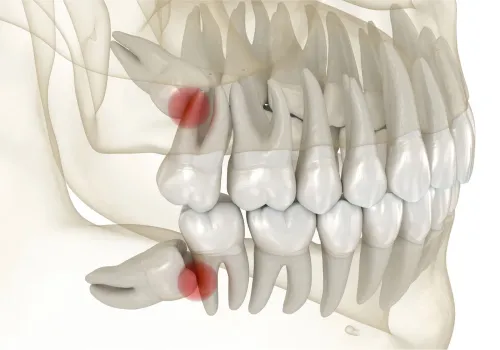
General anaesthesia can be useful for major surgical procedures, such as multiple tooth extractions, complicated wisdom tooth operations or extensive implant restorations. It allows several treatments to be carried out in one session, which saves time and reduces stress.

3. lack of co-operation

General anaesthesia is often necessary for patients who are unable to cooperate sufficiently. These include: Infants, people with mental or physical disabilities, patients with neurological conditions

4. strong gag reflex (gag reflex)

If a gag reflex cannot be controlled by other methods, general anaesthesia offers a solution to be able to work precisely and without interruption.

5 Allergies or intolerances to local anaesthetics

In rare cases, patients are allergic to local anaesthetics. A general anaesthetic may then be necessary in order to be able to carry out the treatment at all.

6. serious medical or mental illnesses

Patients with certain illnesses, e.g. severe anxiety disorders, trauma or certain neurological disorders, benefit from treatment under general anaesthetic.

How

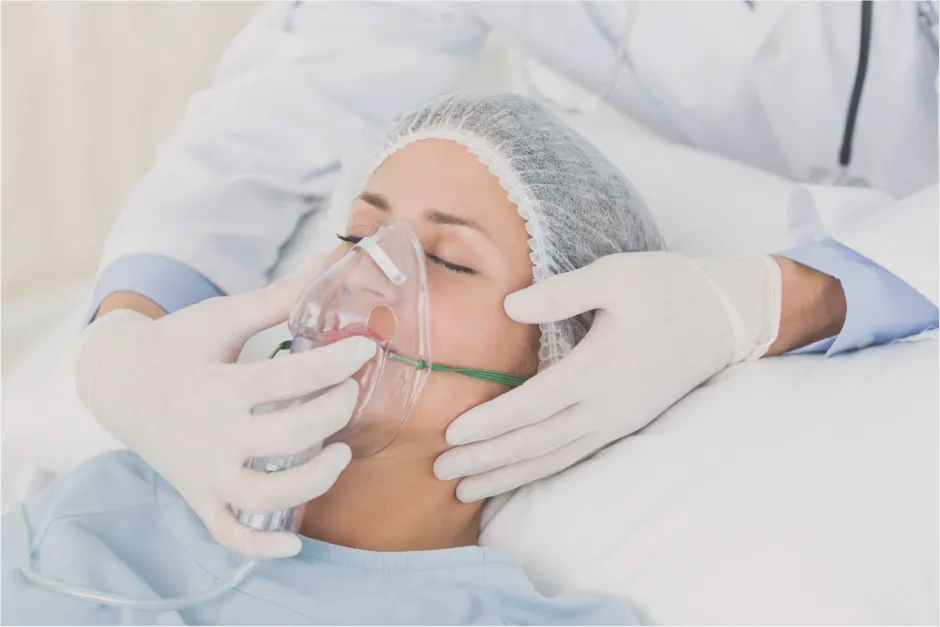
With general an aesthesia (also known as intubation anaesthesia or general anaesthesia) , the patient is asleep during the entire procedure and only wakes up after the operation has been successfully completed.

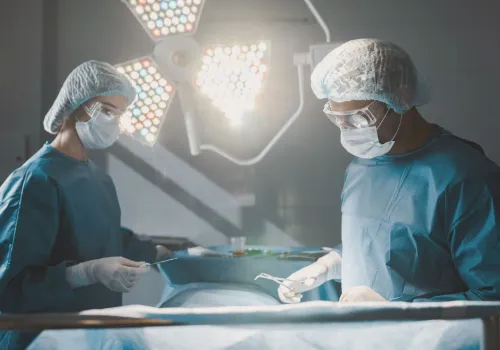
For general anaesthesia, we work together with our experienced anaesthesia team, who carry out the anaesthesia in the dedicated procedure rooms in our practice.

In order to ensure that everything runs as smoothly as possible, the anaesthetist will conduct a pre-anaesthetic consultation with you before the day of the operation. During this consultation, which usually only lasts 30 minutes, possible anaesthetic risks due to illnesses, genetic factors or medication taken regularly are determined.

If there are no health reasons against a general anaesthetic, our reception team will accompany you until the day of your anaesthetic.

On the day of your operation, you can rest in our recovery room after the procedure and sleep in until you feel fit again.

Dental treatment under general anaesthesia

Dental anxiety can lead to neglecting visits to the dentist, which can cause disease to progress over a long period of time and cause significant damage. Many people experience discomfort at the dentist, and for some this sinking feeling in the stomach even develops into outright panic.

For patients with dental anxiety, we offer special treatment concepts that aim to make the treatment more pleasant. A trusting relationship between you and your dentist, in-depth discussions and holistic care are particularly important.

However, in cases of severe dental anxiety, such anxiety-relieving discussions are often not enough. In this case, we offer treatment under general anaesthetic, which can be particularly helpful when it comes to major procedures.

Other alternatives to make a visit to the dentist easier for patients with dental anxiety are nitrous oxide or hypnosis.

Dental surgery under general anaesthesia

We also offer general anaesthesia on request for patients who do not suffer from dental anxiety if major surgical procedures are required.

Such procedures include, for example, the removal of several wisdom teeth or the insertion of several implants with simultaneous bone augmentation.

In some cases, we can also place fillings or crowns under general anaesthetic. As these treatments are often very lengthy, they can incur high costs. It is also advantageous for the success of the treatment if you are responsive during the procedure, as this allows the height of a filling or crown to be checked by biting.

For root canal or gum treatments, methods such as nitrous oxide or other sedatives are often preferable to general anaesthesia.

Risks

The risks of general anaesthesia are very low thanks to medical advances in anaesthetic medicine in recent decades. Nevertheless, we only use general anaesthesia when there is really no other option available. Discomfort that may occur immediately after treatment usually passes quickly. These include nausea, vomiting, difficulty swallowing, vein irritation and haematoma.

You should talk to the dentist about any worries and fears you may have in the preparatory consultation to avoid unnecessary stress before the procedure.

Costs

The cost of a general anaesthetic depends heavily on how long the procedure lasts and which procedure is planned. In general, you can expect to pay around CHF 600-1000 per hour of anaesthesia. We will be happy to provide you with a free, personalised quote.

FAQ: The most frequently asked questions about general anaesthesia at the dentist

Yes, at our dental competence centre in Oerlikon we regularly carry out dental treatment under general anaesthetic.

At our Bahnhof-Oerlikon location, we offer

  • Dental restoration under general anaesthetic
  • Wisdom tooth removal under general anaesthetic
  • Twilight sedation
  • Nitrous oxide sedation

We also offer general anaesthetic dental treatment for the districts of Zurich Seebach, Saatlen, Affoltern and Glattpark in our easily accessible centre in the Franklinturm at Oerlikon railway station.

CITYDENTAL Oerlikon
Franklinturm 15th floor
Hofwiesenstrasse 349
8050 Zurich

Here you can make an appointment for a consultation for dental treatment under general anaesthetic at CITYDENTAL:

Oerlikon location: 044 322 54 54

Online appointment booking via our website.

Our experienced anaesthesia team will ensure that you fall asleep gently under general anaesthesia. We look forward to seeing you.

Yes, at our dental competence centre in Dübendorf / Stettbach we regularly carry out dental treatment under general anaesthetic.

At our Bahnhof-Stettbach location we offer

  • Dental restoration under general anaesthetic
  • Wisdom tooth removal under general anaesthetic
  • Twilight sedation
  • Nitrous oxide sedation

We also offer general anaesthetic dental treatment for the districts of Dübendorf, Schwamendingen, Wallisellen and Gockhausen in our easily accessible centre in the Franklinturm at Oerlikon railway station.

CITYDENTAL Stettbach
directly above the MIGROS
On the outskirts of town 5
8600 Dübendorf

Here you can make an appointment for a consultation for dental treatment under general anaesthetic at CITYDENTAL:

Stettbach/Dübendorf location: 044 215 51 51

Online appointment booking via our website.

Our experienced anaesthesia team will ensure that you fall asleep gently under general anaesthesia. We look forward to seeing you.

Proper preparation for a general anaesthetic at the dentist is crucial for a safe and smooth procedure. If you follow the anaesthetic team's instructions carefully, you minimise risks and contribute to an optimal result.

The most important preparation rule is to fast: before a general anaesthetic, you must generally refrain from eating solid food for at least six hours before the procedure and from drinking clear liquids for at least two to four hours. The reason is medically significant: under anaesthesia, the protective reflexes are switched off. If stomach contents enter the airways (aspiration), this can lead to life-threatening complications. The anaesthetist will give you the exact fasting times for your situation in the preliminary consultation.

Medication must be fully disclosed during the pre-anaesthetic consultation: Certain medications - in particular blood thinners, antidepressants, heart medication, thyroid medication and diabetes medication - can affect the anaesthetic or blood clotting. The anaesthetist will decide which medication should be taken or discontinued on the day of the operation.

Alcohol and smoking should be avoided in the 24 hours before the operation: Alcohol affects the need for anaesthetics and increases the risk of bleeding, nicotine constricts the airways and can make anaesthesia more difficult.

You should not wear contact lenses, jewellery, nail varnish or make-up on the day of the general anaesthetic - these can make monitoring (e.g. oxygen saturation at the fingertips) or medical assessment more difficult.

Organise a companion in good time to take you home after the procedure and ideally stay with you for the first few hours. You must not drive or use public transport alone after a general anaesthetic - your ability to react will be impaired for several hours after you wake up.

The question of how long it takes to recover after a general anaesthetic at the dentist is particularly relevant for many patients - especially those who have a busy work or family life and want to know how much time they need to allow.

Immediately after waking up from a general anaesthetic, most patients are initially in the recovery room, where they can rest under the observation of the medical team. Awakening from a modern short anaesthetic is usually gentle: most patients are oriented enough to know their name and location within 15 to 30 minutes. However, it can still take one to two hours before you feel fit enough to leave the practice.

In the first six to eight hours after the general anaesthetic, tiredness, slight drowsiness and a temporary slowing of reaction times are normal. For this reason, driving, operating machinery or making important decisions should be avoided at all costs during this phase.

Most patients feel much better the day after the procedure and can resume simple everyday activities. Office work without major physical or mental strain is often possible the very next day. More physically demanding work should be paused for two to three days.

Important to note: The recovery time depends heavily on the duration and extent of the procedure. If you receive a short anaesthetic for a single treatment, you will recover much faster than someone who has undergone a comprehensive dental restoration lasting several hours under general anaesthetic. Do not plan any important professional or private commitments for the day of the anaesthetic and at least the following day.

General anaesthesia at the dentist for children is a topic that parents naturally approach with particular care and concern. The reassuring news is that modern paediatric anaesthesia is very safe in healthy children and in experienced hands - and in certain situations is the most humane and sensible solution.

Indications for a general anaesthetic for children at the dentist are pronounced dental anxiety that makes cooperation impossible; very young age where local anaesthesia is not sufficiently tolerated; children with mental or physical disabilities where treatment without anaesthesia is simply not feasible; or when very extensive restorations are required that would take several hours and a child understandably cannot keep awake.

Paediatric anaesthesia differs from anaesthesia in adults in important ways: The anaesthetics used and their dosages are adapted to the child's age, and an experienced paediatric anaesthetist supervises the entire procedure. Modern anaesthetics are broken down by the body so quickly that children wake up quickly after the procedure.

The most frequent question from parents concerns the possible long-term effects of anaesthesia on the child's brain: Scientific studies have shown that, according to current knowledge, a single short anaesthetic in childhood does not cause any relevant long-term damage to the developing brain. There is still a need for research into very long or frequently repeated anaesthesia in the first years of life - but this does not affect the vast majority of dental anaesthesia in children.

It is important that the procedure is carried out in a specialised practice with appropriate experience in paediatric anaesthesia and the necessary monitoring equipment. A detailed discussion with parents beforehand clarifies any concerns and gives the child and parents the necessary reassurance.

The question of whether general an aesthesia at the dentist is covered by health insurance in Switzerland is one that concerns many patients - especially as the costs of anaesthesia can be considerable. The answer is differentiated and depends on the indication, the type of procedure and the insurance model.

Compulsory basic insurance (KVG) does not generally cover anaesthesia costs in the dental sector, as dental treatment in Switzerland is excluded from the KVG. There are exceptions for clearly defined medical indications: If the dental treatment is due to a serious general illness for which the treatment is medically necessary and is defined in the KVG benefits catalogue, anaesthesia costs may also be covered under certain circumstances. The same applies if a general anaesthetic is medically indicated due to a recognised mental illness (e.g. severe dental phobia with a psychiatric diagnosis) - however, this must be clarified and documented on an individual basis.

In the case of children with disabilities or certain developmental disorders, disability insurance (IV) may be able to cover benefits - including the cost of the anaesthetic. Parents of disabled children should clarify this with the IV and the health insurance company in advance.

Depending on the policy,supplementary dental insurance may cover part of the dental anaesthetic costs. As the scope of cover varies greatly, it is worth checking your own policy carefully and obtaining written authorisation from the health insurance company before the procedure.

Accident insurance (UVG) covers treatment costs - including anaesthesia - if the dental procedure is the result of an insured accident.

As the anaesthetic costs must be borne privately in most cases, it is advisable to obtain a detailed cost estimate before the procedure and to fully examine all options for cost coverage.

Comparing general anaesthesia, sedation and nitrous oxide at the dentist is a common question from patients who want a more comfortable dental treatment but are unsure which option is right for them. The three methods differ fundamentally in terms of the depth of the change in consciousness, area of application and risk profile.

Nitrous oxide (laughing gas sedation) is the lightest form of sedation. The gas is inhaled through a nasal mask and causes deep relaxation and anxiety reduction while the patient remains fully conscious. You can speak, co-operate and breathe completely independently. Nitrous oxide works quickly and subsides just as quickly - most patients are fully fit again a few minutes after the end of administration. It is particularly suitable for mild to moderate dental anxiety and shorter procedures. Driving licence is usually restored after just 30 minutes.

Twilight sleep (intravenous sedation) is a deeper form of altering consciousness: a sedative or sleeping pill (often midazolam or propofol) is administered via a vein. The patient is in a sleep-like state, but can still respond to speech. They breathe on their own but have no memory of the procedure. Sedation is suitable for moderate to severe dental anxiety and moderate procedures. An accompanying person is required and driving is prohibited for the rest of the day.

General anaesthesia is the deepest level: the patient is completely asleep, has no consciousness, feels no pain and has no memory. Breathing is controlled or intensively monitored. It requires an anaesthetist, involves more effort and is indicated for complex or extensive procedures, lack of cooperation or severe phobias. Recovery takes longer than with sedation or nitrous oxide.

Your treatment team will advise you on which option is best suited to your individual situation.

The pre-anaesthesia consultation prior to general dental anaesthesia is an essential step that not only serves to ensure safety, but also helps to reduce anxiety and clarify any unanswered questions. Many patients ask themselves what to expect during this consultation and what they should bring or prepare.

The pre-anaesthesia consultation - also known as the pre-medication consultation - usually takes place a few days to a week before the procedure and usually lasts 30 to 60 minutes. It is conducted by the anaesthetist, who forms the treatment team together with the dentist.

The following aspects are systematically recorded during the consultation: Your full medical history - previous illnesses, operations, anaesthesia and reactions to them; current medication (list preparations, dosages and times taken in full); known allergies or intolerances to medication, latex or other substances; lifestyle habits such as smoking and alcohol consumption; family history of anaesthetic problems (e.g. malignant hyperthermia e.g. malignant hyperthermia - a rare but life-threatening reaction to certain anaesthetics) and current general health (blood pressure, cardiovascular system, respiratory system).

Based on this information, the anaesthetist assesses the individual anaesthetic risk and determines which anaesthetic agents will be used and how monitoring will be organised during the procedure.

What should you bring with you? A list of your current medication, previous anaesthesia records if available and - if relevant - current laboratory values or medical reports. Use the consultation to openly address any questions and concerns - the anaesthetist is experienced in allaying fears and providing understandable answers.

The question of whether you can drive home alone after a general anaesthetic at the dentist is sometimes underestimated - and the answer is clear: no, definitely not.

A general anaesthetic impairs your ability to react, concentrate and cognitive performance for several hours after waking up. Even if you subjectively feel fit and clear again, your fine motor skills, judgement and reaction time may still be significantly impaired - without you even noticing. This makes driving a vehicle in this condition dangerous for you and other road users.

This restriction does not only apply to driving: Operating heavy machinery, making important decisions (e.g. signing contracts) and consuming alcohol should also be strictly avoided on the day of anaesthesia.

What does this mean in practice? You must be accompanied by someone who will collect you from the practice after the procedure and accompany you home safely. Ideally, this person should also stay with you for the first few hours after you return home, as in rare cases after-effects such as nausea, dizziness or disorientation may occur.

If no accompanying person is available, you can use a taxi or a transport service - but even then someone should be waiting for you at home. Using public transport alone after a general anaesthetic is also not recommended, as there is a risk that you will feel unwell in the vehicle or get into a safety-critical state.

Organise your journey home carefully in advance - this is one of the most important preparations for a general dental anaesthetic.

If you want to avoid a general anaesthetic, you are right to ask yourself what alternatives to general anaesthesia are available for anxious patients at the dentist. The good news is that there are a number of graded methods that can be used depending on the severity of the anxiety and the type of procedure.

Nitrous oxide (laughing gas sedation) is the gentlest option. The gas is inhaled through a nasal mask and causes deep relaxation and a pleasant feeling without switching off consciousness. It is ideal for patients with mild to moderate dental anxiety who can co-operate but need support during treatment. There are no after-effects, no need to fast and no restrictions on travelling home.

Twilight sleep (intravenous sedation with midazolam or propofol) is the next stage: the patient sleeps peacefully, has no memory of the procedure and co-operates with simple instructions. It is a very effective method for moderate to severe dental anxiety and medium-sized procedures - with significantly less effort than general anaesthesia.

Hypnosis is a lesser known but effective method for suitable patients. A trained dentist or hypnotherapist puts the patient into a deep state of relaxation in which pain and anxiety reactions are significantly reduced. Not every patient is receptive to hypnosis, but for those for whom it works, it can be a very pleasant and drug-free alternative.

Psychological preparation and cognitive behavioural therapy can help patients with dental phobia to overcome their fear in the long term - making normal treatments without sedation possible in the future. This approach requires time and commitment, but is the most sustainable solution.

We will be happy to advise you individually on which option is best suited to your situation - because there is a customised solution for every anxious patient.

The question of the risks of general anaesthesia at the dentist is one of the most serious and at the same time one of the most misunderstood. Many people have deep fears about general anaesthesia - and while these fears are understandable, they are often greatly exaggerated in this day and age.

Modern anaesthesiology has made enormous progress in recent decades. The risk of dying or suffering serious complications from a general anaesthetic in a dental practice is extremely low in healthy adults: it is estimated that the rate of anaesthetic-related deaths is now less than 1 in 100,000 anaesthetics - and many of these rare cases involve patients with serious pre-existing conditions that increase the risk.

The most common side effects of general anaesthesia are harmless and temporary: nausea and vomiting (in around 20-30% of patients), sore throat due to the breathing tube (intubation), drowsiness and tiredness in the first few hours, muscle pain and slight memory lapses. These symptoms usually disappear completely within 24 to 48 hours.

The rarer but more significant risks include: allergic reactions to anaesthetics, problems with ventilation (if intubation is difficult), temporary fluctuations in blood pressure and - very rarely - the aforementioned malignant hyperthermia, a genetic overreaction to certain anaesthetic gases.

The risk is significantly influenced by three factors: the patient's state of health, the experience of the anaesthesia team and the quality of monitoring during the procedure. A careful preliminary examination and the anaesthetic consultation serve precisely to identify and minimise individual risks.

Conclusion: In experienced hands, general anaesthesia at the dentist is now a safe and easily controllable method - with a risk profile that is far below the fears of many patients. Discuss your concerns openly during the preliminary consultation - the anaesthesia team will answer all your questions transparently and in detail.