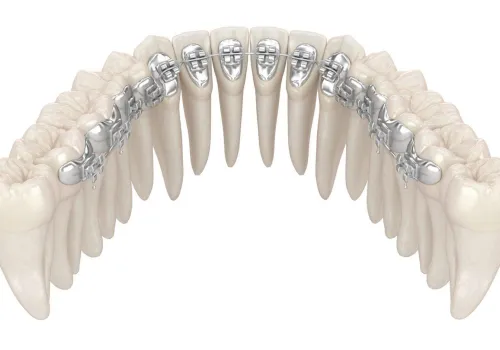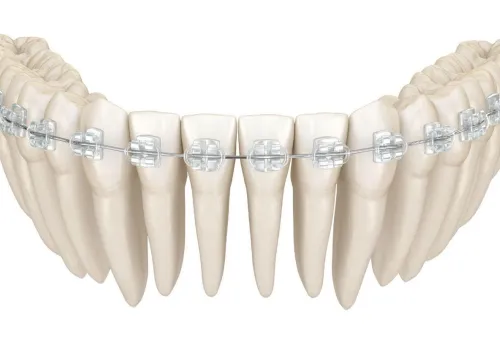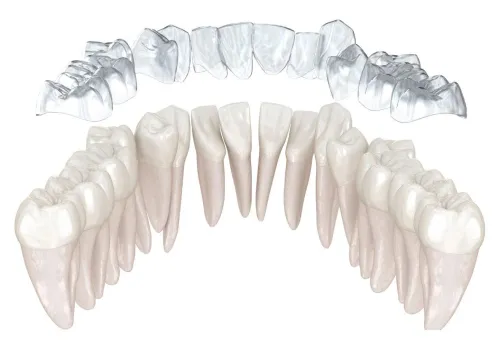
The simple removable solution for correcting misaligned teeth in children. Our technicians are also happy to make the braces in our little patients' favourite colour.


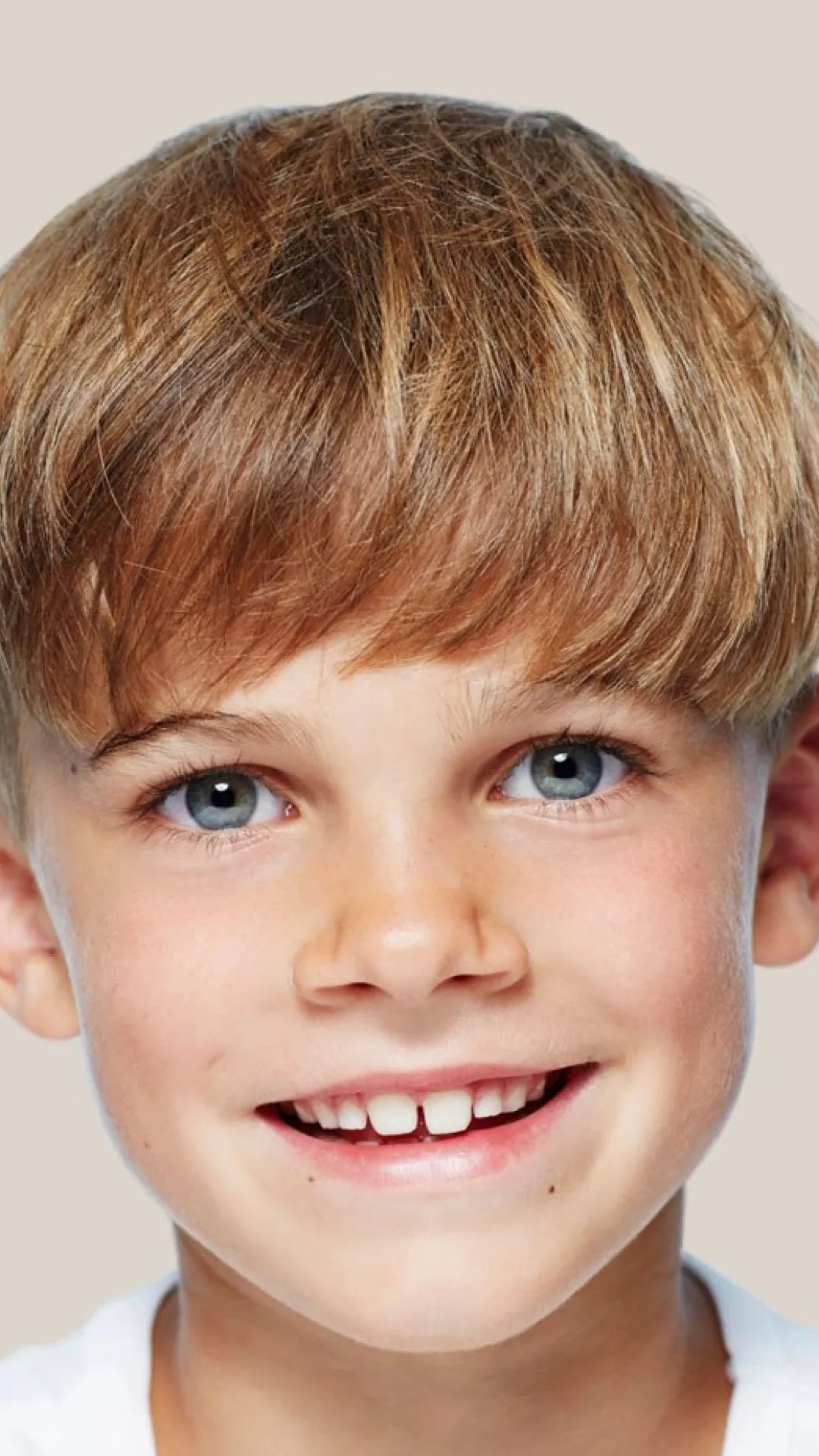

The simple removable solution for correcting misaligned teeth in children. Our technicians are also happy to make the braces in our little patients' favourite colour.
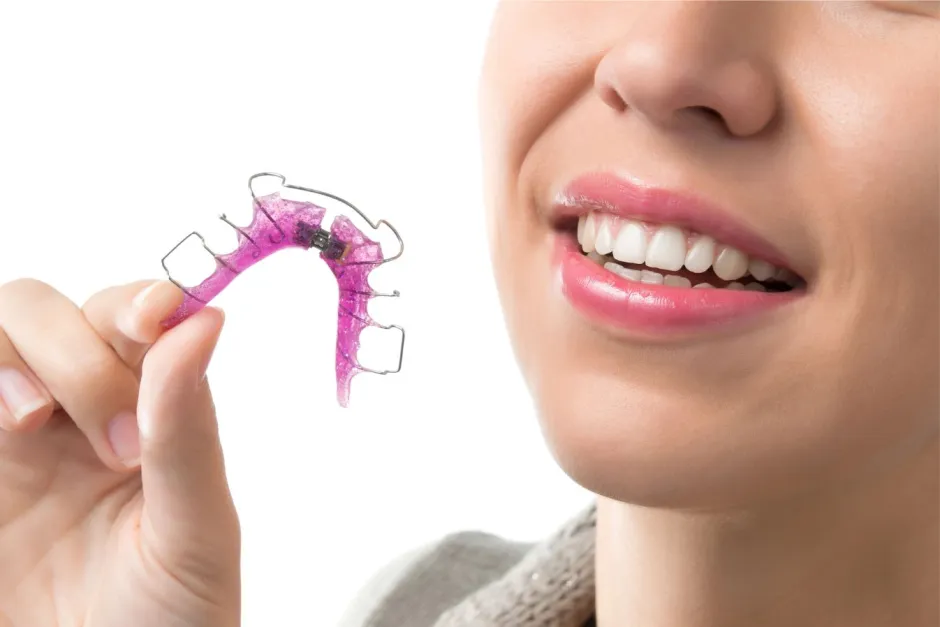
Removable braces - often referred to as night braces - are usually used in childhood to fulfil a variety of tasks.
For example, they are used to keep the gaps open in the event of premature milk tooth loss and to prevent the permanent teeth from growing crooked. They can also be used to gently correct teeth that are already crooked.
The costs for correcting the position of teeth are very individual and depend on the specific problem and the situation of your child. We would be happy to advise you personally on the subject of teeth alignment correction during a brief, free consultation in our practice.
As the name suggests, night bracesare often worn exclusively at night. However, there are some indications where the brace must also be worn during the day.
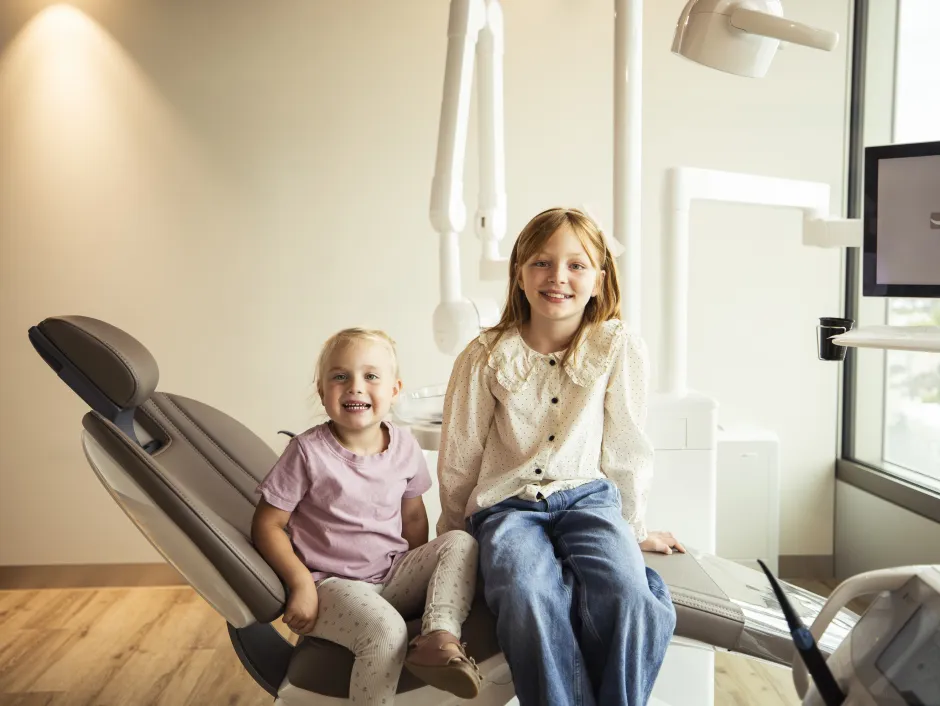
The question of the age at which removable braces should be used is one of the most frequently asked in paediatric dentistry and orthodontics. The answer depends on the type of misalignment, the stage of development of the teeth and the individual growth of the child - but there are clear points of reference.
As a general rule, an early orthodontic assessment - ideally at the age of five to seven - allows the dentist or orthodontist to assess tooth development and determine a suitable time for treatment. At this age, not all permanent teeth have yet erupted and jaw growth is still in progress - which makes certain corrections particularly efficient.
The actual treatment with removable braces often begins between the ages of six and ten - i.e. during the change of teeth, when milk teeth fall out and the first permanent teeth erupt. During this phase, removable braces can be used specifically to keep gaps open, shape the jaw or gently correct slight misalignments before the teeth have fully developed.
Certain functional disorders - such as mouth breathing, tongue clenching or sucking habits - should be addressed as early as possible with suitable appliances, as they can have a negative impact on jaw growth. Special myofunctional appliances are often used here, which can already be used with four to five-year-olds.
Depending on the findings and treatment goal, removable braces can also serve as preparation for fixed braces (brackets) at a later stage. In a personal consultation, the orthodontist and the parents clarify which time and which appliance is best for the respective child.
The wearing time of removable braces is one of the most important issues for parents and children - and at the same time the decisive factor for the success of treatment. Unlike with fixed brackets, the discipline with which removable braces are worn is directly decisive for whether and how quickly the desired result is achieved.
The rule of thumb is: the more, the better - although there are specific recommendations depending on the type of brace and indication. Many removable braces are designed as so-called night braces and must be worn mainly or exclusively at night - i.e. during sleep, when the child has no restrictions in everyday life anyway. This makes compliance much easier for many children.
For other indications - such as when a stronger or quicker correction is required - the orthodontist may also recommend all-day wear for 12 to 16 hours a day. In this case, the brace is only taken out when eating, brushing teeth and doing intensive sport.
What happens if the brace is worn too little? Tooth movement simply does not take place or only very slowly - the treatment time is extended accordingly and in some cases the result remains unsatisfactory. Some children initially report that the braces are uncomfortable or interfere with speech. This feeling usually normalises within a few weeks if the brace is worn consistently.
It is advisable to develop clear routines together with the child: braces in after brushing teeth in the evening, braces out at breakfast. A child-friendly storage box and positive reinforcement help to ensure long-term wearing discipline.
Cleaning removable braces is crucial for hygiene, the durability of the appliance and the oral health of the child. Poorly maintained braces can accumulate bacteria, fungi and plaque - and thus favour tooth decay and gum problems.
The basic recommendation is to rinse the braces with at least cold water every time after removing them to remove fresh saliva residue and food particles. Important: Do not use hot water, as the plastic material of the retainer can warp and then no longer fit exactly.
For more thorough cleaning - ideally once a day - a soft toothbrush without toothpaste is recommended. Toothpaste contains abrasives that scratch the plastic surface, creating a rough surface on which bacteria can colonise more easily. Instead, the braces can be cleaned with a little mild soap or cleaning tablets specially developed for orthodontic appliances, which are dissolved in water and disinfect the braces.
More intensive cleaning may be advisableonce a week: To do this, soak the braces in a solution of water and a cleaning tablet (available from pharmacies) for 15 to 30 minutes. This dissolves deposits and reliably kills bacteria.
Braces should always be stored in the protective box provided when they are not in the mouth. This protects against deformation, damage and the most common fate of braces: being thrown away with napkins on the lunch table. Regular check-ups by the orthodontist also check the condition of the braces and whether they are still fitting correctly.
The loss or breakage of removable braces is a horror scenario for many families - and unfortunately not a rare occurrence. Children misplace braces, leave them on the lunch table or the dog chews them. What to do now?
First things first: stay calm and contact the practice immediately. The sooner you get in touch, the quicker a solution can be found. Don't wait too long, because without braces there is no tooth movement - and in some cases teeth can start to return to their original position.
If the brace breaks, you should never attempt to repair the appliance yourself - glue or other home remedies can deform the brace and lead to a poor fit, which can both jeopardise the success of the treatment and irritate the teeth or gums. Bring the broken pieces with you to the practice - in some cases braces can be repaired professionally, in others a new brace has to be made.
A new brace is made on the basis of the existing impression or a new impression. As the customised production can take a few days to two weeks, it makes sense to keep the treatment-free period as short as possible. During this phase, the orthodontist can assess whether a temporary measure is necessary.
Clear routines help to avoid loss: The brace always goes into the protective box when it is not being worn - never in a pocket, napkin or loose in a shoulder bag. A strong, eye-catching protective box makes it easier to find. Some families label the box with the child's name, which is particularly helpful at school.
The comparison of removable braces vs. Invisalign for children is a question that many parents ask - especially since Invisalign has also been offered specifically for younger patients (Invisalign First). Both systems are removable, but differ in important ways.
Classic removable braces consist of a plastic base with embedded wires, springs or other elements that exert targeted pressure on specific teeth or jaw areas. They are customised by a dental technician and regularly adjusted or replaced by an orthodontist. Removable braces are tried and tested, robust and often more cost-effective than aligner systems.
Invisalign First (the Invisalign system customised for children) works with a series of transparent plastic aligners that are produced on the basis of digital 3D planning. Each aligner gradually moves the teeth into the desired position before the next aligner is used. The splints are almost invisible, which is often more attractive for older children and teenagers.
A major advantage of classic braces is their flexibility: the orthodontist can adjust the appliance directly at check-up appointments, activate springs or modify pressure points - without having to order new braces. This makes them particularly suitable for situations involving jaws that are still growing and can change quickly.
Invisalign scores points for discretion, wearing comfort and the ability to remove the splint completely for eating and brushing teeth - which makes oral hygiene easier. The disadvantage is that the effectiveness depends heavily on the wearer's discipline (at least 20-22 hours a day). The orthodontist will decide which system is more suitable after a thorough examination.
The question of whether removable braces also work for adults surprises many - because most people think of these appliances as being for children. In fact, there are situations in which removable appliances can also be used in adult patients.
Removable appliances are most frequently used in adults as retention splints - i.e. after orthodontic treatment with brackets or aligners has been completed. These splints keep the achieved tooth position stable and prevent the teeth from moving back. Without this retention phase, the results of years of treatment can be cancelled out within a short time.
There are also removable aligner systems such as Invisalign, which are very common in adults and are also technically removable appliances. These are an attractive option for mild to moderate malocclusions.
Traditional removable braces with wires and spring elements - as typically used in children - are generally less effective in adults, as jaw growth is complete and teeth can only be moved by the bone, not by growth control. However, they can also be used in adults for very minor corrections or as a supplement to other treatments.
Adults who are considering correcting the position of their teeth should always seek advice from an orthodontist as to which method - whether removable aligners, fixed braces or lingual brackets - is the most suitable and effective solution for their individual situation.
The question of whether removable braces hurt is of particular concern to parents who want to prepare their child for treatment - and children who understandably want to know what to expect. The honest answer: In most cases, removable braces do not cause severe pain - but a certain feeling of pressure is normal and a sign that the braces are working.
When a new brace is fitted or an existing brace is activated (i.e. adjusted), it exerts targeted pressure on specific teeth or the jaw. In the first one to three days after insertion or activation, a noticeable feeling of pressure or slight pain may occur - comparable to the feeling you get when you have slept on one side for too long. This pressure usually subsides quickly as soon as the teeth have become accustomed to the new position.
Temporary irritation can occur, particularly on the palate or where wires or brackets meet the gums. Orthodontic wax, which is pressed onto the irritated area, provides immediate relief. It is freely available from pharmacies and should be part of the standard toolkit of every family with braces.
If children complain of persistent or severe pain that does not subside after more than a week, the practice should be contacted. In some cases, the brace may not fit correctly or may need to be readjusted. Pain that goes beyond the normal feeling of pressure is not a must and should always be clarified. With the right familiarisation and a little patience, most children report that they hardly notice the braces after a short time.
Removable braces are a versatile orthodontic instrument - but they have their limitations. It is important to know for which malocclusions it can be used effectively and when other methods are more suitable.
Removable braces arewell suited for mild to moderate malocclusions in children where jaw growth is still active. Typical indications are: keeping gaps between teeth open after early loss of milk teeth so that the permanent teeth have enough space; correcting a crossbite where individual teeth of the upper and lower jaw bite incorrectly on each other; treating a deep bite or overbite during the growth phase; and expanding the jaw if there is too little space for the permanent teeth.
Removable braces can also functionally correct bad habits such as thumb sucking or tongue clenching and steer the growth of the jaw in a more favourable direction - a possibility that only exists during the active growth phase.
Removable braces areless suitable or not suitable at all for complex tooth rotations, severe crowding of several teeth, precise single-tooth movements or corrections that require very fine and continuous force transmission to each individual tooth. In these cases, fixed braces (brackets) or a modern aligner system such as Invisalign is the superior choice.
In adults with completed jaw growth, the use of classic removable braces is also limited - aligners or fixed braces are generally used here. The exact indication is determined by the orthodontist after a comprehensive examination.
The duration of treatment with removable braces is one of the most frequently asked questions by parents - and the answer is as individual as the children themselves. There is no generalised time estimate, as the duration depends on the type of malocclusion, the age of the child, the growth of the jaw and - most importantly - the wearing discipline.
As a rough guide, treatment can be completed after just a few months for minor corrections or to keep a gap open after the loss of milk teeth. In the case of jaw expansions or the correction of a crossbite, 6 to 18 months is often realistic. If the braces serve as preparation for a later fixed brace, the total treatment time - including the subsequent bracket phase - can take several years.
The growth of the child is a decisive factor: In phases of intensive growth, tooth movement can progress more rapidly than in quieter phases. This is why the adolescent years - the growth spurt during puberty - are often the most favourable time for orthodontic measures.
Wearing braces consistently is the most important factor that the family can influence. Studies clearly show that children who wear their braces as recommended achieve significantly faster treatment progress than those who wear them irregularly. Every hour that the brace is in the mouth actively contributes to correction.
Once active treatment has been completed, a retention phase follows, even with removable braces, in which a retainer or retention splint stabilises the achieved tooth position in the long term. This phase is just as important as the active treatment itself.
The cost of removable braces in Switzerland varies depending on the complexity of the treatment, the number of appliances required and the course of treatment. Many parents also wonder whether and to what extent their health insurance will cover the costs - a legitimate and important question.
In Switzerland, a single removable brace costs between CHF 300 and CHF 800, depending on the laboratory and the type of brace being manufactured, plus the orthodontist's fees for examination, planning, insertion and all check-ups during treatment. The longer the treatment lasts and the more often the braces need to be replaced or adjusted, the higher the total costs. Overall, orthodontic treatment for children in Switzerland can cost between CHF 1,500 and CHF 6,000 or more, depending on the extent of the treatment.
Compulsory basic insurance (KVG) does not generally cover orthodontic treatment in Switzerland - not even for children. There are exceptions in the case of certain serious jaw malformations or if orthodontic treatment is medically necessary and corresponds to clearly defined indication groups. In these cases, disability insurance (IV) or, in rare cases, basic insurance may cover benefits.
Supplementary dental insurance for children and adolescents - which some parents take out early - can cover a percentage of the orthodontic costs depending on the policy, often up to a certain annual or total amount. It is worth checking this option with your health insurance company before starting treatment and obtaining a cost approval.
Our team will be happy to advise you on the costs involved during a free initial consultation and help you to clarify all insurance issues in advance - so that you can start your treatment transparently and without any unexpected surprises.