CD Logo2 white
Slide kinderzahnmedizin

Teeth preserved Paediatric dentistry Your child in good hands

Even the youngest children should feel comfortable with us and perceive their visit to the dentist as a positive experience. We attach great importance to individualised and gentle care. We also offer school dental check-ups for children's treatments.

Kinderzahnbehandlung Patient schaut TV

When

Regular check-ups and careful oral hygiene are important from an early age in order to avoid dental problems. We recommend taking your child to the dentist for the first time when all milk teeth have erupted - but no later than the age of 3. Your child's first appointment is mainly for information purposes and your child has the opportunity to familiarise themselves with paediatric treatment at CITYDENTAL without any treatment taking place.
You will also receive recommendations on nutrition, dental care and, if necessary, the choice of health insurance (taking out supplementary insurance for your child's teeth). In addition, any problems with oral hygiene or oral health can be recognised at an early stage.
Subsequently, an annual check-up is advisable. Children are often routinely checked too late as part of compulsory school dental care .

In the primary and mixed dentition , a lack of dental carecan quickly lead to tooth decay, as the child's enamel is thinner. We also frequently observe slight inflammations during the change of teeth or dental accidents that occur during play. Early dental care helps to protect your child's dental health in the long term.

How

Children are not "little adults". That's why at our dental practice, we place great importance on individualised care that is specially tailored to the needs of each child. Our aim is for our youngest patients to come to the dentist with a positive feeling and take away many positive impressions.

With a great deal of patience and experience, we playfully introduce children to dentistry in a calm atmosphere. We use state-of-the-art treatment methods to ensure gentle and pain-free dental treatment.

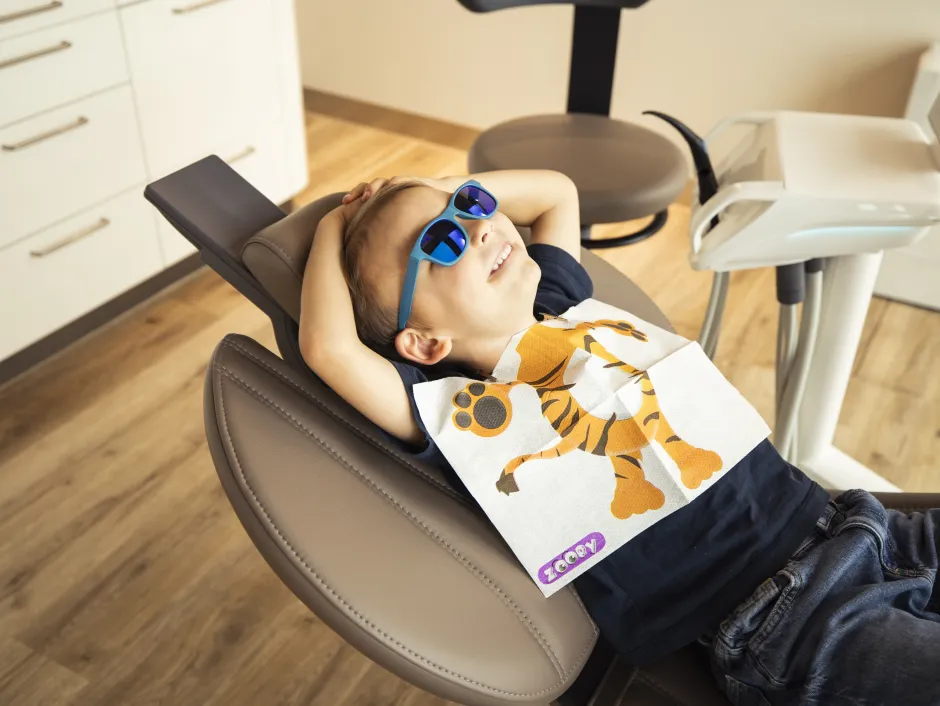
During treatment, for example, children can watch a children's series on our blanket TV to make them feel comfortable. For children who have had bad dental experiences and for whom conventional treatment is not possible, we offer dental treatment under general anaesthetic to ensure stress-free treatment.


Costs

The cost of your child's dental treatment will depend on the type of treatment carried out. After an initial examination, we will be happy to provide you with a free personalised cost estimate tailored to your child's needs. You can use our price list for an initial cost orientation .

Braces

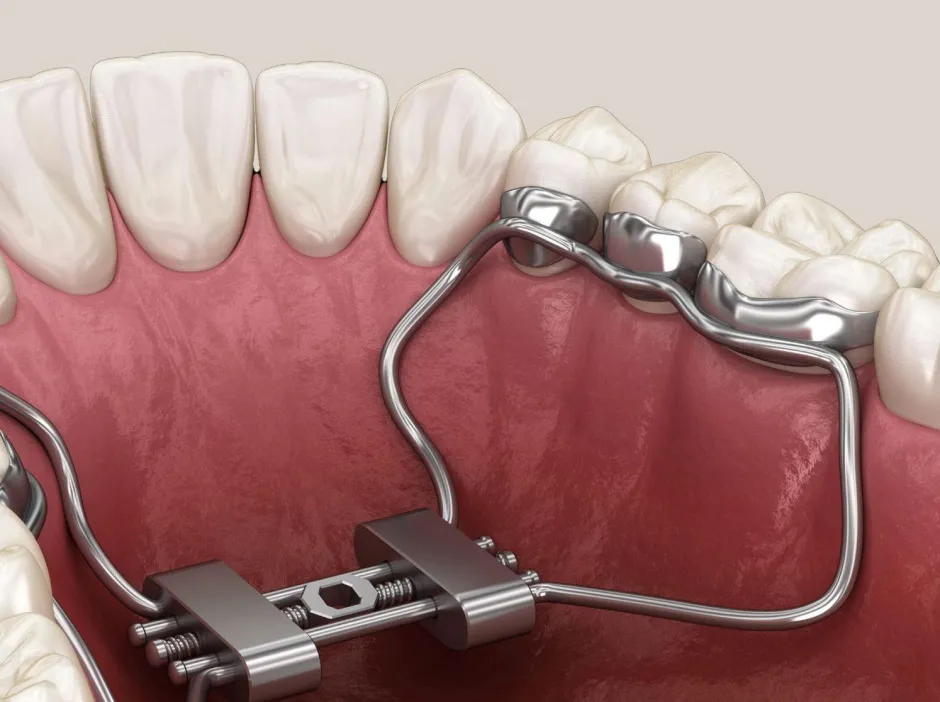
As soon as all milk teeth have erupted, an initial assessment of the tooth position can be made. With the appearance of the first permanent teeth, orthodontic treatment may be necessary. Between the ages of 9 and 12, it is possible to actively influence the development of the jaw and face. Minor misalignments are usually corrected between the ages of 12 and 16.

Kinderzahnmedizin

FAQ: The most frequently asked questions about paediatric dentistry

The question of the cost of paediatric dentistry in Switzerland is one of the most frequently asked questions in our clinics. Prices often vary depending on the treatment and the amount of work involved. Routine check-ups and simple prophylaxis are comparatively inexpensive, while more complex procedures such as fillings or orthodontic measures can be more expensive.
As a rule, parents have to bear the costs themselves, as basic insurance only covers medically necessary treatment. However, supplementary insurance can cover part of the costs. The rates for supplementary insurance are often the most favourable if the insurance is taken out when the child is still a baby or toddler.
It is important that parents invest in their child's dental health at an early age by teaching them good oral hygiene habits, as preventive measures can avoid expensive follow-up treatment in the long term. In Switzerland, it is recommended to schedule regular check-ups and get a transparent cost estimate before major procedures. Overall, paediatric dentistry is an important investment in the long-term health of the child.

Many parents underestimate how important it is to treat decay in milk teeth. Milk teeth play a central role in the development of the jaw and the position of permanent teeth.
If caries is recognised early, it can often be treated with small fillings. If left untreated, however, it can lead to pain, inflammation or even tooth loss. In Switzerland, great importance is therefore attached to early diagnosis and treatment. Consistent oral hygiene and regular check-ups are crucial. Parents should know that healthy milk teeth form the basis for healthy adult teeth. Timely treatment not only protects the teeth, but also the child's well-being.

Many parents are concerned about the question of anaesthesia at the paediatric dentist. Generally speaking, modern anaesthetic procedures are very safe and well controlled in Switzerland. They are mainly used for extensive treatments or for very anxious children.
In addition to general anaesthesia, gentler methods such as nitrous oxide or sedation are also used to make the treatment stress-free.
Before each treatment, the child's state of health is carefully assessed. The aim is to ensure that the child has an anxiety-free and pain-free treatment. Risks are low if the treatment is carried out by experienced specialists. Overall, anaesthesia is an important option for carrying out complex procedures safely and efficiently.

Early detection is a central component of paediatric dentistry. Many dental problems develop gradually and initially go unnoticed. Typical signs are discolouration, sensitivity or changes in eating behaviour.
Regular visits to the dentist help to recognise and treat problems at an early stage. In Switzerland, it is recommended that children have regular dental check-ups, as indications of later dental diseases can be recognised at an early age.
Parents play an important role by watching for changes and reacting early. Early diagnosis enables gentle and effective treatment before major damage occurs.

A dental accident in children is a common emergency situation. It is important to act quickly and correctly. Every accident should be reported to the dentist immediately, even if the injury appears harmless at first. This also makes sense because the accident insurance company has then registered the dental damage and any consequential damage is covered.
Depending on the situation, a tooth may be loosened, broken or completely knocked out. Especially with permanent teeth, quick action is crucial to save the tooth.
Parents should remain calm and reassure the child. Quick treatment can prevent complications and significantly improve the chances of recovery.

Overall, the quicker the reaction, the better the chances of success.

Fear of the dentist is widespread among children and a common issue. It is often caused by negative experiences, uncertainty or a lack of familiarisation.
In Switzerland, great importance is therefore attached to child-friendly treatment. The first visit should be as stress-free and pain-free as possible in order to create a positive experience.
Parents can contribute to this by presenting the visit to the dentist in a positive light and not conveying any fear. Good preparation helps to build trust.
The aim is for children to experience a visit to the dentist as a normal and unproblematic part of their everyday life.

The importance of milk teeth is often underestimated. They are crucial for the development of the jaw and serve as placeholders for the permanent teeth.
Healthy milk teeth enable normal speech development and facilitate chewing. If they are lost early, this can lead to malocclusion.
In Switzerland, great importance is therefore attached to the preservation of milk teeth. Good care and regular check-ups are crucial.

Milk teeth are not "unimportant", but form the basis for later dental health.

Paediatric dent istry covers a wide range of treatments. This includes prevention, caries treatment, fillings and orthodontic measures.
Special procedures such as fissure sealing or fluoridation are also used to protect the teeth.
An important focus is on prevention and early intervention. The aim is to maintain dental health in the long term and avoid invasive interventions. Treatment is customised to the individual child and takes place in a child-friendly environment.

The frequency of dental visits for children depends on the individual risk. As a rule, one to two check-ups per year are recommended.
Regular visits help to recognise and treat problems at an early stage. They also help children to familiarise themselves with the situation and avoid developing anxiety.
In Switzerland, great importance is attached to prevention. Regular check-ups are an important part of dental health and help to prevent long-term damage.

Many parents wonder what their child can expect at the paediatric dentist. The focus is on playful and empathetic care in order to build trust.
The treatment usually includes an examination, cleaning and counselling. The aim is to gradually familiarise the child with the situation.
Modern paediatric dentistry takes into account not only medical but also psychological aspects. The child should feel comfortable and gain positive experiences. This lays the foundation for lifelong dental health.

Yes, of course. Please take the voucher booklet with you to the check-up. If you do not have it with you, the check-up will be charged privately, but can usually be reclaimed later. Additional services such as dental hygiene, special hygiene instructions or treatments can be charged privately after prior cost clarification. Vouchers from neighbouring cantons are stamped and signed for confirmation.

Such phases are completely normal for children and occur regularly. Refrain from pressurising or forcing your child to brush their teeth. Your child may simply be too exhausted in the evening - in this case, it may help to bring brushing forward to the early evening directly after dinner. Let your child sit on your lap and distract them with an exciting story.

Only offer your child drinks at set times and make sure that he or she does not fall asleep with the bottle. Unsweetened teas or water are best for quenching thirst. As soon as your child is able to sit independently, bottles and sippy cups should be gradually phased out - introduce drinking from a normal cup instead.

Thumb-sucking in particular can lead to serious misalignment of the teeth and jaw. If your child reaches for their thumb, it is advisable to switch to a dental dummy early on - because thumb sucking is much harder to wean off later than the dummy. It is often possible to wean off the dummy from the age of two, even earlier.
From the age of five, persistent thumb sucking can have a negative impact on jaw growth and favour a so-called open bite - this means that a visible gap is created between the teeth of the upper and lower jaw when biting.

Brushing teeth starts from the first milk tooth. For the very youngest children, it is best to start with a cotton bud with a little children's toothpaste. If your child likes the dummy, coating the dummy with children's toothpaste can also prevent the development of caries on the front milk teeth

Choosing the right toothbrush depends on your child's age and motor skills. Electric toothbrushes are generally suitable from around 3 to 4 years of age, but should only be used independently by children from the age of 8 to 9.

Even if your child is already brushing independently, we strongly recommend a parental "follow-up brushing" in which all teeth are systematically cleaned again by a parent.

We will be happy to advise you personally on which toothbrush is best suited for your child.

The first milk teeth - usually the front incisors - begin to fall out at the age of 5 to 6 years. In children between 8 and 10 years of age, the change of teeth is usually less active and typically no milk teeth fall out. At around 12 to 13 years of age, the child finally loses the last milk tooth.