Imagine being able to regain your own natural teeth - as a perfect replacement for teeth lost due to tooth decay or accidents! This option not only gives you a radiant smile, but also a new sense of self-confidence and quality of life.




Imagine being able to regain your own natural teeth - as a perfect replacement for teeth lost due to tooth decay or accidents! This option not only gives you a radiant smile, but also a new sense of self-confidence and quality of life.
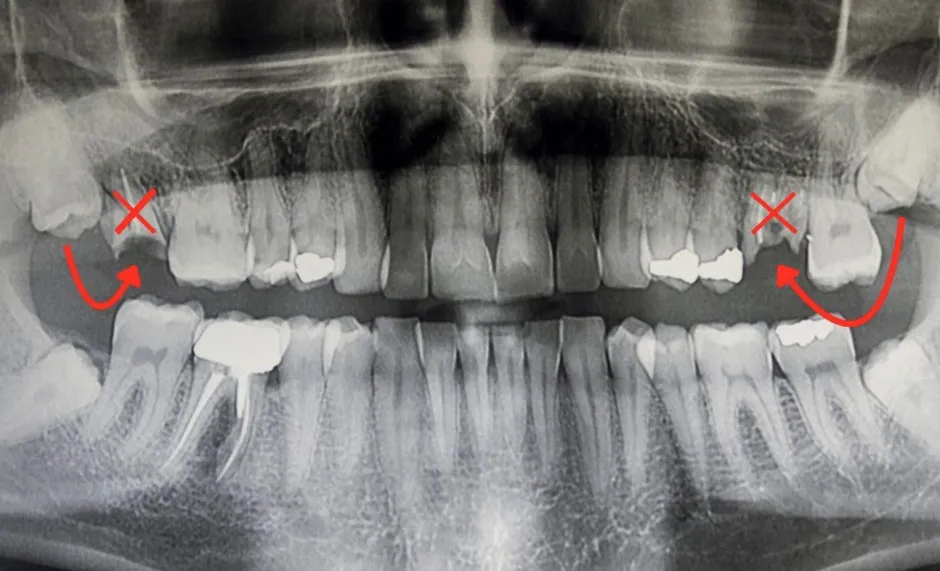
In addition to surgical experience, tooth transplantation also requires careful selection of the patient in terms of age and suitability.
If the requirements for a tooth transplant are met, this treatment can now be carried out with a very high success rate and excellent aesthetic results .
A typical case for a tooth transplant is the loss of the first molar tooth due to caries or an accident in adolescents up to the age of 23. In this case, the untouched wisdom tooth, which lies peacefully dormant in the jawbone, can serve as a natural tooth replacement.
Tooth transplants are also possible for adults under certain conditions - a smart alternative to implants.
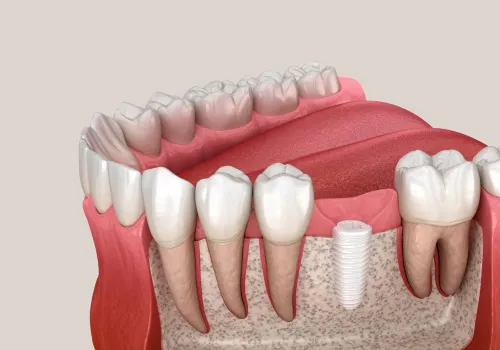
At around CHF 2000 per tooth, tooth transplantation is an attractive and cost-effective alternative to implants (approx. CHF 4000) - if the requirements are met.
A tooth transplantation (autogenous tooth transplantation) is a precise surgical procedure in which a healthy tooth (usually a wisdom tooth or premolar) is transplanted to another location in the jaw.
The procedure begins with a thorough preliminary examination including x-rays and 3D images to check the accuracy of fit, bone quality and root development. The procedure is usually performed under local anaesthetic or, if desired, under sedation.
First, the donor tooth is gently extracted without damaging the sensitive root skin (desmodont) - this is crucial for success. The tooth is immediately placed in a special nutrient solution (e.g. tooth rescue box or physiological saline solution with antibiotic) to keep the cells vital. At the same time, the surgeon prepares the recipient socket: The empty tooth socket is carefully cleaned and shaped so that the transplant tooth fits perfectly. The tooth is then inserted, fixed with minimal movement (usually with a flexible splint for 2-4 weeks) and secured with sutures.
The entire procedure usually takes 20-60 minutes per tooth and is performed on an outpatient basis. Important: The surgeon must be extremely gentle on the tissue in order to avoid ankylosis or resorption. After the procedure, you will receive detailed instructions on how to take it easy. In Zurich and throughout Switzerland, specialised oral surgeons offer this modern biological method, which preserves natural teeth and promotes bone and gum growth.
Many patients appreciate precisely this gentle, autologous approach. Precise planning and a cell-sparing approach make the difference between long-term success and complications. This is why choosing an experienced team is essential.
No, a tooth transplant is usually painless under modern anaesthesia. Thanks to local anaesthesia or optional sedation/nitrous oxide, you will feel nothing during the procedure. Many patients in Switzerland even report that they are relaxed after the procedure. After the operation, however, you may experience mild to moderate wound pain, swelling or a feeling of pressure - similar to after a wisdom tooth removal. This discomfort can be controlled very well with prescribed painkillers and anti-inflammatory medication. Cooling the cheek for the first 48 hours noticeably reduces the swelling.
Most patients are able to return to work the next day, although hard or crunchy foods should be avoided for about 1-2 weeks. Decisive for minimising pain: careful aftercare and adherence to the rules of rest. In specialised practices in Zurich, attention is also paid to gentle surgical techniques that traumatise the tissue as little as possible. Many Swiss patients emphasise that the initial discomfort is significantly less than feared and subsides quickly.
If unexpectedly severe pain occurs, an immediate check-up with the treating oral surgeon is advisable. With the right care, the procedure is well tolerated by most people and is a real alternative to more complex procedures. Modern dentistry ensures that you can master the process in a relaxed manner.
Healing after a tooth transplant usually takes 6-12 weeks until the tooth is firmly fused to the jawbone and gums.
In the first 7-10 days, the sutures are removed and the flexible splint is checked. During this phase, absolute protection is important: soft food, no hard or crumbly foods and gentle oral hygiene.
Regular check-ups (clinical and radiological) in the first few months check for ingrowth and rule out inflammation at an early stage. In adolescents with a still open root tip, healing can be even faster with possible revascularisation of the pulp. In adults, the healing time is often somewhat longer, as additional root canal treatment may be necessary.
Full resilience is usually achieved after 8-12 weeks. Important for successful healing: consistent oral hygiene with antibacterial rinsing solutions and avoidance of pressure on the transplanted tooth. In Switzerland, specialists recommend close follow-up checks in the first year to ensure long-term success.
Many patients report that they were able to eat normally again after just 4 weeks and that the tooth feels completely natural. The healing phase is crucial to ensure that the transplanted tooth functions like a natural tooth and can last for decades. With the right aftercare, you minimise risks and maximise the chances of a stable, aesthetically perfect solution.
As with any surgical procedure, there are certain risks associated with tooth transplants, but these are low if experienced oral surgeons and careful planning are used. Possible complications include infections, temporary swelling or bleeding. Specific risks relate to the root: inflammatory or ankylotic root resorption (adhesion to the bone), which can lead to premature loss. Injuries to the root skin during extraction increase this risk. Healing can be impaired by improper positioning or excessively rigid splinting. In rare cases, root canal treatment may be necessary at a later date. Important: These risks can be significantly reduced by using a gentle technique, antibiotic rinsing and modern materials (e.g. Emdogain). In Switzerland, specialised centres work according to the latest scientific standards, so the complication rate is low. Regular check-ups recognise problems at an early stage. Most patients do not experience any serious complications and benefit from a natural, autologous dental prosthesis. Open information before the procedure and the choice of an experienced team minimise all risks considerably. As a result, tooth transplantation remains a safe and biologically superior option.
In Switzerland, compulsory health insurance (OKP/KVG) does not generally cover tooth transplants as a standard benefit. As with most tooth replacement solutions (implants, bridges), patients must bear the costs themselves - unless it is an insured accident or a rare medical exception (e.g. serious jaw disease or congenital malformation).
Accident insurance (UVG) can cover the costs of trauma-related tooth loss. Supplementary insurance or additional insurance often covers some or all of the costs.
Important: Ask your health insurance company to authorise the costs before treatment. In practice, the costs are significantly lower than those of an implant and are well reimbursed by many supplementary insurances. Specialised practices in Zurich will help you with the clarification. A tooth transplant remains a cost-effective, biological alternative that you can plan individually. Early clarification saves surprises.