Periodontitis often ends with receding gums and loosened teeth. Thanks to innovative treatment methods, our specialised team can stop this process and help you keep your teeth.




Periodontitis often ends with receding gums and loosened teeth. Thanks to innovative treatment methods, our specialised team can stop this process and help you keep your teeth.
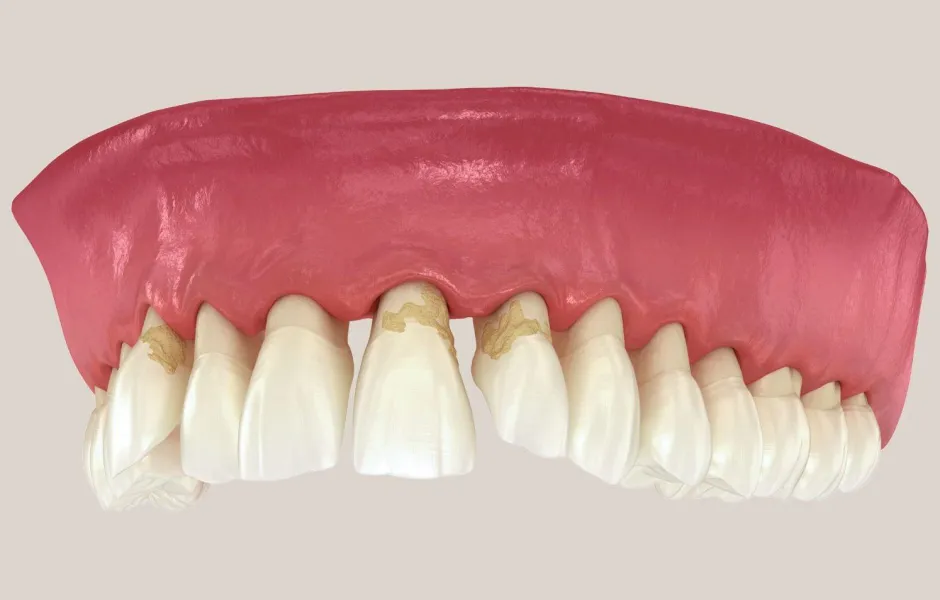
Periodontitis is a serious and insidious dental disease that today jeopardises more teeth than tooth decay. Over 30% of the population in Switzerland suffer from periodontitis.
Worldwide, periodontitis bacteria are found in the mouths of practically 99.9% of all people. Depending on the country, around 50% - 90% of all adults show local signs of periodontitis. This makes it the most common infectious disease in the world.
The insidious nature of periodontal disease is that it often remains painless for a long time and therefore often goes unnoticed by those affected. Symptoms include strong bad breath, bleeding gums and aesthetic impairments due to receding gums and displaced teeth.
Advanced periodontitis often leads to receding gums and loose teeth. In severe cases, periodontitis can also cause general illnesses such as heart attacks, an increased risk of stroke or diabetes.
The earlier periodontal disease is recognised and addressed with professional treatment, the better the chances of recovery.
Periodontology deals with the diagnosis and treatment of diseases of the periodontium. Periodontitis or periodontosis refers to inflammatory or degenerative changes in the gums and the tooth-supporting jawbone, which can lead to premature tooth loss if left untreated.
CITYDENTAL specialises in the treatment of gum disease. Our dental practices have experienced periodontists who are experts in this field. All our specialists use the latest treatment methods such as deep scaling, GBR (Guided Bone Regeneration), Emdogain and other modern regenerative procedures to ensure optimal periodontitis treatment. In this way, we offer our patients the best possible dental treatment for long-term dental health.
After successful periodontitis treatment, regular checks of the gums and periodontium are essential. The periodontal recall plays a central role in the long-term and sustainable elimination of periodontitis. These check-ups take place at regular intervals in our dental practice and are carried out by individual appointment in order to optimally protect your dental health.
The cost of gum treatment cannot be determined as a lump sum, as it depends on the number of sessions and the severity of the disease. On average, the costs are around CHF 1500, but vary depending on individual treatment requirements.
We will be happy to provide you with a free quote that is specifically tailored to your gum treatment. Contact our dental practice for a personalised consultation!
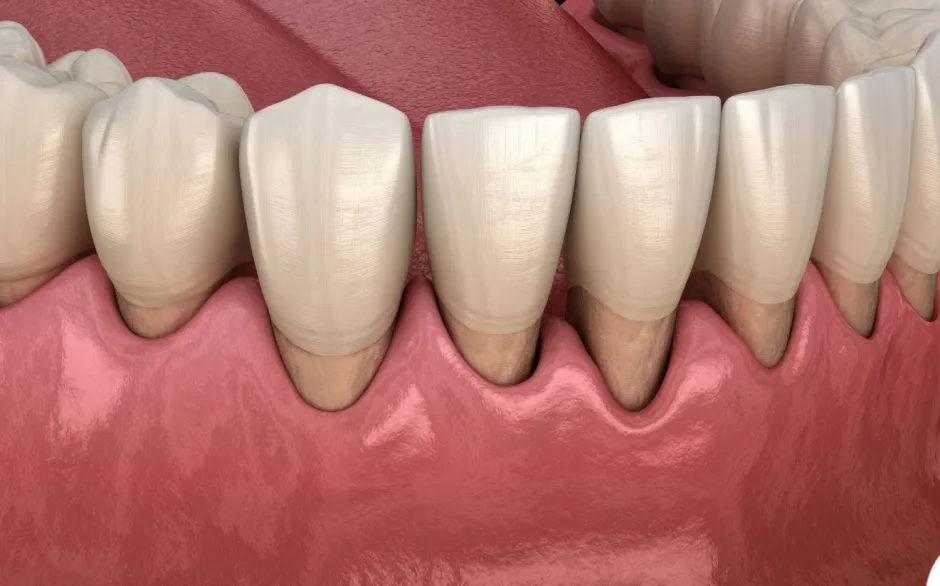
Treatment of mild periodontitis / periodontosis (chronic periodontal disease)
Therapy for moderate periodontitis / periodontosis (chronic periodontal disease)
Treatment of severe periodontitis / periodontosis (chronic periodontal disease)
Gum inflammation mainly occurs when teeth are not cleaned regularly and thoroughly. If oral hygiene is poor, pathogens and bacteria multiply very quickly, causing the gums to become diseased more quickly. There are several hundred different types of bacteria in the mouth, which are normally part of the natural oral flora and are harmless.However, if teeth are not cleaned regularly and food debris is not removed, pathogens can multiply very quickly.
As a result, the bacteria produce aggressive acids and toxins during metabolisation. These then penetrate the fine interdental spaces and gums and attack them. As a result, the immune system reacts with an inflammatory response and gum inflammation develops.
But bacteria are not the only cause of gum disease. If plaque is not regularly removed from the teeth, calcium and other minerals accumulate in them. Poor oral hygiene causes the plaque to harden and then develop into tartar. The rough structure of the tartar makes it even easier for bacteria to settle and small gum pockets, also known as periodontitis, develop.
But beware: It is not only a lack of oral hygiene that can lead to gum inflammation, but also brushing your teeth too hard. If the gums are damaged by excessive pressure with the bristles and an incorrect tooth brushing technique, bacteria will settle in the wound and trigger an inflammation. Therefore, the sensitive gums and the entire periodontium should always be cleaned with great care.
There are also a number of other risk factors that can favour gingivitis (inflammation of the marginal gums caused by bacteria). These include metabolic disorders, diabetes mellitus, alcohol and nicotine consumption, stress, hormonal changes such as puberty or pregnancy, or a vitamin C deficiency.
There are also certain medications that can favour gum inflammation. Examples of this are medication for convulsions (hydantoin preparations) and high blood pressure. The same applies to medication with the active ingredient cyclosporin A.
It is also possible to take preventive measures against periodontitis. It goes without saying that daily and thorough dental cleaning is a prerequisite for healthy teeth. However, you can also do the following:
The most important remedy for gingivitis is daily oral hygiene and thorough tooth brushing. Bacterial plaque in particular must be removed regularly.
It is usually sufficient to brush your teeth twice a day to prevent gingivitis or allow it to heal again. Make sure that you clean all tooth surfaces thoroughly and remove plaque.
You should use a toothbrush with softer bristles when cleaning your teeth every day. This reduces the risk of further injuring or irritating gums that are already inflamed by brushing your teeth.
You should also use dental floss or interdental brushes to clean the spaces between your teeth. Finally, you can also gargle with an antibacterial mouthwash or apply a special ointment. Both curb bacterial growth and prevent the spread of periodontal bacteria. Hydrogen peroxide-based formulations prescribed by your dentist are also helpful for periodontal disease and receding gums and provide optimum protection for your gums.
Note: As a preventative measure, it is also advisable to have your teeth professionally cleaned by your dentist at least once a year. During a professional dental cleaning, the dentist will also reach the places in your mouth that you cannot reach with a toothbrush, despite brushing your teeth properly.
There are some well-known home remedies that can provide relief from gum inflammation and reduce the symptoms and inflammation. Examples include: Camomile tea, sage, myrrh and thyme. These medicinal plants have an anti-inflammatory and disinfectant effect and are therefore ideal for quick relief.
Another good home remedy for gum inflammation is apple cider vinegar. It is best to mix two tablespoons of apple cider vinegar with a glass of water. This mixture should be gargled daily half an hour before brushing your teeth. This stimulates the production of saliva and has an anti-inflammatory and antibacterial effect.
Some people who are prone to recurrent gingivitis [see above] use homeopathic treatment methods to support the healing of gum inflammation. However, the effectiveness of homeopathy has not yet been clearly proven scientifically.
IMPORTANT: Alternative healing methods do not replace traditional oral hygiene!
In addition to periodontitis, there are also other acute gum diseases. These include, for example, abscesses of the gums, which manifest themselves as swelling and redness and can sometimes be very painful or even purulent. This disease should also be treated quickly and professionally.
In rare cases, so-called necrotising or ulcerating gum disease can also occur. These usually occur in connection with acute stress or a reduced general condition. In these cases, there is pronounced localised inflammation of the gums. These localised inflammations are extremely painful and in many cases lead to a sudden onset of extreme bad breath. Typical symptoms of these gum diseases are severely inflamed, bleeding gums with whitish areas. This clinical picture requires rapid treatment in order to alleviate the pain and prevent the inflammation from progressing.