CD Logo2 white
Portrait einer brünetten jungen Frau, die einen fragenden Blick hat. Der Hintergrund ist beige.

Teeth preserved Root canal treatments Success with a high degree of safety

Dental nerves can become inflamed or even die as a result of major tooth decay or accidents. Using state-of-the-art instruments and a microscope, we can usually preserve even painful and severely damaged teeth in collaboration with our specialists and thus avoid the "tooth extraction" route.

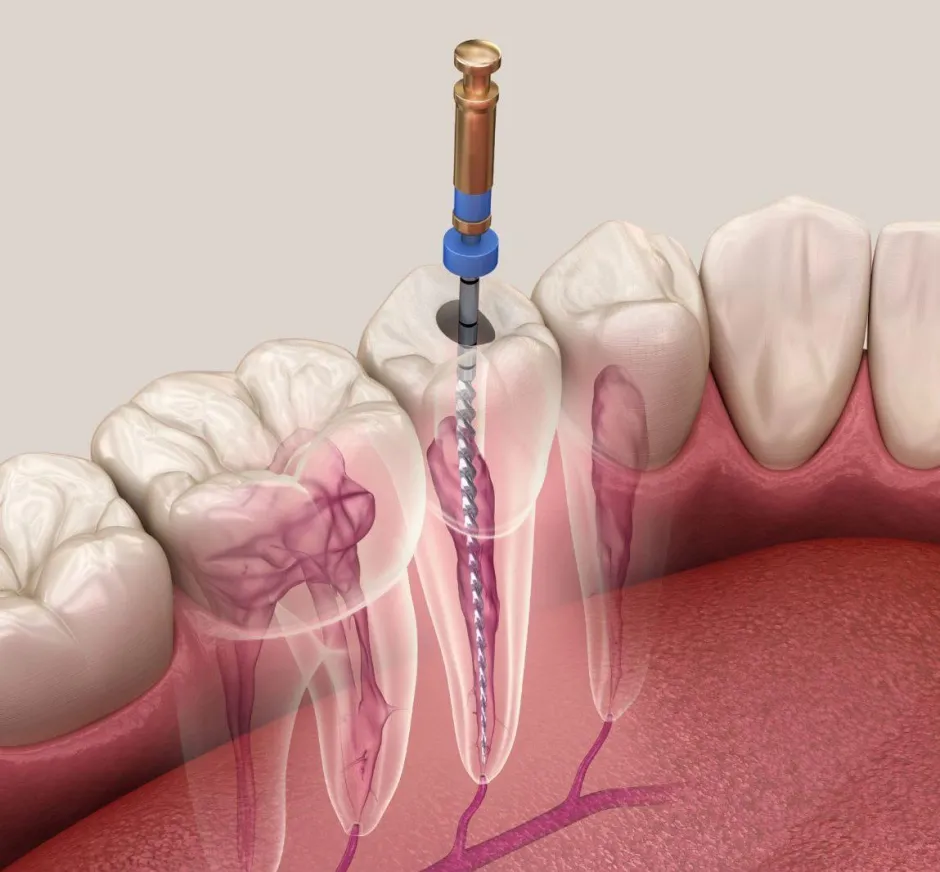
Graphische Darstellung einer Zahnreihe mit sichtbaren Wurzelkanälen und Versorgungssystem, bei einem Zahn steckt eine Wurzelkanalbehandlungsfeile drin. Der Hintergrund ist beige.

What is root canal treatment

Root canal treatment is an attempt to save a damaged tooth. This usually involves inflammation or damage to the tooth nerve. The most common reason for such an inflammation of the tooth root is tooth decay. However, dental nerves can become inflamed not only as a result of major tooth decay, but also as a result of accidents and, in the worst case, can even die.

Using state-of-the-art instruments and a microscope, we can often preserve even painful and severely damaged teeth in collaboration with our specialists and thus avoid having to extract the tooth. Root canal treatment does not usually cause any pain, as the affected tooth is anaesthetised by the dentist beforehand. The duration of an appointment for root canal treatment is 60 minutes on average. In order to save the diseased tooth, around 2-3 sessions are required, depending on the treatment case.

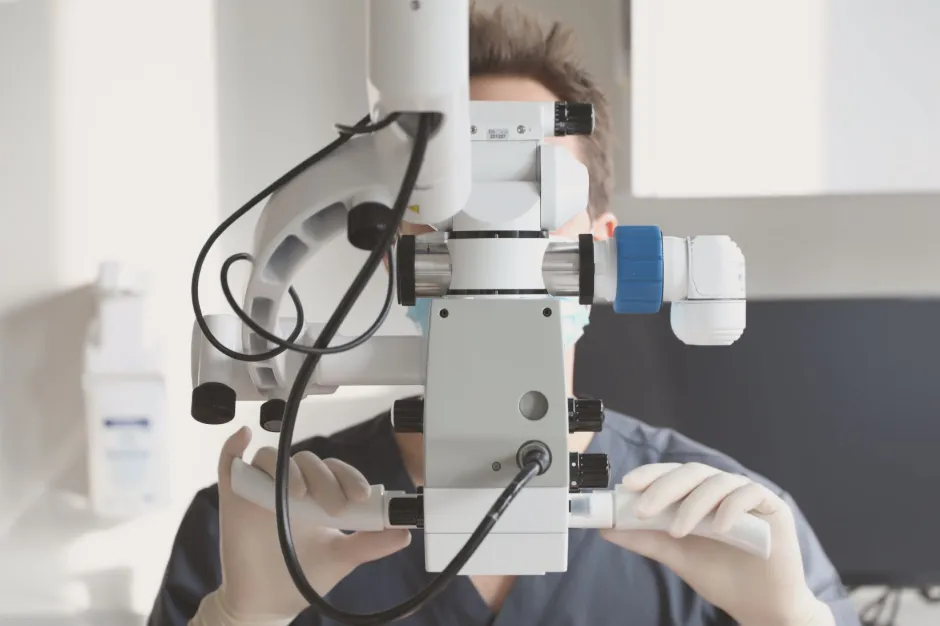
Foto von einem CITYDENTAL Zahnarzt, Wurzelbehandlungsspezialist/Endodontologe, der in einem zahnärztlichen Mikroskop reinschaut.

When is root canal treatment necessary

Root canal treatment is necessary if a caries defect is so deep that bacteria can penetrate the tooth nerve. This often manifests itself as severe toothache caused by the inflammation of the tooth nerve. In some cases, however, the inflammation is "asymptomatic", i.e. without symptoms, and therefore goes unnoticed for a long time. If the inflammation of the dental nerve persists over a longer period of time, the bacteria can migrate via the nerve canal to the bone and form an abscess there. This can become noticeable as a painful swelling in the mouth or drain via a fistula, which often looks like a small "bible" in the mouth.

However, root canal treatment is not only necessary for deep caries. Bacteria can also enter the tooth nerve as a result of accidents or other events. To preserve the affected tooth, root canal treatment is necessary in all of these cases. During this procedure, the contaminated tooth nerve is removed, the nerve canal is cleaned and internally disinfected. A medication is applied to the root canal to remove as many bacteria as possible (decontamination). Root canal treatment is usually carried out in two to three sessions, depending on the size of the bacterial colonisation of the canal and the extent of the inflammation. If the tooth is symptom-free, the root canal can then be filled and the tooth sealed again.

Root canal treatment is a proven treatment method with a very good prognosis.

What is the treatment procedure

Root canal treatment usually consists of 2-3 sessions. If the nerve of the affected tooth is still alive, a local anaesthetic is administered in the first session to numb the tooth. Your dentist at the CITYDENTAL dental practice then inserts small measuring instruments into the root canals. Using state-of-the-art technology and electronic measuring devices, we are able to precisely determine the length of the canals.

The inflamed or dead dental nerve tissue is then removed with small, flexible files. The entire root canal is thoroughly cleaned and disinfected in several passes. Only after the tooth has been completely disinfected from the inside is the canal filled with a medicated inlay. This inlay contains highly disinfectant substances or antibacterial medication such as antibiotics. At the end of the treatment, the tooth is sealed with a temporary and easily removable material. Depending on the severity of the inflamed tissue, a few days or weeks are then usually waited until the infection and pain have subsided.

In the following sessions, the nerve canal is carefully widened to remove the bacterially contaminated wall substance. The affected tooth is rinsed again with disinfectant and the medicated insert is changed. In the case of a severe infection with acute inflammation, several such sessions may be necessary.

Only when this has been carried out successfully and the tooth is still free of pain and symptoms can the dental nerve canal be hermetically sealed with a special root canal filling material in a third session. The tooth must be sealed at the end of the treatment to prevent subsequent damage. This prevents microorganisms from the mouth from penetrating the jawbone and prevents new infections, swelling or even abscesses from developing. The root filling must seal the pulp tightly.

After root canal treatment

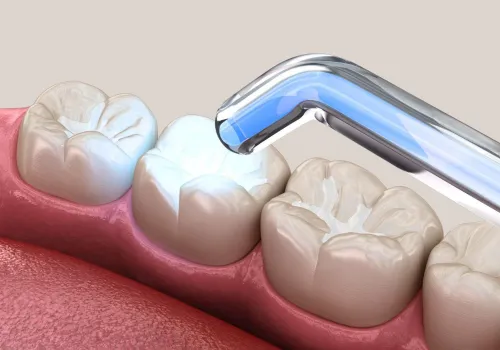
After successful root canal treatment, the so-called access opening is closed. This small hole in the chewing surface of the tooth is used to access the dental nerve during treatment. Once the root canal treatment is complete, it is securely sealed with a high-quality plastic filling material to protect the tooth.

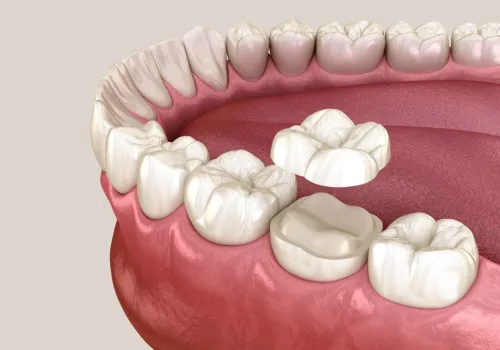
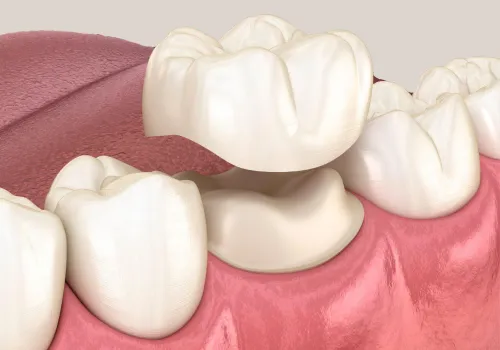
A root-filled tooth should be stabilised in the medium term with an onlay or a dental crown, especially in the posterior tooth area, which is subject to chewing stress. Root-filled teeth become more brittle after around six months and are therefore more susceptible to fractures. Without stabilisation, there is a risk of tooth loss, even after successful root canal treatment.

Advantages of root canal treatment

  • Preservation of the affected tooth
  • Usually no dentures necessary as a result
  • A root-treated tooth is more aesthetically pleasing than a denture

Costs excl. filling / crown, depending on the number of canals

Best Price
CHF 760 - 1'000.-

Root canal treatment anterior tooth
(excl. filling or crown, depending on the number of canals)

Best Value
CHF 900 - 1,450

Root canal treatment premolar
(excl. filling or crown depending on the number of canals)

High End
CHF 1,350 - 1,850

Root canal treatment canine or revision of an insufficient old root filling
(excl. filling or crown depending on the number of canals)

FAQ: The most frequently asked questions about Root canal treatments

If there was severe discomfort before the first session, this usually subsides on the same day or within a few days.
The root canals may need to be cleaned, disinfected and treated with medication several times before a stable result is achieved. As soon as the pain has completely subsided, the root canal can be sealed.

Successful root canal treatment requires a great deal of patience, care and sensitivity. However, the result is worth it! After a successful root canal treatment, the tooth can be preserved for many years or, with good care, until the end of life.

However, it should not be forgotten that root canal treatments are only attempts to save the teeth. Approximately 80-90% of teeth can be saved by sufficient root canal treatment. Unfortunately, even today and with the most modern aids, not 100% of all root canal-treated teeth can be saved permanently.

After root canal treatment, the natural tooth may become slightly darker in colour. Although this does not have any negative effects on health, it can be perceived as a nuisance by the patient. If this is the case, the treating dentist can try to lighten the tooth again.

A root-treated tooth becomes more brittle after a certain time - tooth fractures are more common in root-treated teeth. To prevent possible fractures, teeth in the posterior region in particular, which are exposed to high masticatory stress, should be protected with an onlay or crown within six months.


Particularly demanding root canal treatments or revisions (renewals) of old insufficient root fillings are carried out in our clinic by specially trained dentists under a high-resolution surgical microscope. You therefore receive better quality treatment at the same tax point value.

Root canal treatment, like any other treatment, harbours certain risks. These are summarised below:

Infections
The bacteria that initially caused the root inflammation can lead to further inflammation or even an abscess. This is usually characterised by increasing swelling in the area of the cheek.

Loss of the treated tooth
If the root canal cannot be fully prepared technically, bacteria that cannot be removed can continue to maintain the inflammation, so that tooth removal is the only way to achieve freedom from pain.

Necessity of an apicoectomy
If the dentist cannot reach the root canals in the normal way via the crown of the tooth, an apicoectomy may be indicated. In this minor surgical procedure, the root tip is cleaned via a tiny, minimally invasive access from the side and sealed from below with a root filling material so that the tooth is hermetically sealed again and can no longer release bacteria into the bone.

Have your teeth checked by your dentist once or twice a year. In this way, damage can be recognised and treated at an early stage. An x-ray of all teeth should also be taken at least every two years.

The earlier caries is recognised, the lower the likelihood of root canal treatment.

Before a tooth is treated with a root canal or a complex restoration is carried out, it must be clarified whether the periodontium, i.e. the bone in which the tooth is located, and the tooth root are in good condition. The survival time and long-term prognosis of the tooth depend largely on this.
There is often a risk that the tooth can be root canal-treated but cannot be preserved in the long term. In this case, you must help decide whether the tooth should be removed or whether a conservation attempt should be made.

Fear of pain is one of the most common concerns during root canal treatment. However, thanks to modern anaesthesia and treatment techniques, the procedure is usually completely painless today.
Before treatment begins, the affected area is thoroughly anaesthetised so that the patient does not feel any pain. A slight feeling of pressure may occur during the treatment, but this is easily tolerated. At CITYDENTAL, we take great care to ensure pain-free root canal treatment.
After the procedure, there may be temporary sensitivity, which usually subsides within a few days. Painkillers can help if necessary. Overall, root canal treatment is now considered a safe and well-controlled treatment.

Root canal treatment is carried out in several precise steps. Root canal treatment usually consists of 3 sessions:
1. emergency treatment with pain relief and insertion of a medication.
2. deep cleaning and widening of the root canals, as well as changing the medication.
3. final cleaning and root canal filling.

First, the tooth is locally anaesthetised. A rubber dam is then placed over the tooth to protect it and keep it dry. The tooth is then opened painlessly to gain access to the root canal. The inflamed tissue is then removed and the canal thoroughly cleaned. Bacteria and infected tissue residues are completely removed using fine instruments and rinsing solutions. The canal is then disinfected. In many cases, a medicated insert is used before the canal is provisionally sealed.

The root canal filling ensures that no new bacteria can penetrate or multiply within the tooth. You can think of this filling as a cavity sealant in a car to prevent rust.
Finally, the tooth is often sealed and stabilised with a filling or crown.

The duration of a root canal treatment depends on the condition of the tooth and the number of root canals. In simple cases, the treatment can be completed in one session of around 60 to 90 minutes.
However, more complex cases require several appointments. Factors such as severe inflammation or difficult-to-access canals can prolong the procedure. In Switzerland, many dental practices use modern technology to make treatment more efficient. Nevertheless, thoroughness is more important than speed, as only thorough cleaning guarantees long-term success. Your dentist will inform you individually about the exact schedule.

The cost of root canal treatment in Switzerland varies depending on the complexity and type of tooth involved. As a rule, they are between CHF 760 and CHF 1,500. You can find all prices on our price list.
Back teeth/root canals with several root canals are usually more expensive than front teeth, as they are more complex to treat and more difficult to access. The use of modern technology can also influence the price. As this is often a necessary treatment, supplementary insurance policies sometimes cover part of the costs. Without treatment, however, there is a risk of significantly higher follow-up costs due to dentures. Root canal treatment is therefore an important investment in tooth preservation.

The most important alternative to root canal treatment is the removal of the tooth, followed by a dental prosthesis such as an implant, bridge or denture.
However, this means a permanent loss of the natural tooth. For this reason, modern dentistry endeavours to preserve the tooth as far as possible.
In some cases, a so-called vital amputation or partial treatment of the root pulp can be an option if the inflammation is not yet very advanced. In Switzerland, root canal treatment is considered the standard for tooth preservation. Preserving your own tooth is usually the best solution, both functionally and aesthetically.