Thanks to careful planning and a great deal of expertise, we have a customised solution for every wisdom tooth. Contact us for your personal consultation appointment.




Thanks to careful planning and a great deal of expertise, we have a customised solution for every wisdom tooth. Contact us for your personal consultation appointment.
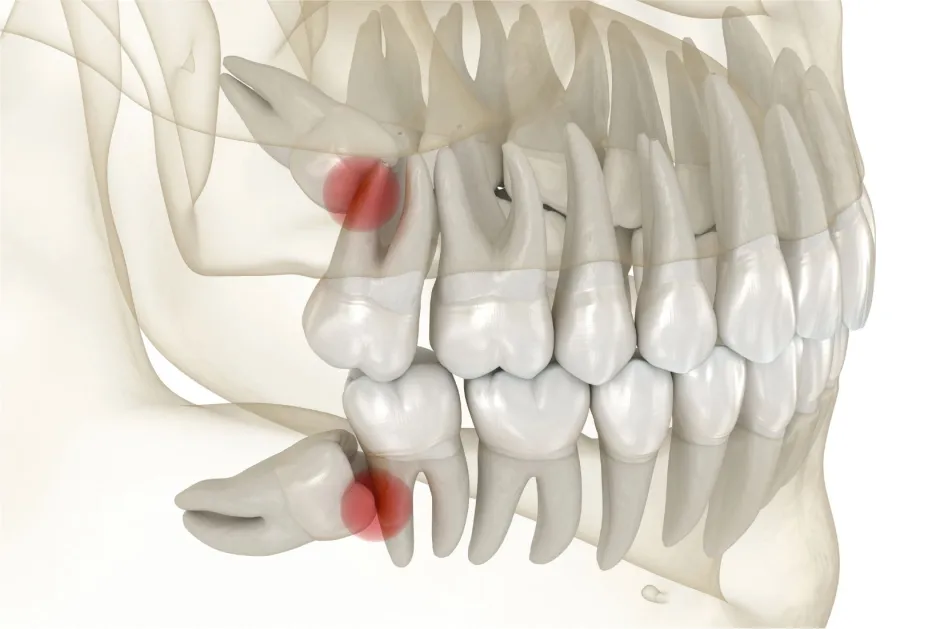
Wisdom teeth are located in an anatomically narrow position at the very back of the row of teeth. Due to this space restriction, they often cannot be adequately cleaned, which means that even in a normal position, they statistically develop caries or gingivitis more frequently than the teeth in the anterior region.
In addition, these teeth often do not manage to break through to the chewing level due to the jaw conditions and their late growth. Instead, they are wedged between the last tooth and the jawbone.
This misalignment can cause unpleasant symptoms ranging from pressure sensations and tooth displacement to bad taste and bad breath. In severe cases, severe pain can occur due to inflammation and abscesses.
After a detailed discussion of your patient's wishes or the need for treatment due to the disease, we will draw up an individually tailored treatment programme for you.
We will decide together with you whether the procedure will be performed under local anaesthetic, twilight sedation or general anaesthetic .
All surgical procedures are carried out in specially equipped operating theatres using state-of-the-art equipment and instruments.
We attach great importance to painlessness and gentle treatment of our patients.
Wisdom teeth are among the human molars. In contrast to the other permanent molars, wisdom teeth usually only appear at around 18 to 22 years of age - hence their name. Whilst the development of wisdom teeth does not cause problems for everyone, they can cause discomfort if the jaw does not have enough space for these additional teeth.
Wisdom teeth differ from other molars in several ways. For example, some wisdom teeth have three or five cusps instead of four. The roots of wisdom teeth are also often more pronounced than the roots of other molars. In addition, the roots of wisdom teeth are often curved or intertwined.
Not everyone has the genetic predisposition for wisdom teeth. Some people develop not just the usual four wisdom teeth (two in the lower jaw and two in the upper jaw), but up to eight wisdom teeth. As wisdom teeth - starting from the incisors - are each located in the eighth position, they are also known in dentistry as " 8s", whereby the central incisor is counted as tooth 1.
The eruption of wisdom teeth into the oral cavity can lead to various dental problems. If wisdom teeth are present in a person but do not erupt into the oral cavity, we speak of retention. If there is only partial eruption through the jawbone or the oral mucosa, this is called partial retention.
Wisdom teeth that remain completely in the jaw often do not cause any discomfort in the affected patients. Partially retained wisdom teeth, on the other hand, often lie crooked in the jaw and are in contact with bacteria in the oral cavity. These teeth are difficult to clean with a toothbrush despite partial eruption. Transverse wisdom teeth can also lead to displacement of the other teeth, which can result in misaligned teeth.
In addition, gum pockets form more quickly on partially retained wisdom teeth, in which bacteria can colonise. The consequences include inflammatory processes on the gums, which in severe cases can also spread to the cheek and chewing muscles. As incompletely erupted wisdom teeth are often adjacent to neighbouring teeth without gaps, there is an increased risk of caries developing on these teeth. In addition, transversely positioned wisdom teeth can resorb the adjacent neighbouring teeth or dissolve the neighbouring tooth structure.
The cost of wisdom tooth removal depends on the individual patient's situation and the degree of displacement of the wisdom teeth.
We will be happy to provide you with a customised quote. The prerequisite for this is a special X-ray image, the so-called orthopantomogram. You can either bring this with you or it will be taken during a short examination.
| Treatment methods: | Surgical and non-surgical methods |
| Anaesthesia: | Local anaesthesia; nitrous oxide sedation or general anaesthesia on request |
| Aftercare: | 1 - 3 follow-up appointments in our practice |
| Ability to socialise: | After about 2 - 7 days |
| Suture removal: | After about one week |
Advantages of lateral tooth extraction:
Side-by-side wisdom tooth extraction offers the patient the opportunity to use the untreated side for chewing after the operation.
Disadvantages of lateral tooth removal:
Second operation necessary
Advantages Removal of all wisdom teeth in one session:
At our dental centres, we use very gentle measures that enable the gentle removal of all wisdom teeth in just one procedure. This shortens the aftercare and downtime for the patient overall. For this reason, many of our patients prefer to have all their wisdom teeth removed once.
Disadvantages Removal of all wisdom teeth in one session:
Possibly a little more swelling as both sides are affected.
CONCLUSION: We recommend the removal of wisdom teeth in one session for more anxious patients. This can be done under sedation or general anaesthetic if necessary.
You should take it easy physically for 2 to 3 days after the treatment. When you can return to work depends on your well-being and the extent of the treatment, among other things. In a comprehensive consultation, we will be happy to inform you about the optimal behaviour after wisdom tooth removal.
As a rule, Swiss health insurance covers the costs if there is a medical necessity for wisdom tooth surgery. This is the case, for example, in the case of tooth cysts or danger to neighbouring teeth. We will be happy to inform you in our practice whether the costs can be covered in your individual case.
Basically, one of the most important issues for us is that all treatments at CITYDENTAL are painless. In our clinics, we have various sedation and anaesthesia options to make the treatment as comfortable as possible for each of our patients. During treatment under local anaesthesia, nitrous oxide or general anaesthesia, you will not feel any pain. There may be some soreness after the treatment. However, we will provide you with sufficient pain-relieving medication and cool packs to cool the treatment area. We recommend that our patients continue to cool the treatment area at home for a while and use conventional painkillers if pain occurs.
Following the removal of wisdom teeth in our practice, we recommend that our patients take it easy physically for 2 to 3 days. It is best not to plan any important appointments or trips abroad during this time. Normally, you can resume work after this short break. In the first week after wisdom tooth surgery, you should avoid direct sunlight, sauna visits, intensive sport and smoking.
Wisdom teeth that cause complications do not always have to be removed. If a wisdom tooth that has fully entered the oral cavity does not affect the other teeth in a set of teeth, but is affected by even moderate damage such as caries, tooth-preserving medical treatment steps may be considered depending on the extent of the damage. At our clinics in Zurich, we therefore always make the decision for or against the removal of wisdom teeth on a case-by-case basis and in dialogue with our patients.
If the wisdom teeth are crooked, partially retained or retained, we recommend their prophylactic removal between the ages of 17 and 25, as once a lower wisdom tooth is severely inflamed, for example, it cannot usually be surgically removed on the same day due to the spread of bacteria into the blood (bacteraemia/sepsis). After the age of 25, we only recommend the removal of wisdom teeth if they are causing discomfort or if the tooth has concomitant diseases.
If you are unsure about the advisability or necessity of removing your own wisdom teeth, we will be happy to advise you on the basis of a dental examination of your teeth.
The right diet after a wisdom tooth extraction is crucial for complication-free healing. Many patients underestimate how much the choice of food can influence the healing process - but the rules are clear and easy to follow.
In the first 24 hours after the procedure, you should only eat cold or lukewarm, soft food. Cold also has a decongestant and pain-relieving effect: yoghurt, quark, milkshakes, soft ice cream (without nuts or hard pieces), bananas, mashed potatoes or soups are ideal. Important: Soups and other warm foods should be lukewarm and not hot, as heat dilates the blood vessels and can favour post-operative bleeding.
In the first week after the operation, only soft, easily chewable foods should be eaten. Soft bread without a hard crust, pasta, rice, eggs, soft meat or fish, steamed vegetables and dairy products are suitable. During this phase, avoid anything that leaves crumbs or small particles - these can settle in the wound, disrupt the blood clots (blood clots that protect wound healing) and promote inflammation.
The following should bestrictly avoided in the first few days to weeks: hard, crunchy or grainy foods (nuts, crisps, crispbread, hard bread), hot spices and acidic foods that irritate the wound mucosa, as well as alcohol, which slows down healing and can impair the effect of painkillers.
Also important: Do not drink with a straw and do not suck hard - the negative pressure created in the mouth can dissolve the protective blood clot from the wound and lead to a painful dry alveolus (alveolitis sicca). After about one to two weeks, most patients can eat normally again - always listening to their own symptoms.
Swelling after wisdom teeth removal is one of the most common and normal side effects of the procedure - and also the one that patients worry about the most. First things first: swelling is not a sign of a complication, but a natural inflammatory reaction of the body to the surgical procedure.
Swelling usually begins a few hours after the procedure and peaks after about 24 to 72 hours. In some patients, the greatest swelling does not occur until the second or third day after the operation. This can be surprising, but is completely normal.
The most effective way to minimise swelling is to keep the area cool: For the first 24 hours after the procedure, regularly place cool packs or ice cubes in a cloth (never directly on the skin) on the cheeks - cool for 15 to 20 minutes at a time, then take a 10-minute break. After the first 24 hours, cooling should be discontinued as it can slow down the healing process.
Sleeping with your head slightly elevated - for example with an extra pillow - also helps to reduce swelling, as excess tissue fluid can drain away better.
In most patients, the swelling subsides significantly after five to seven days. In the case of larger procedures or if several wisdom teeth have been removed at the same time, the swelling may last a little longer. If the swelling increases instead of decreasing after a week, combined with severe pain, fever or a bad taste in the mouth, the practice should be contacted immediately - these signs may indicate an inflammation or infection that needs to be treated.
Dry socket (medically: alveolitis sicca or dry socket) is one of the most common complications after wisdom tooth extraction and causes considerable discomfort to affected patients. It is important to recognise this complication at an early stage and react correctly.
After a tooth extraction, a blood clot forms in the socket (the bone cavity in which the tooth was located) - a protective blood clot that covers the wound and initiates healing. If this blood clot is removed too early or does not form, the jawbone is exposed without protection - this is called a dry socket.
The typical symptoms of a dry socket are: severe, drilling or pulsating pain in the area of the extraction site, which occurs three to five days after the procedure - exactly when the normal post-operative pain should actually decrease. The pain can radiate into the ear, temple or neck. Often there is also an unpleasant smell or taste in the mouth, and when you look in the mirror you will see a whitish-grey, empty alveolus instead of a dark blood clot.
Risk factors for a dry socket are Smoking (even one cigarette in the first few days after the procedure significantly increases the risk), drinking through a straw, rinsing the mouth heavily in the first 24 hours, poor oral hygiene and oestrogen supplements (e.g. the contraceptive pill, which can affect blood clotting).
If you suspect a dry socket, you should contact your dental practice immediately. The treatment is uncomplicated: The dentist gently cleans the socket and places a medicated insert to relieve the pain and promote healing. This usually needs to be changed after a few days.
The question of when you can play sport again after wisdom teeth removal is often asked by particularly active patients before the operation - and the answer is clear: you should hold back on physical activity for the first few days.
Why is sport problematic after wisdom teeth removal? Physical exertion increases the heart rate and blood pressure. This can lead to the freshly formed blood clots in the wound being destabilised or flushed out - with the risk of secondary bleeding or a dry socket. In addition, intensive sport increases the inflammatory reaction and can increase swelling and pain.
As a general rule of thumb, you should completely avoid any sporting activity for the first two to three days after the procedure. This includes not only intensive endurance sports or strength training, but also strenuous gardening, climbing stairs quickly or other physical exertion.
After three to five days, most patients can resume light activities such as a relaxed walk - provided there is no severe pain, swelling or post-operative bleeding. More intensive sports such as jogging, swimming, cycling or strength training should be resumed after a week at the earliest - and even then gradually and in line with your own well-being.
Contact sports such as football, martial arts or basketball should be suspended for at least two weeks due to the risk of injury. An unfortunate blow to the jaw in the first few weeks after the procedure could significantly disrupt wound healing.
Your dentist will give you personalised recommendations after the procedure that are tailored to the extent of the operation and your personal healing process.
The question of whether wisdom teeth removal can shift teeth or, conversely, create more space for the incisors is one of the most persistent myths and misunderstandings surrounding the topic of wisdom teeth - and they deserve a differentiated answer.
Myth 1: Wisdom teeth displace the front teeth. Many people believe that wisdom teeth exert pressure on the back molars when they erupt, which propagates as a domino effect to the incisors and pushes them together. However, scientific studies in recent decades have not been able to clearly prove this connection. Tooth displacement in the anterior region also occurs in people who do not have wisdom teeth or who had them removed at an early age. The causes of crowding are more complex - genetic factors, jaw growth and other forces play a more significant role.
Myth 2: Removing wisdom teeth automatically creates more space. Unfortunately, no. Removing the wisdom teeth does not create any noticeable space in the front dental arch. Anyone hoping to straighten their crooked front teeth by removing wisdom teeth will be disappointed. Orthodontic treatment is necessary for this.
What is true, however: Fully impacted or transversely positioned wisdom teeth can exert mechanical pressure on the neighbouring tooth (the second molar) and damage or displace it - and this is a good reason to remove such teeth prophylactically. In this case, removal protects the neighbouring tooth, but does not prevent crowding in the front area. Your dentist will advise you individually as to whether and why removal makes sense in your case.
Oral hygiene after wisdom teeth removal is a tricky subject: on the one hand, clean oral hygiene is crucial to prevent infections. On the other hand, cleaning too aggressively in the first few days can disrupt the blood clot in the wound and cause complications. The right balance is required.
In the first 24 hours after the procedure, the mouth area should be left alone as much as possible. No rinsing, no gargling and no vigorous rinsing of the mouth. Rinsing creates pressure that can destabilise the fresh blood clot. In the first few hours, you should also only brush your teeth in areas far away from the wound.
From the second day onwards, you can carefully start cleaning the wound area again. We recommend gentle rinsing with a lukewarm saline solution (half a teaspoon of salt in a glass of lukewarm water) - do not actively gargle, but gently move the water around in your mouth and let it run out. This rinsing should be carried out several times a day, especially after meals, and supports wound healing through its disinfectant effect.
Brushing the remaining teeth can be resumed as normal from the second day - use a soft toothbrush and avoid brushing directly on and around the wound until it has healed sufficiently. Over time, you can increasingly include the wound area in your brushing routine again.
Your dentist may also recommend an antiseptic mouthwash (e.g. with chlorhexidine), which reduces the number of germs in the oral cavity and prevents infections. Only use this as directed by your dentist - chlorhexidine can cause discolouration of the teeth if used continuously.
Not every wisdom tooth removal is the same - and many patients wonder what the difference is between a simple wisdom tooth removal and a surgical wisdom tooth removal. The answer depends on the location, degree of eruption and root structure of the wisdom tooth.
A simple (non-surgical) tooth removal is possible if the wisdom tooth has fully erupted and is upright in the jaw. In this case, the tooth can be loosened and removed like any other tooth using special forceps and levers. The procedure is relatively quick, healing is uncomplicated and the surgical effort is minimal.
Surgical removal of wisdom teeth is necessary if the tooth is partially or completely hidden (impacted) in the jaw, is crooked, lies crosswise or is deeply anchored in the bone. In these cases, the dentist or oral surgeon must first cut open the gum and, if necessary, remove jawbone to expose the tooth. The tooth is often cut into several pieces in order to gently remove it from the bone. Finally, the wound is closed with sutures.
Surgical removal is more demanding and requires more experience and equipment - it also usually causes a little more swelling and longer healing time than a simple extraction. However, it is safe and a routine procedure for experienced practitioners.
Which method is necessary can be assessed using a panoramic X-ray or 3D DVT, which shows the exact position of the wisdom tooth, its root shape and its proximity to important structures (such as the inferior alveolar nerve in the lower jaw). On this basis, your dentist or oral surgeon will create a personalised plan and discuss with you which procedure is necessary.