Find out here how professional teeth whitening works, how many shades lighter your teeth can become and how long the result lasts. We also explain why professional teeth whitening is the best choice for a long-lasting and healthy smile.




Find out here how professional teeth whitening works, how many shades lighter your teeth can become and how long the result lasts. We also explain why professional teeth whitening is the best choice for a long-lasting and healthy smile.
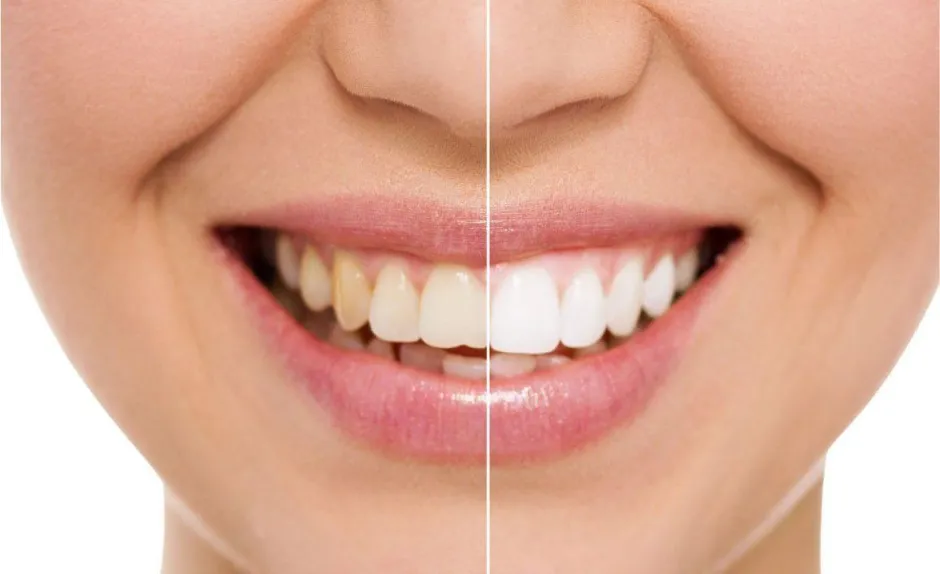
The best thing about professional teeth whitening at the dentist is that almost anyone can now have bright white teeth in a short space of time - safely, effectively and gently. Thanks to modern methods, teeth whitening in the dental practice is not only significantly more effective than conventional products from the drugstore, but also gentle on the teeth and safe.
If you want to play it safe when bleaching your teeth, professional bleaching at the dentist is the best choice. In our practice, we only use tested and pH-neutral bleaching materials that not only whiten your teeth, but also protect and strengthen them.
Before professional teeth whitening, the dentist carefully checks your teeth for damage, cracks or caries to rule out any risk. During the entire whitening process, the treatment is closely monitored by the dental team so that you can rest assured: Your teeth whitening is in the best hands. The bleaching itself is usually carried out by a specially trained dental hygienist or prophylaxis assistant.
Different methods are used for teeth whitening depending on the patient's needs.
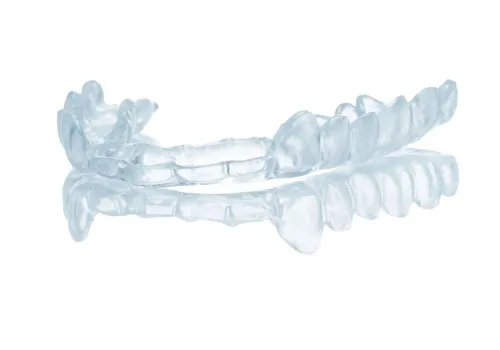
Home ble aching is a proven and particularly flexible method of professional teeth whitening: after taking an impression of your teeth, you will receive a customised bleaching tray made by a dental technician, which you can use in the comfort of your own home - as often and as long as you need until you have achieved your desired result. With a peroxide concentration of usually 6-10%, the bleaching gel used is slightly lower than in professional power bleaching in the dental practice, which makes the application particularly gentle.
Before home bleaching, the dentist checks whether your teeth are suitable for whitening and has your teeth professionally cleaned. This important step prevents uneven bleaching stripes and ensures that the gel can work evenly. You will then receive your personalised bleaching tray together with detailed instructions on how to use it.
The treatment duration for home bleaching is usually 2 to 3 weeks. Depending on the concentration of the bleaching gel, the daily application time varies between 30 minutes and 6 hours - or alternatively overnight. During the application, you are only slightly restricted when speaking, but can otherwise go about your everyday life as normal.
The results are impressive: your teeth will be visibly whiter with home bleaching and the brightness achieved can last for several years. If necessary, you can easily repeat or refresh the whitening process at any time - just as you wish.
Power ble aching is the fastest and most effective method of professional teeth whitening - with visible results after just one treatment in the dental practice. In contrast to home bleaching, power ble aching is carried out entirely by the dentist and enables intensive whitening in just one session.
At the beginning of the treatment, the gums are carefully covered with special protection to protect them from the highly concentrated bleaching gel. A highly concentrated bleaching gel with 20-30% peroxide is then applied to the tooth surfaces - a much stronger concentration than with home bleaching. After a reaction time of around 10 minutes, the gel is sprayed off and a new layer is applied. This process is repeated 3 to 4 times until the desired brightness is achieved.
A particular advantage of power bleaching is that the bleaching gel used also has an enamel-hardening effect - the treatment not only protects your teeth visually, but also strengthens them.
For an even faster and more intensive result, the gel can also be activated and heated using UV light or laser radiation. This makes it deeper and more efficient: The entire power bleaching treatment usually takes 60 to 90 minutes - and immediately afterwards you will see your radiant results for the first time.
Finally, the gum protection is removed, you can rinse - and leave the practice with noticeably whiter teeth and a new smile.
A single darkened tooth can affect the entire smile - and is often an indication that the tooth nerve has died. When the nerve dies, it begins to decompose: Decomposition products penetrate the tooth structure and cause discolouration from the inside out, which cannot be effectively treated from the outside. This is precisely where internal bleaching comes in - a targeted method for whitening a single discoloured tooth from the inside.
With internal bleaching, the affected tooth is opened from the inside. As the tooth no longer has an active nerve, the treatment is usually completely painless and harmless. The highly concentrated bleaching gel is poured directly into the tooth and then activated with light. This process is repeated 2 to 3 times until the tooth has regained its original colour shade and is once again in harmony with the surrounding teeth.
In more complex cases, the dentist leaves the bleaching inlay in the tooth for several days, during which time it is temporarily sealed. This inlay process is also repeated 2 to 3 times if necessary until the desired brightness is achieved. The result is impressive: the treated tooth blends seamlessly back into the natural appearance of the dentition.
Internal bleaching is therefore the most effective and gentle solution if a single tooth is noticeable due to internal discolouration - without the need for expensive prosthetic measures such as a crown or veneer.
Most people have a natural tooth colour in the A3 shade range, which is considered an average shade. With professional tooth bleaching, discolouration can be effectively reduced and significantly lighter shades such as B1 or even lighter can be achieved - depending on the individual's initial condition.
The final tooth colour after bleaching depends on several factors, including the desired degree of whitening, the strength of the tooth discolouration and the reaction of your tooth structure to the bleaching gel.
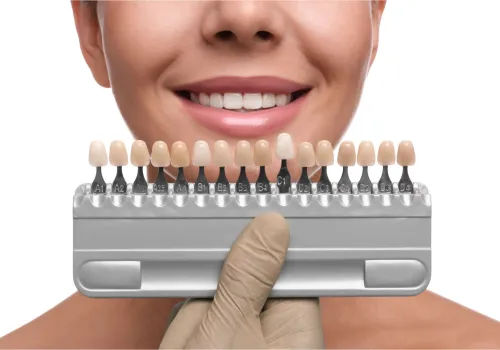
At our dental practice, we professionally measure tooth whitening using a colour scale. This so-called tooth colour scale enables a precise assessment of the success of the treatment - both before, during and after bleaching.
On average, 7 to 9 colour levels of brightness can be achieved in healthy teeth. In this way, many patients go from a tooth colour A3 to B1, which corresponds to the ideal image of naturally white teeth.
If dark spots are still visible after tooth cleaning and bleaching, these are often old, discoloured plastic fillings. These cannot be lightened by bleaching. In such cases, we will be happy to advise you on how these old materials can be replaced with modern, tooth-coloured composite fillings with perfect aesthetics - for an all-round harmonious and natural smile.
If you would like whiter teeth in just a few days, arrange your personal consultation now. We will be happy to show you what results are possible with bleaching - individually tailored to your dental situation.
We use gentle tooth whitening to give your teeth a natural and gentle white colour. Contact us for a radiant smile.
The cost of tooth whitening depends on the desired degree of whitening and the chosen whitening method. Basically, professional teeth whitening at the dentist is an investment in your smile - and the results speak for themselves.
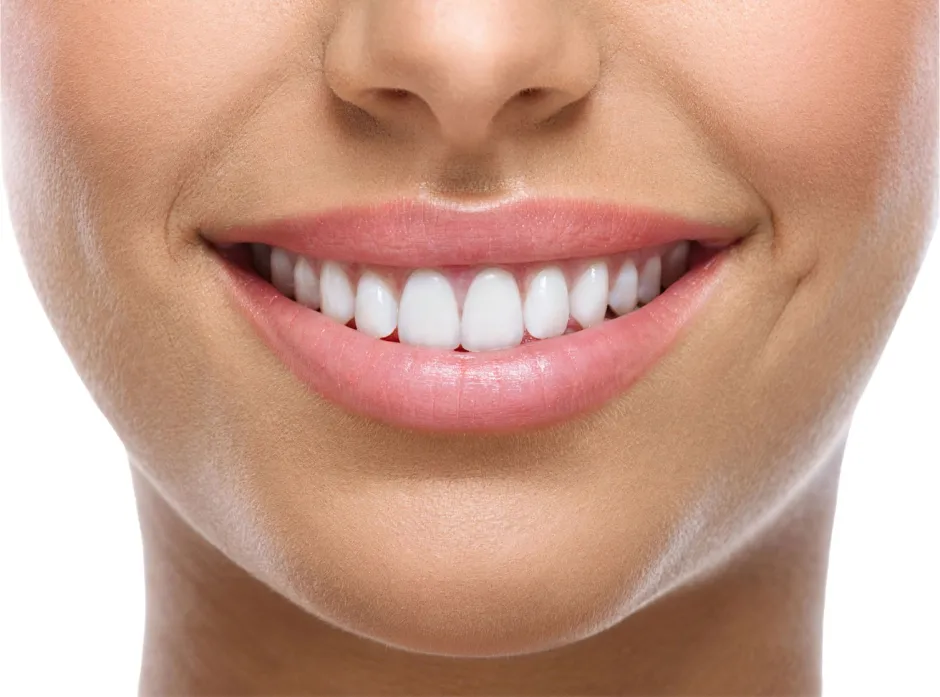
With power bleaching using FLÄSH or Philips Zoom - a highly efficient light-activated power bleaching method - you can achieve a whitening of 6 to 8 shades in a single session at our locations in Switzerland.
The cost of home bleaching includes the customised bleaching tray, which you can reuse indefinitely. This makes home bleaching particularly economical in the long term: the refill bleaching agent costs just CHF 49 and lasts for around 4 to 6 applications. This means you can continue to whiten your teeth or refresh the result at any time and at low cost.
A direct cost comparison of the bleaching methods shows: Both variants are available at the same entry-level price - the decisive difference lies in the application and long-term cost-effectiveness. While power bleaching provides an immediate result in the practice, home bleaching scores with flexible application at home and particularly favourable follow-up costs.
We will be happy to advise you personally on which method suits you best and the costs for your customised tooth bleaching.
The first tooth whitening method we would like to introduce to you is home bleaching. With home bleaching, you receive a customised bleaching tray made by a dental technician after taking an impression of your teeth, which you can use yourself as often as you wish or until you achieve the desired result. The bleaching gel is slightly less concentrated than in power bleaching (usually between 6-10% peroxide).
He checks in advance whether your teeth are suitable for bleaching. Your teeth are also professionally cleaned before whitening to avoid bleaching streaks. You will then receive a customised tray that can conjure up a beautiful smile within a very short time through effective application.
The duration of the application is approx. 2 - 3 weeks. Depending on the concentration of the whitening gel, the daily application time is between 30 minutes and 6 hours, or one night. During this time, you will only be slightly restricted in speaking.
Home bleaching will visibly whiten your teeth and the brightness can last for several years. You can continue to whiten your teeth at any time.
Power bleaching is a quick and highly effective treatment method for whitening teeth. After the gums have been covered with protection, a highly concentrated bleaching gel is applied to the teeth (usually 20-30% peroxide).
The highly concentrated bleaching gel has a significantly higher concentration than the bleaching gel used for home bleaching. This gel is sprayed off again after a 10-minute exposure time and a new layer is applied. The process is repeated 3 - 4 times until the teeth have reached the desired brightness.
The positive side effect of this tooth whitening method is that the bleaching gel used has a hardening effect on the enamel. To complete the treatment, the protection that was placed on the gums at the beginning is removed again. The patient can rinse out and see the result of the bright white teeth for the first time!
The power whitening treatment usually takes one to one and a half hours and also works with whitening gel that is additionally activated and heated using special UV light or laser radiation. This makes it work faster and more intensively: after just an hour or so, your teeth are much brighter and you can give the world your best smile again!
If a single tooth is dark, it is usually because the tooth nerve has died. As a result, the tooth nerve decomposes, decomposition products penetrate the tooth and the tooth becomes discoloured.
To whiten the tooth, it is opened from the inside. As it no longer has an active nerve, the treatment is generally completely harmless and can be carried out painlessly. The whitening gel is then poured into the tooth and activated with light. This tooth whitening process is repeated 2-3 times until the tooth has returned to its original colour.
In difficult cases, the dentist must leave the bleaching inlay in the tooth for a few days (which is temporarily sealed during this time). The inlay process must be repeated 2-3 times until the tooth has the desired brightness. Afterwards, nobody will be able to recognise its "dark past".
In our experience, between two and five years. Whether and how quickly your teeth darken again depends on what you eat and what stimulants you consume. If you smoke or drink a lot of tea, coffee, red wine or cola, the whiteness will not last as long as if you are "abstinent".
Most people have an average tooth colour, which is described as A3 on the scale. However, depending on various factors, bleaching can achieve a colour B1 or even lighter.
On average, teeth become about 7 to 9 shades lighter with tooth whitening. In practice, we measure the initial situation and the result using a so-called colour scale.
Not really! The white teeth can be re-whitened at any time. This is usually much quicker than the initial whitening and also costs considerably less. Many patients have their teeth whitened again every 1-2 years and thus enjoy their white teeth in the long term.
If it is done under the supervision and control of a dentist, bleaching is very safe and harmless. Professional whitening agents even harden the tooth enamel. By using pH-neutral bleaching materials, the tooth is protected and professionally whitened.
The situation can be different with products from drugstores or the internet. Here, the composition is often unknown. Especially if teeth have holes or cracks, these products can lead to tooth damage.
Conclusion: If you have your teeth whitened by a dentist, you can feel safe and you will get a visible result: significantly brighter teeth for a radiant smile!
The question of whether home bleaching is safe during pregnancy is a concern for many expectant mothers who want whiter teeth. The clear recommendation is: During pregnancy and while breastfeeding, any form of professional tooth whitening - including home bleaching - should be avoided.
The reason for this is not that bleaching gels are demonstrably harmful to the unborn child. Rather, there is a lack of sufficient long-term scientific studies that prove the complete safety of peroxide compounds during pregnancy. In the interests of caution, dentists and gynaecologists therefore recommend avoiding bleaching during this sensitive phase.
In addition, the oral situation often changes during pregnancy: The gums are more sensitive due to hormones and are more prone to bleeding and irritation. The whitening gel could further increase this sensitivity and lead to unpleasant side effects such as gum irritation.
The same applies to breastfeeding: as ingredients from the oral cavity can in principle enter the bloodstream, experts also advise breastfeeding mothers to exercise caution. Even if the quantities ingested are small, the risk cannot be completely ruled out.
The good news is that nothing stands in the way of home bleaching after pregnancy and breastfeeding. Many women consciously use this time as motivation to do something good for themselves afterwards with professional bleaching. A dental consultation before the planned bleaching helps to determine the best time and the most suitable method.
A frequently asked question about home ble aching with dentures is whether the bleaching tray also works if crowns, bridges, veneers or fillings are present. The answer is differentiated and depends on the material of the dentures.
Natural teeth respond very well to bleaching gel, as the peroxide can penetrate the tooth structure and lighten the discolouration molecules inside the tooth. Ceramic, plastic or composite dentures, on the other hand, do not react to bleaching gel - these materials cannot be lightened by bleaching as the peroxide does not penetrate the synthetic structures.
In practice, this leads to an important consequence: anyone who has crowns, veneers or larger fillings in the visible area and still carries out home bleaching risks the natural teeth becoming lighter, while the dentures retain their original colour. This can lead to an uneven, blotchy appearance that is aesthetically unsatisfactory.
It is therefore important to have a dentist check whether and where dentures are present before home bleaching. In many cases, it is advisable to bleach first and then match or replace old dentures in the new, lighter tooth colour.
Bleaching can still be useful for small, inconspicuous fillings in less visible areas. Your dentist can individually assess which solution is right for you - and whether individual fillings or restorations should be replaced following home bleaching in order to achieve a harmonious overall appearance.
The care of the home bleaching tray is crucial for its durability and the hygiene of the application. As the customised bleaching tray for home bleaching is a long-term aid that you can reuse indefinitely, it is worth treating it with care.
The tray should be rinsed with cold water immediately after each use. Important: Never use hot water for this, as heat can deform the soft plastic material and the splint will then no longer fit your teeth exactly. An inaccurately fitting tray can lead to the bleaching gel getting onto the gums and causing irritation.
The tray can then be carefully cleaned with a soft toothbrush without toothpaste - toothpaste contains abrasives that can scratch the material and thus create a surface for bacteria to accumulate. Cleaning tablets specially designed for dental splints or a mild soap solution that is rinsed out thoroughly are more suitable.
The splint should be stored in the protective box provided in a dry and clean place, away from direct sunlight and heat sources. The box protects the splint from mechanical damage and prevents it from becoming deformed.
Check the rail regularly for cracks, deformation or material fatigue. If there are any abnormalities, you should inform your dentist, who can assess whether a new splint needs to be made. However, with the right care, a well-made home bleaching tray can be used reliably for several years.
The diet after power bleaching plays a decisive role in the long-term success of the treatment. Immediately after power bleaching, the teeth are particularly susceptible to new discolouration as the enamel is temporarily more porous due to the treatment. You should therefore take particular care in the first 24 to 48 hours after the procedure.
Avoid all strongly colouring foods and drinks during this time: these include coffee, black tea, red wine, cola, red fruit juice, tomato sauce, curry, soy sauce and other intensely pigmented foods. Tobacco consumption should also be avoided at all costs during this phase, as nicotine discolours the teeth particularly quickly and intensively.
Light-coloured, less staining foods are recommended in the first few days: chicken, white rice, potatoes, bananas, yoghurt, white bread and water are good examples. This so-called "white diet" helps to stabilise and maintain the whitening result.
Acidic foods and drinks such as citrus fruits, vinegar or carbonated drinks should also be avoided in the first few days, as they can further irritate the sensitive tooth enamel.
In the longer term, the more consistently you limit strongly colouring habits, the longer the power bleaching result will last. Professional teeth cleaning every six months and occasional refreshments with home bleaching can help to maintain the light-coloured tooth shade for many years.
The question about the durability of the power bleaching result is understandably one of the most frequently asked after this treatment. The answer depends on several factors - both individual circumstances and personal lifestyle habits.
On average, the results of professional power bleaching last between one and three years. This period varies considerably depending on how much the person being treated consumes colouring substances and how often bleaching has already been carried out. Anyone who regularly consumes coffee, black tea, red wine or cigarettes will notice that their teeth darken more quickly than someone who avoids or restricts these habits.
Oral hygiene is also an important factor: if you brush your teeth thoroughly twice a day, regularly have them professionally cleaned by a dental hygienist and use dental floss, you will make a significant contribution to maintaining the bleaching result for longer. Deposits on the tooth surface can accelerate the darkening process.
The natural tooth structure also plays a role: teeth with a denser and smoother enamel surface absorb less discolouration than those with a porous or rough surface.
To maintain the result in the long term, regular refreshing is recommended - either with the customised home bleaching trays that you received at the same time or with a new power bleaching. Many patients have their teeth refreshed every one to two years and thus enjoy a radiantly white smile in the long term.
The question of possible risks of internal bleaching is justified and important. Internal bleaching is a proven dental method - if carried out correctly, it is safe and effective. Nevertheless, there are some aspects that the dentist and patient should keep in mind.
A known, albeit rare, risk of internal bleaching is so-called external cervical resorption. Paradoxically, the body attacks the tooth root from the outside - a mechanism whose exact cause has not yet been fully researched, but which is associated with the use of certain bleaching substances, in particular 30 per cent hydrogen peroxide. To minimise this risk, modern practices rely on safer bleaching gels and careful sealing of the root canal before treatment.
Another important point is that the already devitalised tooth - i.e. the tooth without an active nerve - is not further structurally weakened by internal bleaching, provided the treatment is carried out correctly. However, the opening and sealing of the tooth must be precise and tight to prevent bacteria from penetrating.
Regular follow-up checks after internal bleaching are therefore essential: your dentist will check whether the treated tooth is stable, the colour is retained and there are no signs of complications. Overall, internal bleaching is a low-risk and very effective alternative to prosthetic solutions such as crowns or veneers if used carefully.
Tooth sensitivity after home bleaching is one of the most common side effects of this treatment - and is initially worrying for many patients. The good news is that in the vast majority of cases, this sensitivity is temporary and harmless and subsides completely within 24 to 72 hours after the application. During this time, the short-term use of a mild painkiller such as ibuprofen or paracetamol can provide rapid relief.
The reason for this is that the bleaching gel temporarily opens the dentinal tubules in the tooth enamel. As a result, stimuli such as cold, heat, sweet or sour can be perceived more intensely than usual. This effect is physiological and not a sign of damage to the teeth.
If you notice sensitive teeth after home bleaching, the following measures can help: Pause the application for one to two days and then continue the treatment with a shorter wearing time. During this time, use a toothpaste for sensitive teeth with potassium nitrate or fluoride, which closes the dentinal tubules again and alleviates the sensitivity.
Some dental practices also offer special desensitising gels that are filled into the bleaching tray and worn after the bleaching application. These neutralise the bleaching gel and effectively reduce sensitivity.
If the sensitivity does not subside or worsens after several days, a visit to the dentist is recommended. In rare cases, pre-existing sensitivity or an undetected dental defect may be the cause, which should be treated before further bleaching. As a general rule, less is sometimes more - a longer, gentler application with a low-concentration gel is often better tolerated than an intensive short treatment.
The question of how often you can bleach is a concern for many patients who want to keep their teeth white in the long term. The good news is that professional bleaching - whether as home bleaching or power bleaching - can generally be repeated regularly, provided it is carried out under the supervision of a dentist.
With home bleaching, there is no fixed time limit for repetition. As the customised bleaching tray can be reused indefinitely and only the refill gel is reordered, many patients can decide for themselves when they want to have a refresher treatment. It is advisable to have a top-up when you notice that your teeth are darkening slightly again - this is usually the case after one to two years, depending on your lifestyle.
With power bleaching, most dentists recommend repeating the treatment no more than once or twice a year. This is because the highly concentrated gel may attack the tooth enamel if used too frequently without sufficient recovery time. The combination of power bleaching and subsequent refreshments with home bleaching is therefore a proven and gentle long-term concept.
It is crucial that the dentist assesses the condition of the enamel and gums before each repeat treatment. If there are signs of enamel thinning or excessive sensitivity, a longer break should be taken. All in all, with moderate and responsible use, bleaching is a safe long-term solution for permanently shiny teeth.
The question of whether internal bleaching is possible with an implant is occasionally asked - and the answer is clear: no, internal bleaching cannot be used with dental implants and is also not necessary.
The reason lies in the fundamental difference between a natural tooth and an implant: in internal bleaching, the bleaching gel is applied to the inner chamber of a devitalised natural tooth to lighten discolouration caused by the dead nerve from the inside out. A dental implant, on the other hand, consists of a titanium post that is anchored in the bone and an attached ceramic crown. There is neither a pulp chamber nor a dental nerve - and therefore no starting point for internal bleaching.
If the ceramic crown of an implant looks unsightly or no longer matches the colour of the surrounding teeth, the crown must be replaced or a new one made. This is a prosthetic procedure, not bleaching.
If you are considering whitening your natural teeth and have implants in your mouth, the same applies as for other types of tooth replacement: The natural teeth can be whitened by home bleaching or power bleaching, but the implant crown cannot. In such a case, it is advisable to whiten first and then match the colour of the implant restoration to the new, lighter natural teeth - for a uniform and harmonious smile.