CD Logo2 white
Slide chirurgie

Tooth surgery Surgery Expertise creates trust

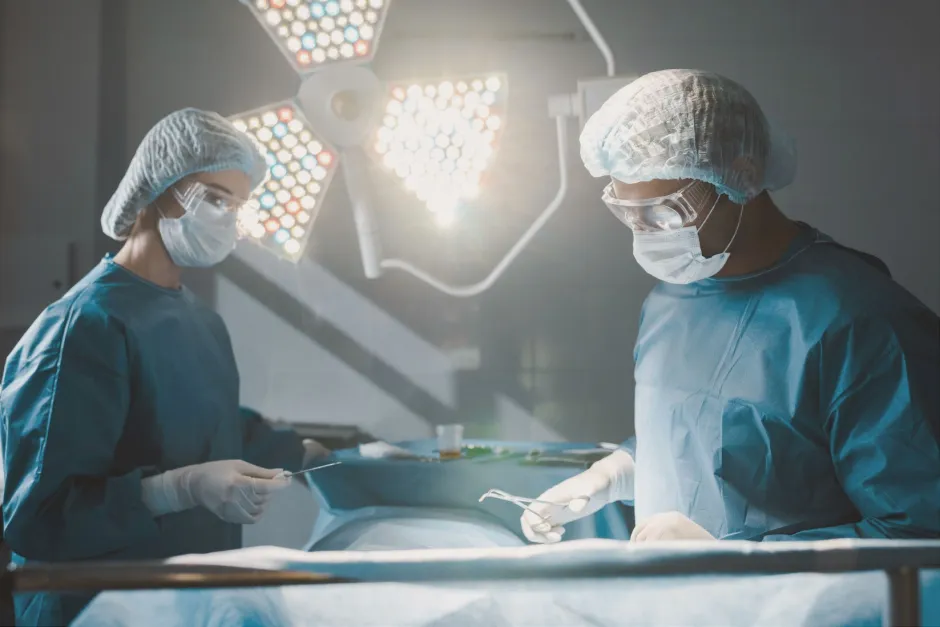
Thanks to our specialisations and many years of experience, we carry out all dental surgical procedures, such as bone augmentation, removal of cysts or benign changes to the mucous membrane, competently and carefully.

We attach great importance to painlessness and minimising post-operative discomfort.

Oralchirurgie

When

Dental surgery is used, for example, for cysts, small benign growths of the oral mucosa and tumoursin the mouth, jaw and facial area . It is also used for aesthetic purposes, such as correcting the course of the gums or rebuilding receding jawbone.

How

After discussing your patient's wishes or disease-related treatment requirements, we will create atreatment programme tailored to your individual needs . We will decide together with you whether the procedure will be carried out under local anaesthetic, twilight sedation or general anaesthetic.

Material

All surgical procedures are carried out in our specially equipped operating theatres with state-of-the-art medical technology. We attach great importance to pain-free treatments and a patient-orientated, gentle approach to ensure maximum comfort and safety.

Cost

The costs for surgical procedures vary depending on the type of medical service. Statutory health insurance usually covers the costs, particularly for the removal of growths or tumours. For all other treatments, we will provide you with a free, transparent quote that is customised to your individual needs.

FAQ: The most frequently asked questions about oral surgery

The question of how long it takes to heal after oral surgery is one of the most frequently asked questions in our clinics. The duration depends heavily on the type of procedure. Minor procedures such as simple tooth extractions often heal within 3 to 7 days, while more complex operations such as bone augmentation or implantation can take several weeks to months.

It is important to note that the actual wound healing is often faster than the complete regeneration of the bone. Patients should therefore differentiate between visible healing and biological healing.

Good aftercare, including cooling, protection and oral hygiene, is crucial for the healing process.

In modern oral surgery, great importance is attached to minimally invasive techniques in order to shorten the healing time. Overall, the gentler the procedure, the faster the healing process.


Many patients are specifically looking for the right behaviour after oral surgery. Smoking, alcohol and physical exertion should definitely be avoided in the first few days, as these factors can significantly impair wound healing.

Hot food and intensive rinsing should also be avoided, as they can favour post-operative bleeding.

Instead, a soft diet and careful oral hygiene are recommended.

Compliance with these rules is crucial in order to avoid complications such as inflammation or wound healing disorders. All in all, behaviour after the operation has a significant influence on the healing process.

The question of the necessity of oral surgery is frequently asked. Treatment is always necessary when conservative methods are not sufficient.

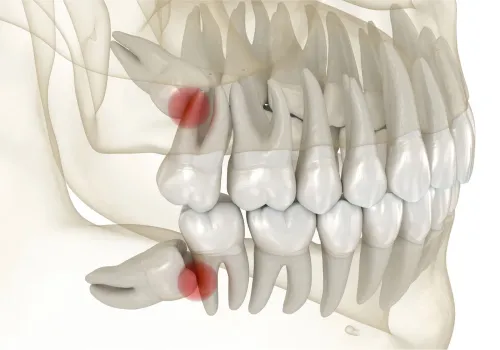
Typical indications are inflamed teeth, insufficient root fillings, wisdom teeth that have not erupted, cysts or bone defects.

Oral surgery is also often necessary when preparing for dentures or implants.

The aim is to maintain oral health in the long term and prevent more serious problems.

In Switzerland, every indication is carefully examined to ensure medically appropriate and sustainable treatment.

The follow-up check after oral surgery is an important part of the treatment. It usually takes place a few days after the procedure to check the healing process.

This involves checking whether the wound is healing well, whether swelling is subsiding and whether there are any infections.

If necessary, stitches are removed or further measures are initiated.

Regular follow-up checks help to recognise and treat complications at an early stage.

In modern dentistry, aftercare is a key factor in the long-term success of treatment.

Many patients ask themselves whether they are able to work after oral surgery.

In the case of minor operations, it is often possible to return to work the very next day. In the case of major operations, however, a recovery period of several days may be necessary.

The decision depends on the type of activity. Physically demanding jobs usually require a longer break. Office work is often possible the following day without further ado.

In Switzerland, it is recommended that the level of exertion after oral surgery is discussed individually with the dentist.

Sufficient recovery time is important to avoid complications and support healing.

Nutrition after oral surgery is a factor that is often underestimated. In the first few days, soft, cool and easily digestible food should be prioritised.

Hard or sharp-edged foods can irritate the wound and should be avoided.

Dairy products are also recommended to a limited extent, depending on the procedure.

An adapted diet supports healing and reduces the risk of complications.

All in all, the right diet is an important part of aftercare.

Many patients ask themselves whether there are age limits for oral surgery.

In principle, procedures can be performed at almost any age, as long as the general state of health allows it.

In older patients, however, particular attention is paid to previous illnesses and medication.

Oral surgery is also possible for children and adolescents, for example in the case of malpositioned or unerupted teeth.

Treatment is always customised to ensure maximum safety.

Preparation for oral surgery is crucial for the success of the treatment. This includes a thorough examination, often including X-rays or 3D diagnostics.

Patients should inform their dentist about any medication and previous illnesses.

On the day of treatment, it is recommended to arrive feeling rested and to adhere to certain guidelines depending on the procedure.

Good preparation helps to minimise risks and optimise the procedure.

In modern dentistry, planning is a central component of every surgical treatment.

Digital and modern oral surgery is a growing topic. Technologies such as 3D X-rays, navigated implantology and lasers enable more precise and gentler treatment.

These procedures help to plan interventions better and reduce risks.

Minimally invasive techniques are also becoming increasingly important.

In Switzerland, great importance is attached to innovation in order to provide patients with the best possible care.

The development shows that oral surgery is becoming increasingly characterised by technology.

Many patients are unsure when they should see an oral surgeon instead of a dentist.

Generally, a referral is made for more complex procedures that require specialised knowledge.

These include, for example, implantations, bone augmentation or complicated tooth extractions.

Oral surgeons have specialised training and generally have significantly more experience in performing oral surgery. This has a positive effect on the duration of the procedure and therefore often also on post-operative complaints. At CITYDENTAL, the oral surgeons work hand in hand with your dentist.

The right choice of specialist is often decisive for the success of the treatment and the safety of the procedure.